More About Skunk Cabbage

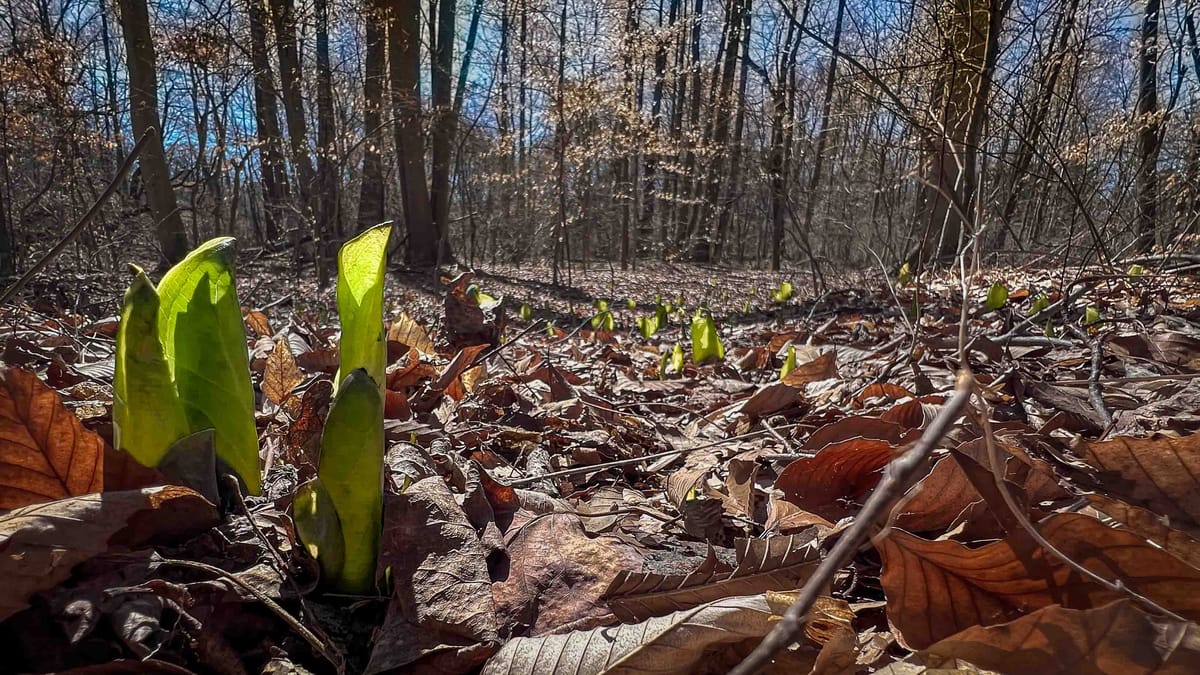
How long has skunk cabbage been around?
Our local skunk cabbage is a relative of fossils reaching back 72 million years. Using the molecular clock (a method of estimating the age of plant groups by DNA changes) our local species developed roughly 12 million years ago.
At that time he northern regions of Asia and North America were intermittently connected by land. Climate changes and rising seas broke that connection and one population of skunk cabbage split into two eventually evolving into separate species.
How long do individual plants live?
The sources I consulted claimed that a skunk cabbage plant could reach 20 years of age while others suggest "200 or more years," "possibly even centuries," or "over 100 years old or even older."
This was a pretty broad range of claims, so I dug a little further.
After an extensive search I could find no source that cited a method or a measurement to back up any of these claims. There are plenty of skunk cabbage studies, but none sought to determine the length of the plant's lifespan or made any specific reference to the subject.
So these confidently repeated "facts" about the age of skunk cabbage probably came from a game of whisper down the lane or post office. Unsubstantiated "facts' like this get repeated because they are rarely challenged.
Maybe someone looked at this plant and thought; " looks ancient, its roots go impossibly deep, must be really old!" and that assumption went on to be regarded as authoritative by repetition. What we think we know about the natural world may have no real basis in fact, is best to challenge any claims, especially remarkable ones.
I think it's safe to say no one knows how old an individual skunk cabbage may become.
Heat Machines
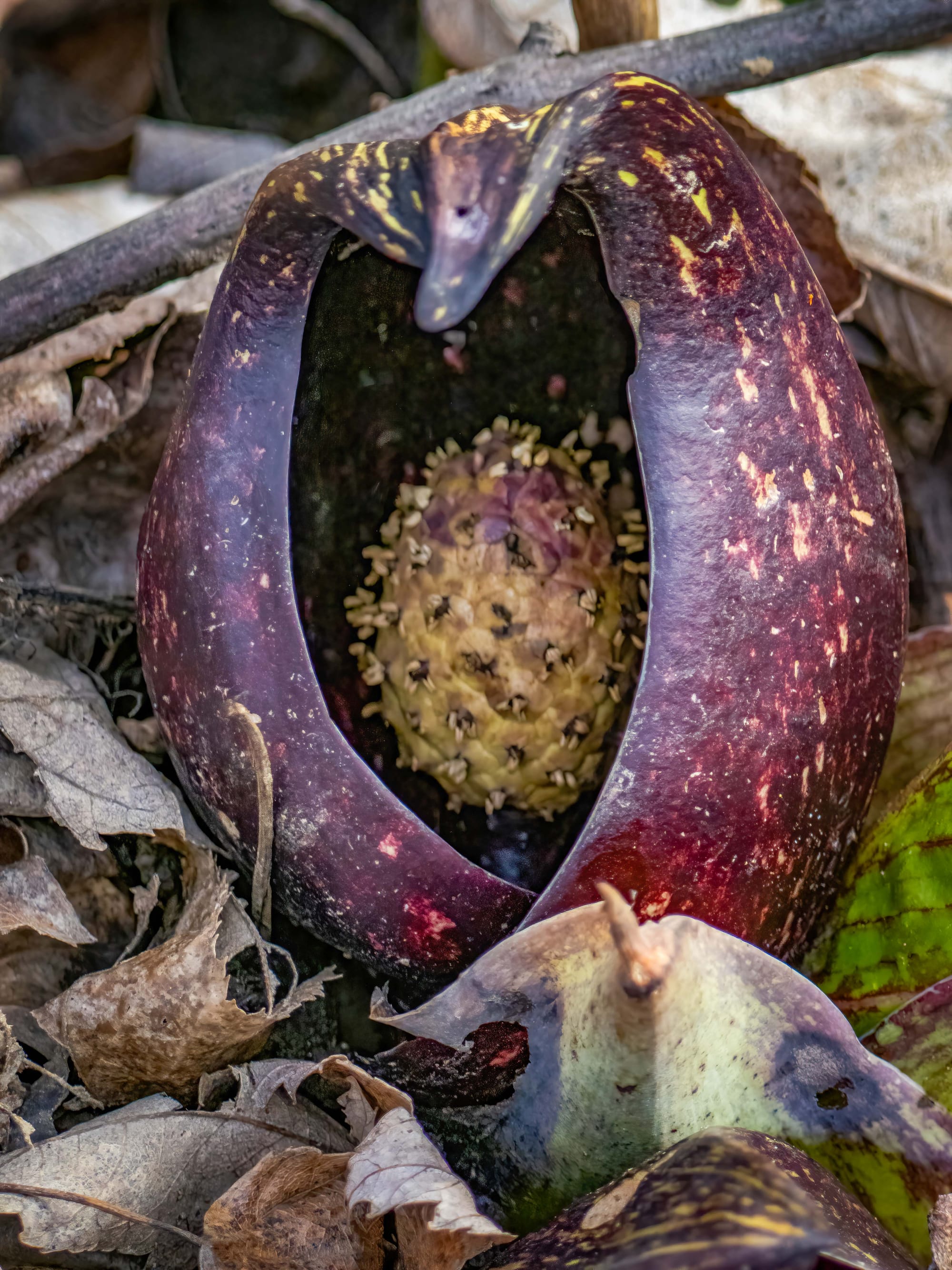
The spathe (the big purple part of a skunk cabbage flower) emerges very early in the year and the spadix (the seed bearing ball inside the spathe) generates its own heat. From well below freezing to well above the internal temperature of the flower remains warmer than the surrounding air - the most precise self-regulation recorded in any flowering plant.
That's the remarkable thing. Maintaining a stable internal temperature against a broad range of external temperatures is something we associate with mammals, not flowers.
When temperatures fall the plant responds by burning more of the starch stored in its roots, ramping up metabolism to compensate.
Why does the plant thermoregulate like this? Is it to spread scent and attract insects? Perhaps, but they may have little to do with the pollination of the skunk cabbage.
What may be happening (and seems the most likely explanation to me) is that an elevated, steady temperature range is required for germination. A study of the nearly identical Russian species found germination requires a temperature that remains within a couple of degrees.
What is that smell?
A 2024 study in Phytochemistry details the first detailed chemical analysis of the strong smell that gives skunk cabbage its name. Fetid sulfur compounds, and pleasant or apple-like scents combine to project a scent profile that ranges from rotting flesh to fresh apple.
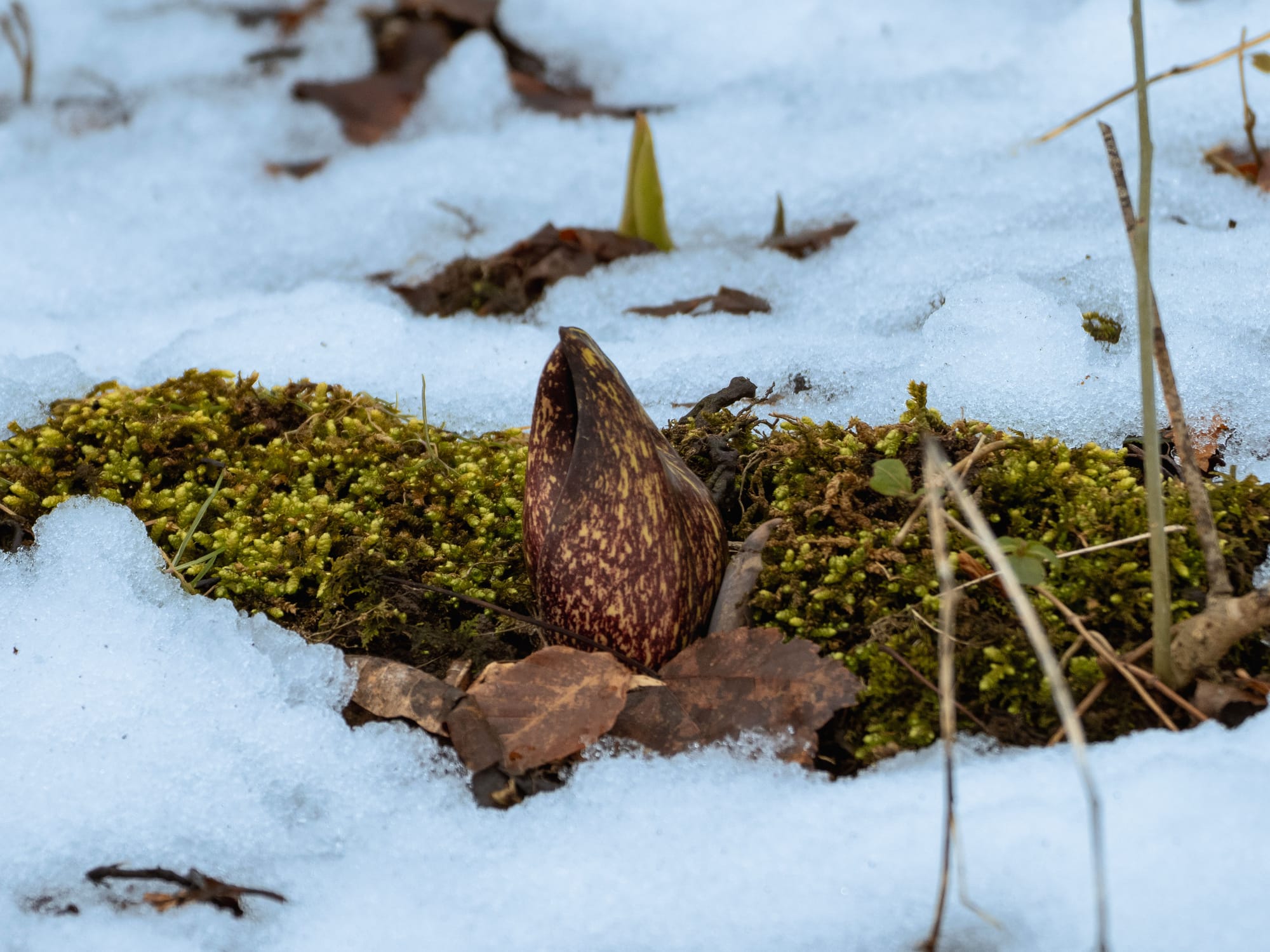
The shape (pointed top with a narrow opening on one side) causes the warm air generated by the spadix to rise and exit at the top as cold air enters from below moving heat and scent outward.
The internal temperature, strong smell, and purple-mottled spathe is thought to lures flies by imitating a rotting carcass. A 2021 field study documents visits from at least seven fly families as well as beetles. Larvae do develop inside the flowers, what attracts them and what benefit they may provide or receive is not a settled question.
Why is this spathe blackened?
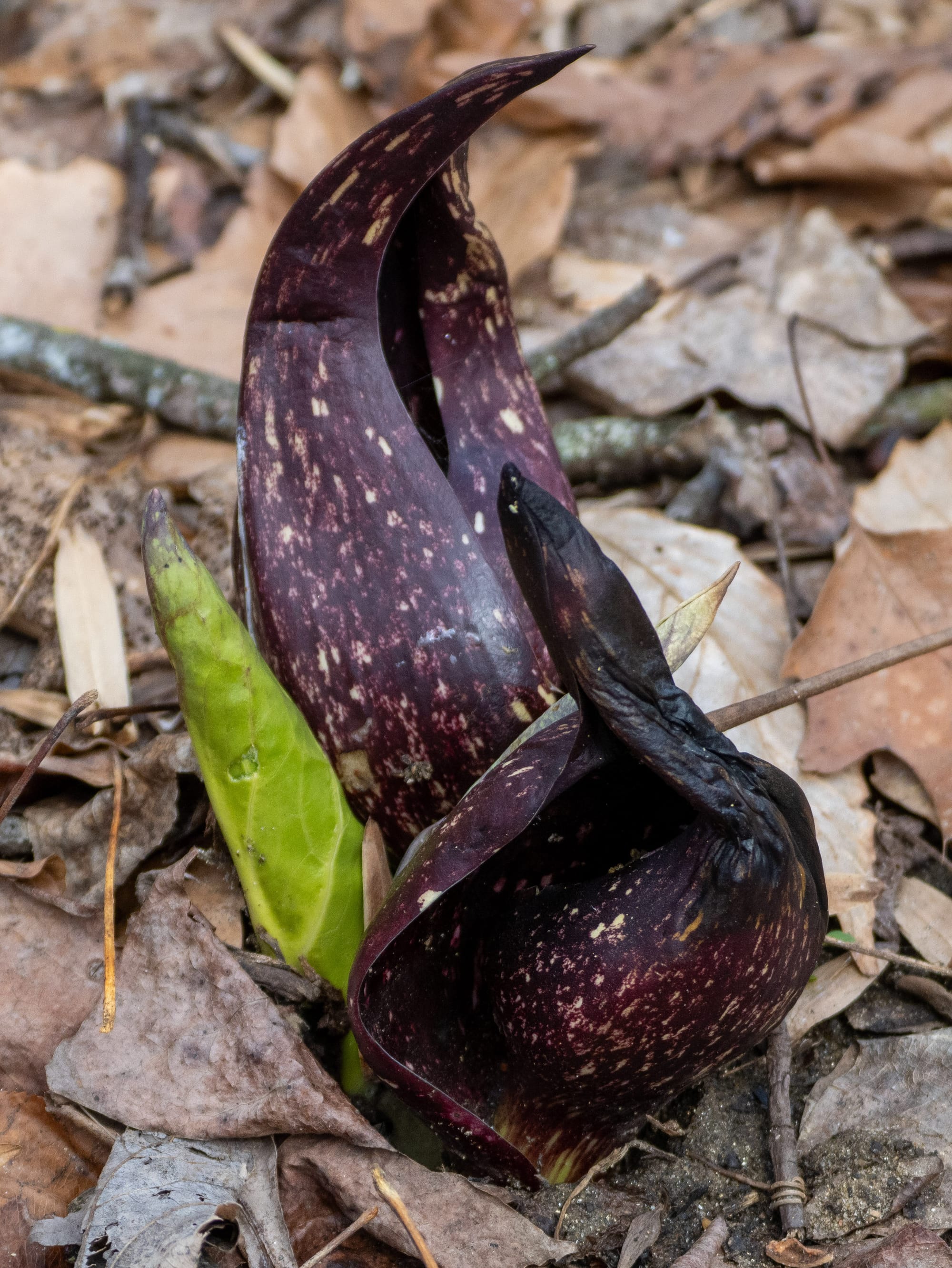
The spathe's fleshy structure is insulated with thousands of tiny air cells but it may freeze during a cold snap (14°F or below) killing some of the tissue. When this happens the margins of the spathe blacken, it can totally die back, or be scarred.