Water Striders and Water Spiders
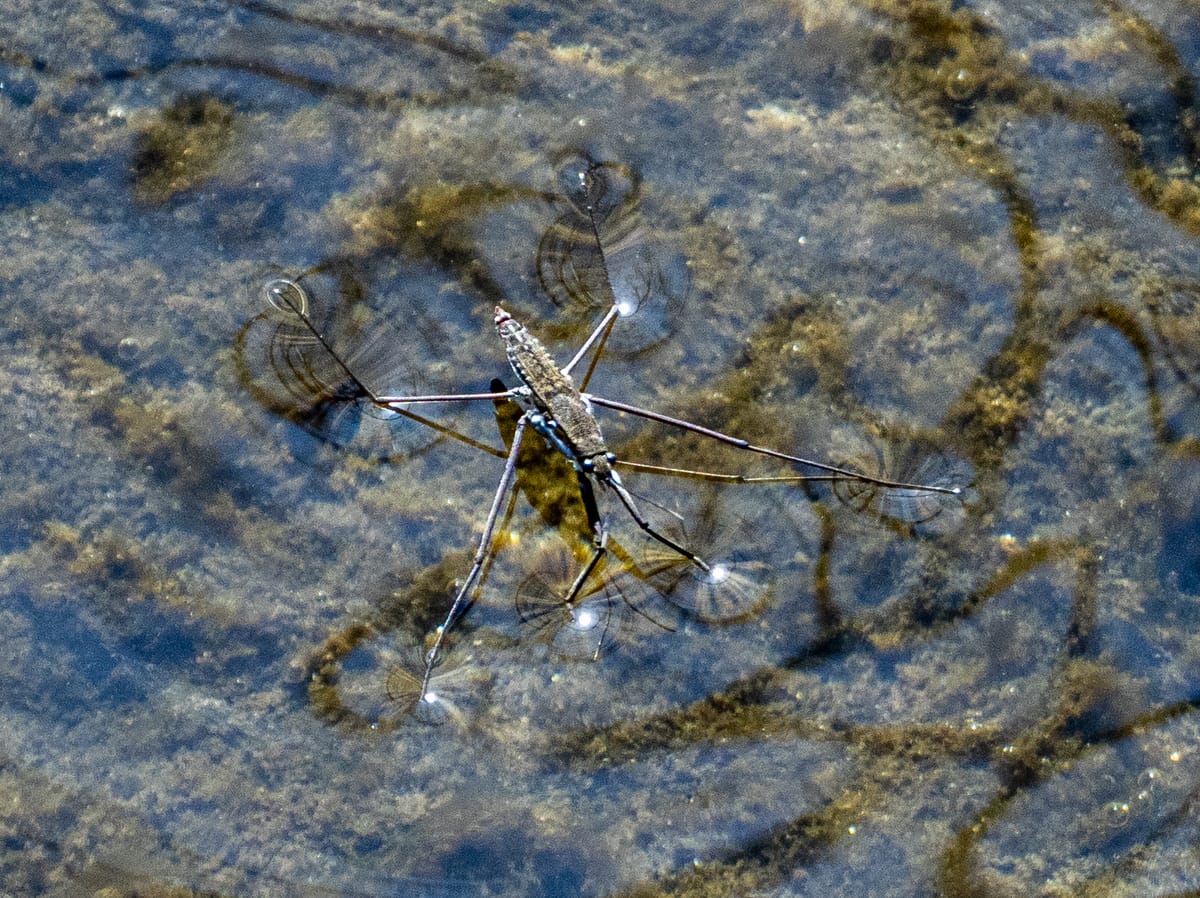
Crossing a footbridge at the park this week I saw a frenetic kerfuffle of water striders on the surface of the creek. My surprise at seeing them so early in the year sparked some research; here's what I found.
Our creek water striders are in the Aquarius remigis complex; (a complex is a group of nearly identical species that have branched into different genetic families over time).
The ponds are home to a different water strider species trepobates a much smaller water strider that you'll often see in large groups. I've yet to see them this year, but they should show up before long.
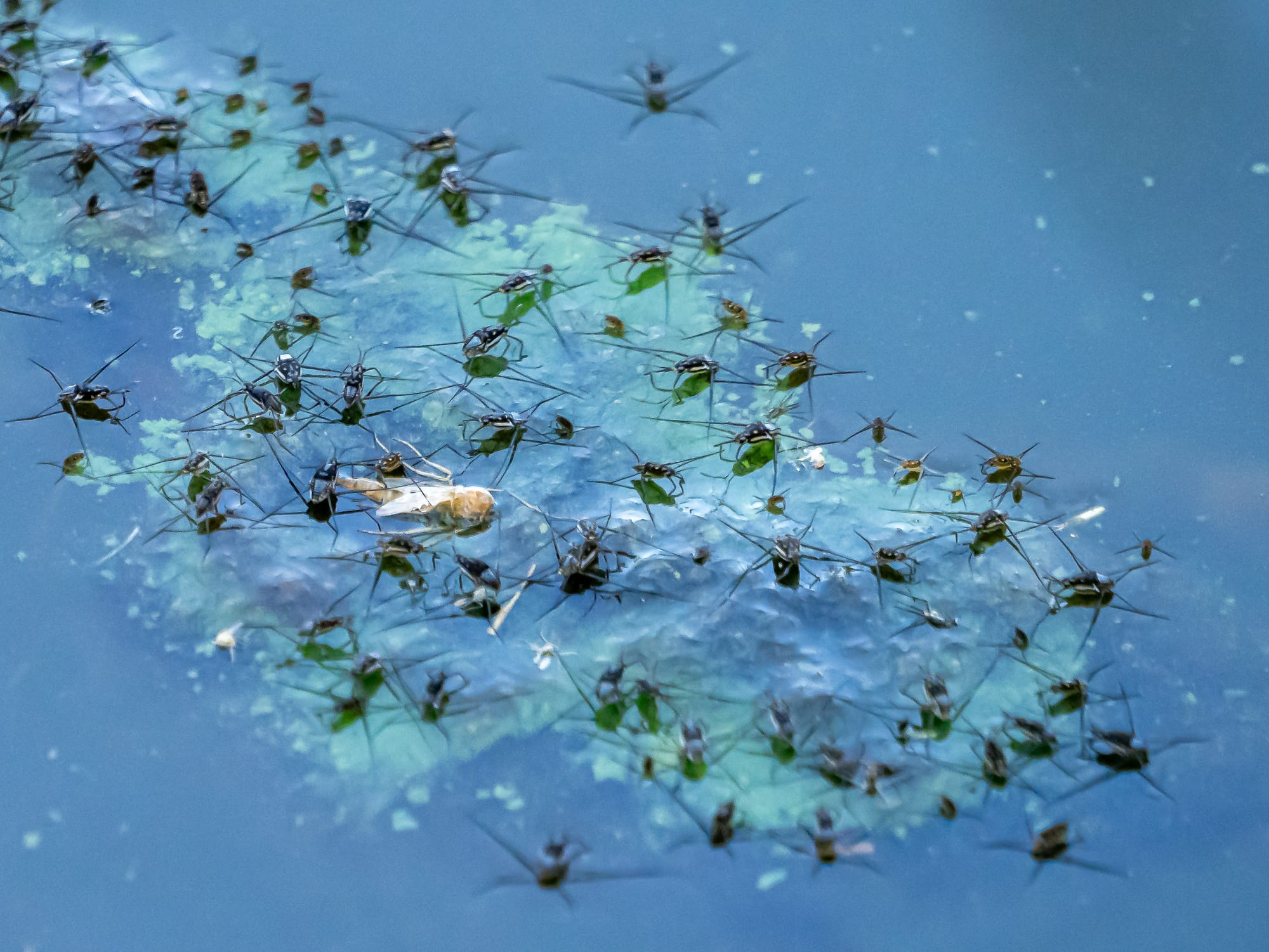
Water striders breed twice a year. The spring generation born in late spring or early summer hatches from eggs develops into nymphs and then adults within just a few weeks. By late August the spring generation has reached the end of its natural life.
The summer generation born in late summer or early autumn enters a state of biological suspension, or diapause, as the water cools. They shelter in the dry leaf litter or mossy overhangs of the creek bank. With their metabolism slowed to a crawl, they can survive for seven or eight months of freezing temperatures making them some of the longest lived species of the family Gerridae.
It would seem water striders and spiders should be close cousins; both "hear" the world through their feet, whether on the water or on a web, and both eat by liquefying their prey from the inside out.
They are not close cousins, or even distant relations; their most recent common ancestor lived more than 500 million years ago.
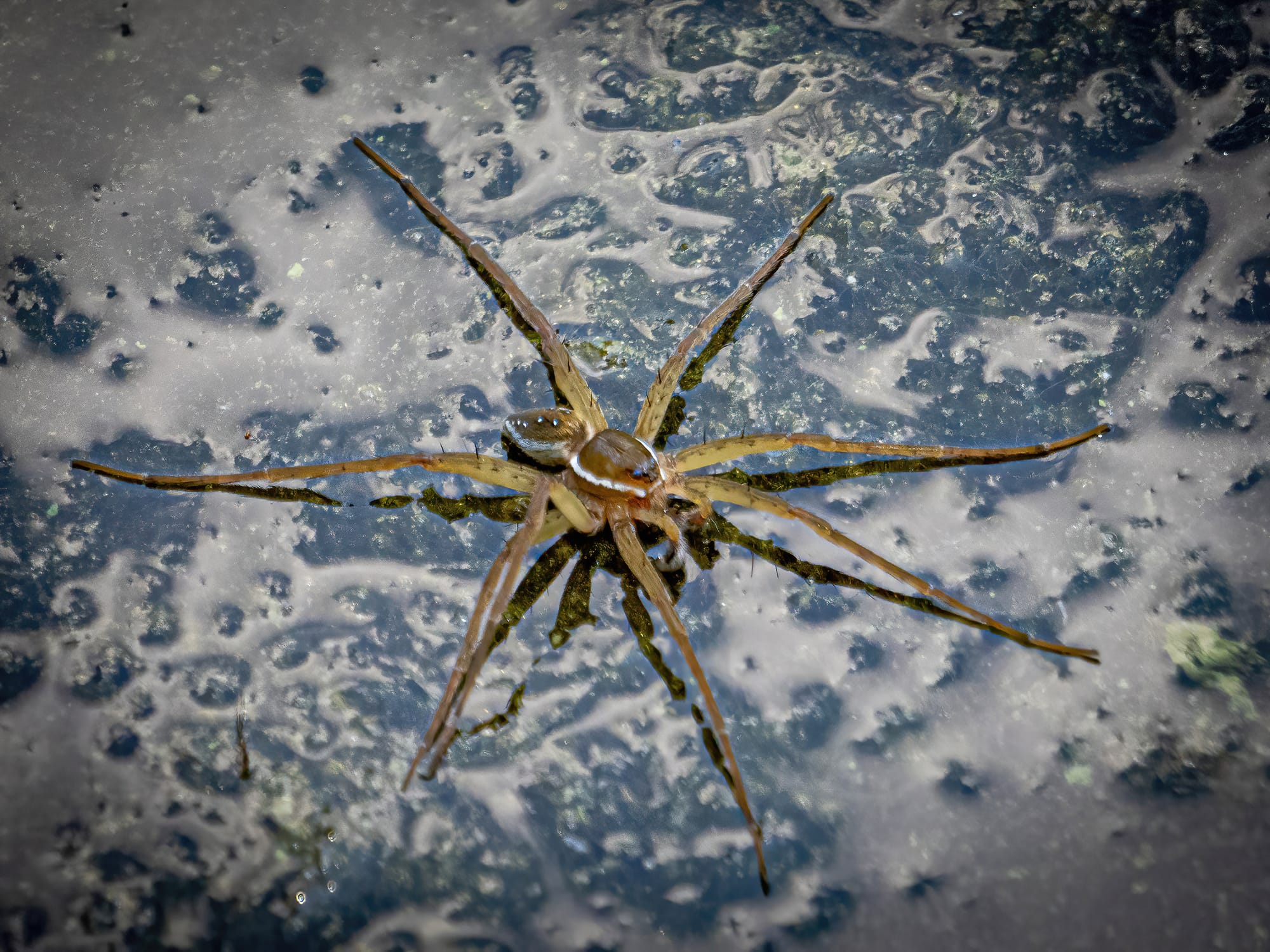
The water spiders at the park like the seven-eyed fishing spider evolved from ancestors that lived on the forest floor, moved to the water, and developed the adaptations that makes the surface of the pond into a giant hunting web.
Although they are unrelated both the fishing spider and water striders have evolved similar adaptations. The same adaptations evolving in different species is an example of convergent evolution. Birds and bats are another example of convergence - both fly, but this trait evolved twice, once in bats and once in birds.
To live on the trampoline-like surface tension of water both striders and spiders independently evolved microscopic, densely packed leg hairs that trap a thin cushion of air. This cushion means the leg never actually comes in contact with the water; but rests on microscopic layer of air distributing their weight indenting the water surface like a trampoline.
Both species also the water surface like an eardrum, however there's a difference between these adaptations. Water striders, have scolopidial organs hidden deep inside the leg joints that sense vibrations. Water spiders have another set of vibration sensitive leg hairs called trichobothria that achieve the same ends. Water striders communicate with potential mates through a rhythmic pattern of taps on the water's surface.
The large water striders in the creek and the tiny zig-zagging water striders in the pond are closely related, they're not related to water spiders, but they have convergently evolved similar solutions to living on the water.