Not a Slug or a Fly
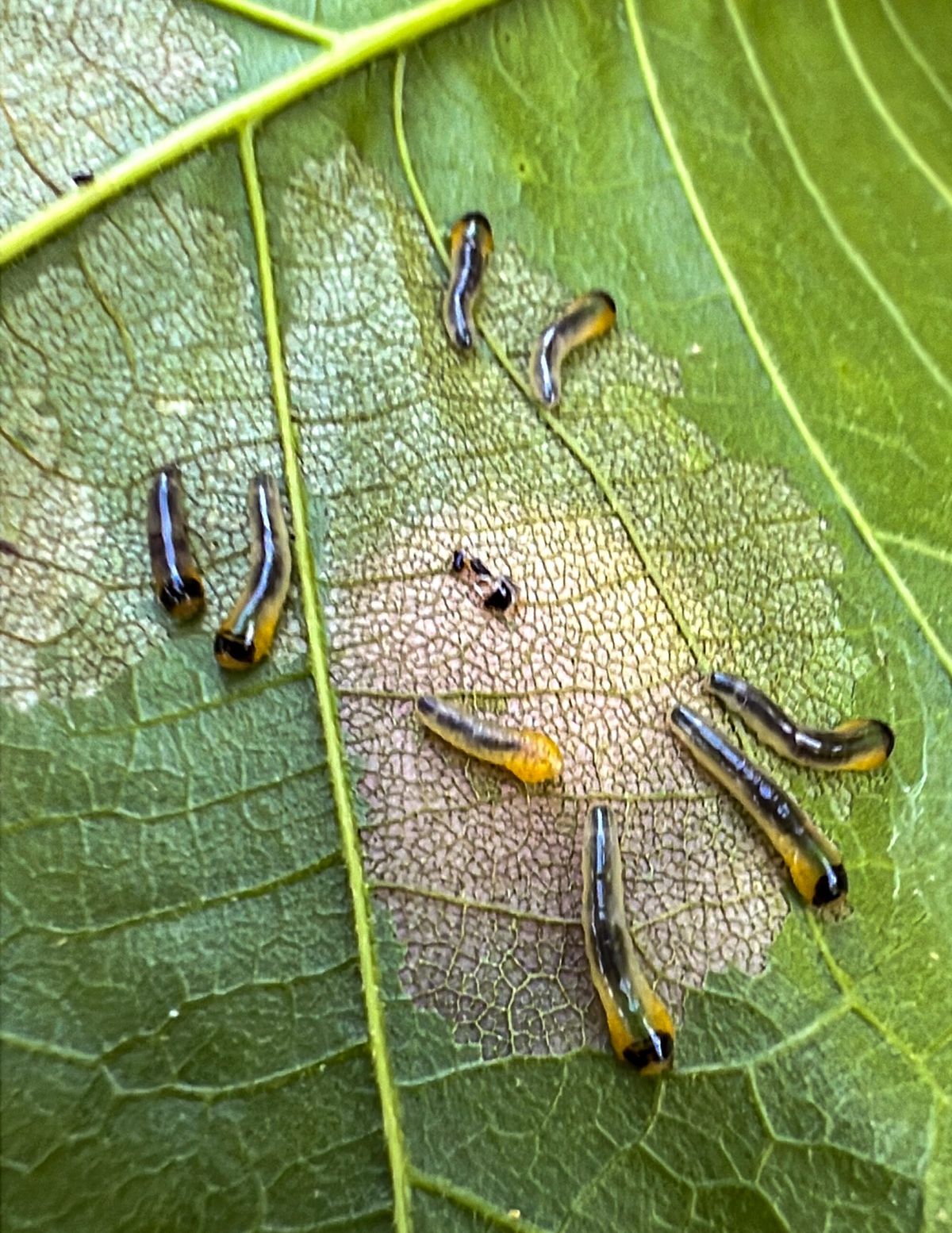
The oak slug sawfly (Caliroa annulipes) is neither a slug or a fly.
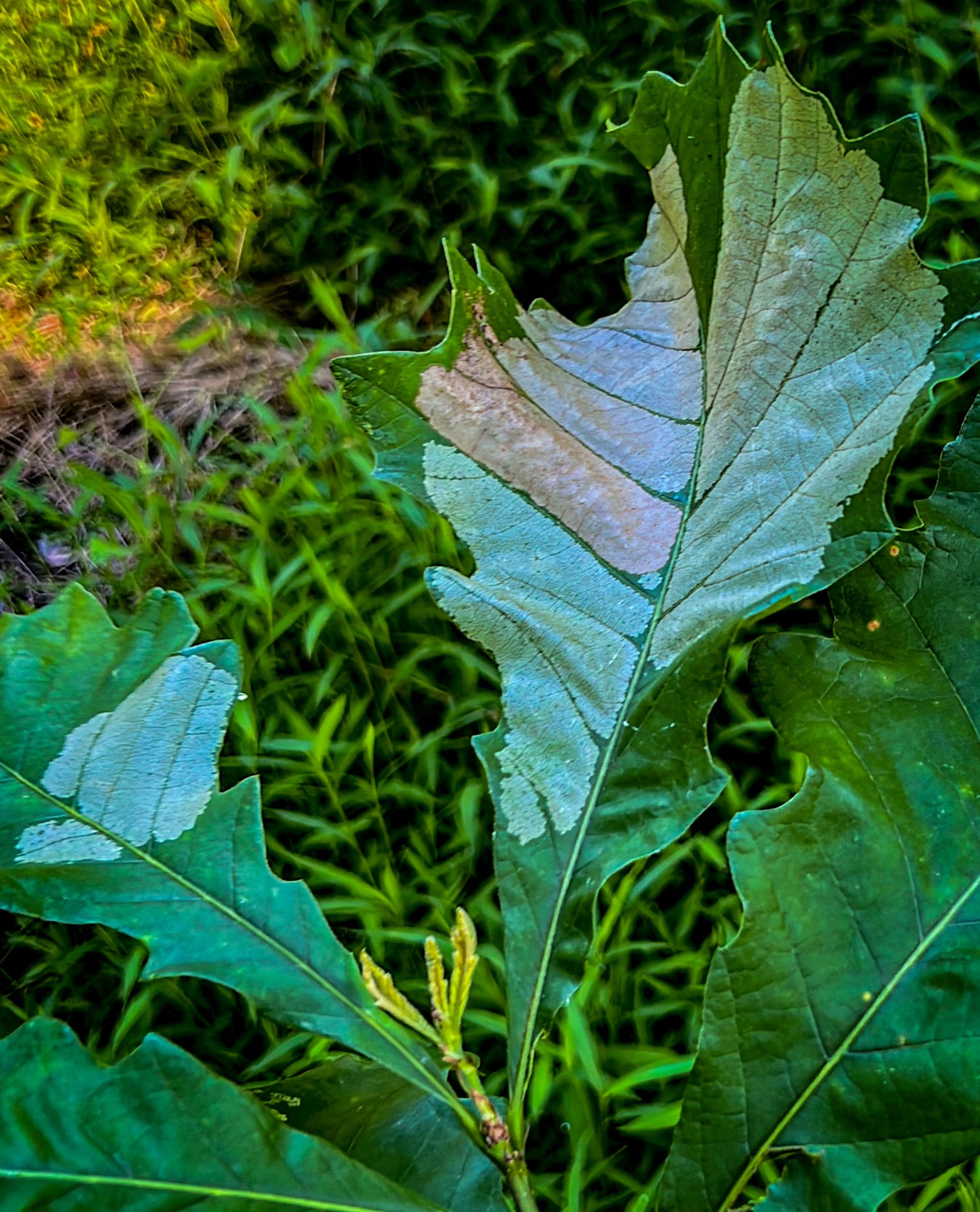
The first thing you notice is the leaves of this swamp oak, they look skeletonized.
Turn the leaf over and you find club-shaped translucent worms coated in wet mucus like a slug.
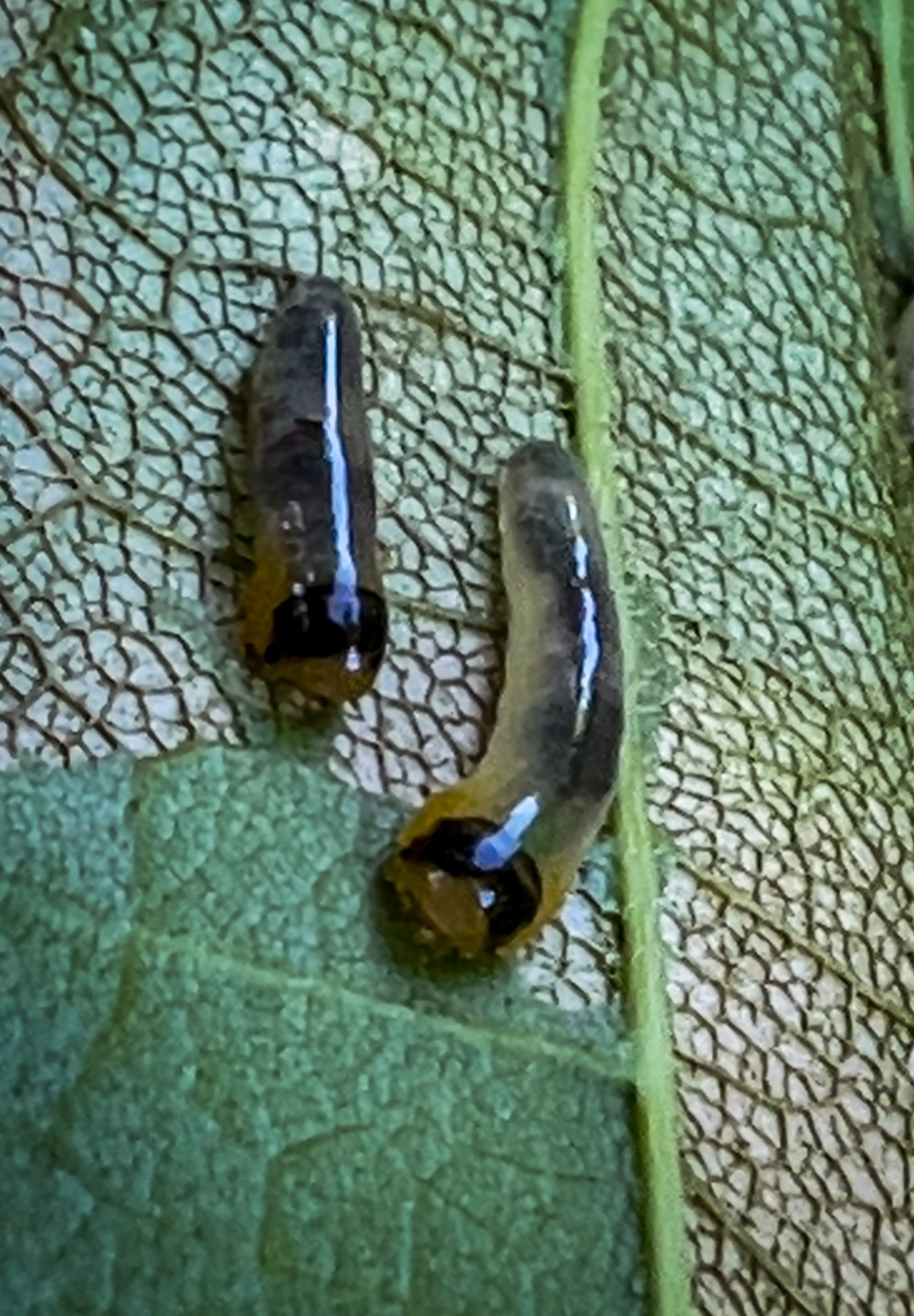
It's the larva of a sawfly.
The larva has been eating only the soft tissue of the underside of the leaf between the veins, leaving the upper layer and veins intact.
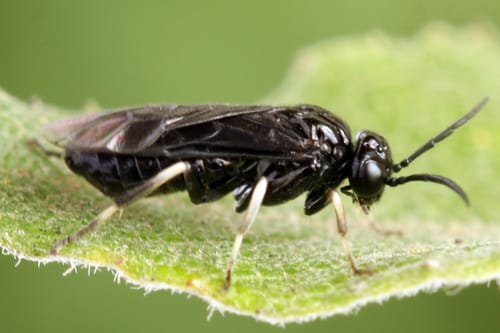
The adults sure look like flies, but they are actually wasps. They belong to Tenthredinidae — the true sawflies — a family that split from the wasp lineage before stinging became a thing. Females slice into leaf veins with a serrated structure (the saw in "sawfly") on their tail and lay eggs directly into the leaf.
After the emerge the larva feed on the leaf, drop to the ground, pupate in the leaf litter or the top few inches of soil. There's two generations each year (spring and midsummer). The spring larvae emerge from the eggs in two or three weeks, the midsummer larva overwinter in the soil.
Sawflies as a group were feeding on plants before the dinosaurs. The sawflies emerged 250 million years ago. The body plan and feeding strategy we see today date to when deciduous forests first appeared, roughly 100 million years ago.
Sawflies are one of a small handful of organisms you'll see at the park whose basic form has remained essentially unchanged for tens or hundreds of millions of years.