Ceratina - The Tiny Carpenter Bee

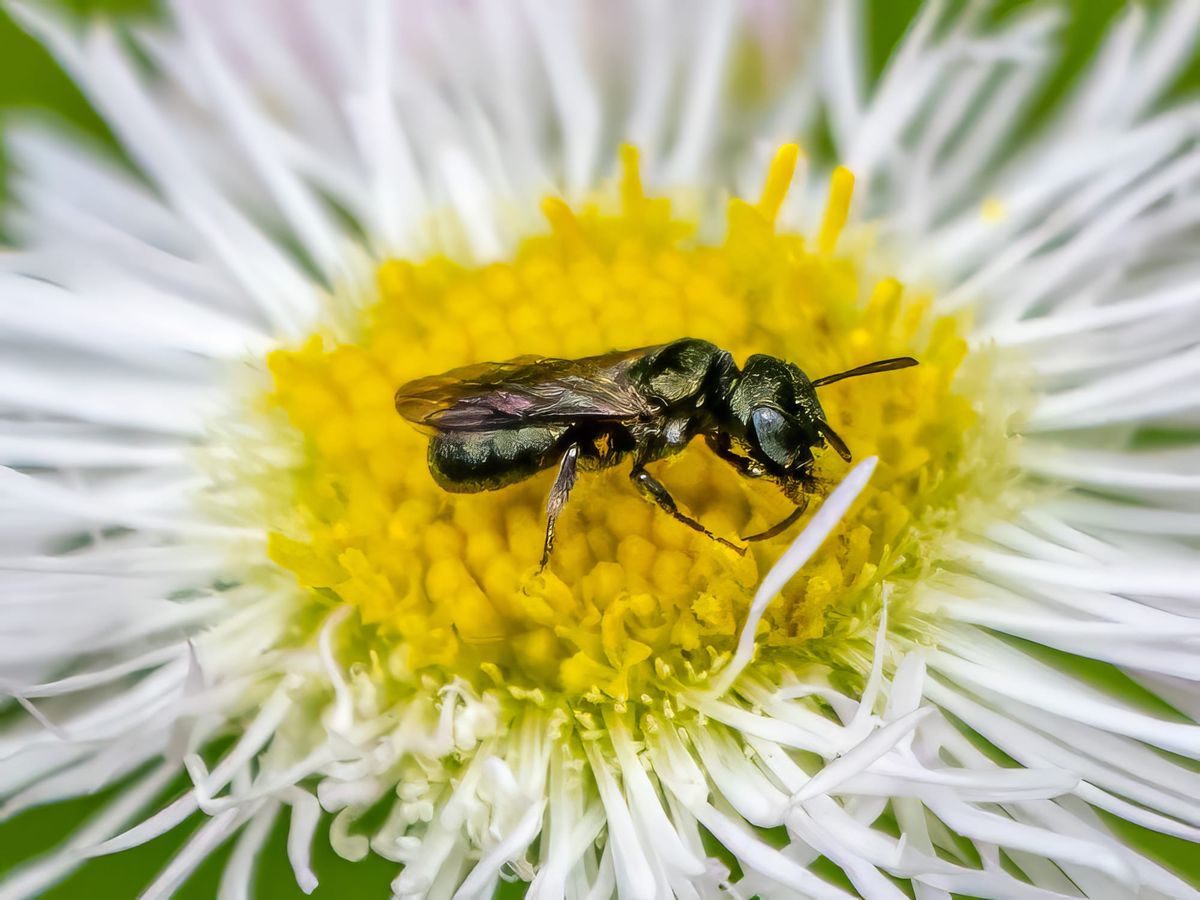
Philadelphia Fleabane has been blooming all over the park in the past week. It's hard to miss, it looks like a small daisy on overdrive. What appears to be a single flower is actually a central disc of hundreds of tiny yellow blooms surrounded by more than 150 threadlike white petals that are not really petals at all, each is a separate flower with a single petal.
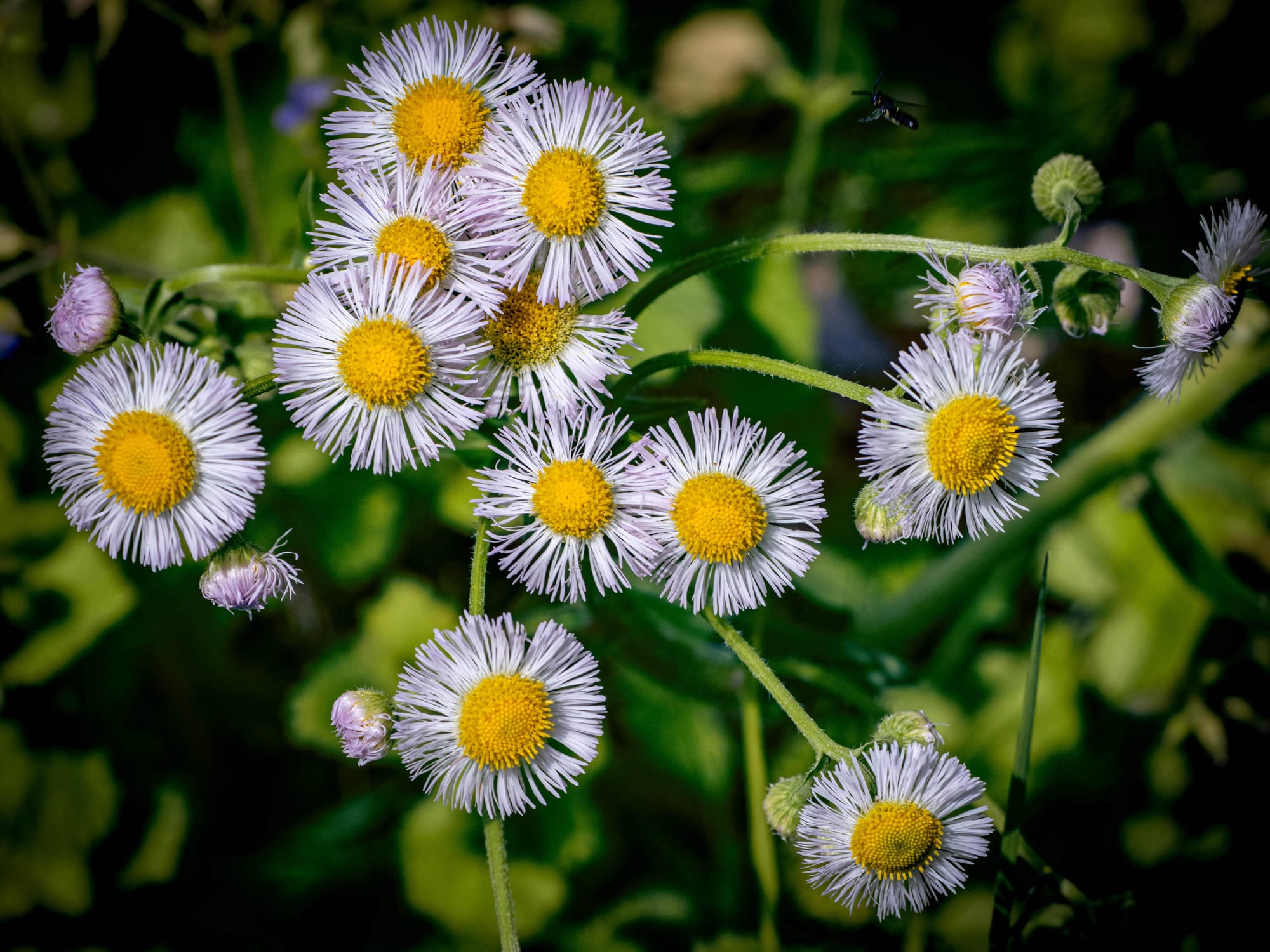
Each one of the tiny yellow flowers has five stamens holding pollen making the plant an attractive resource for small carpenter bees, cuckoo bees, mason bees, and a number of flies and small butterflies.
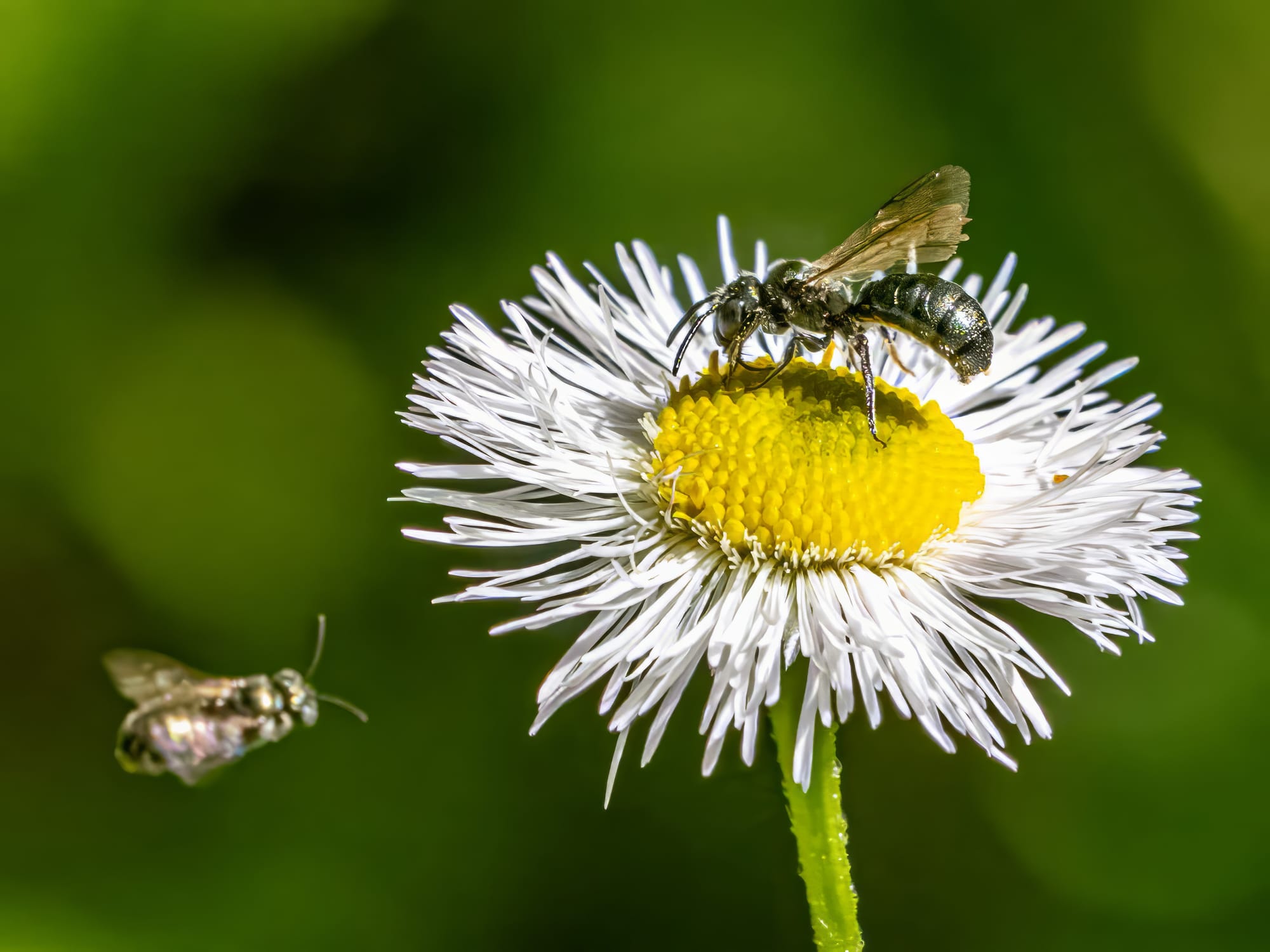
Ceratina (carpenter bees that are No more than 3/8 of an inch long) are one of the most frequent fleabane visitors. Ceratina are generally nearly hairless and metallic green. They are easy to spot with the naked eye - look for them on fleabane and note their metallic sheen.
There are around 22 species of Ceratina in eastern North America and identifying a particular species usually requires capturing and killing the bee, so I am satisfied to stop at genus.
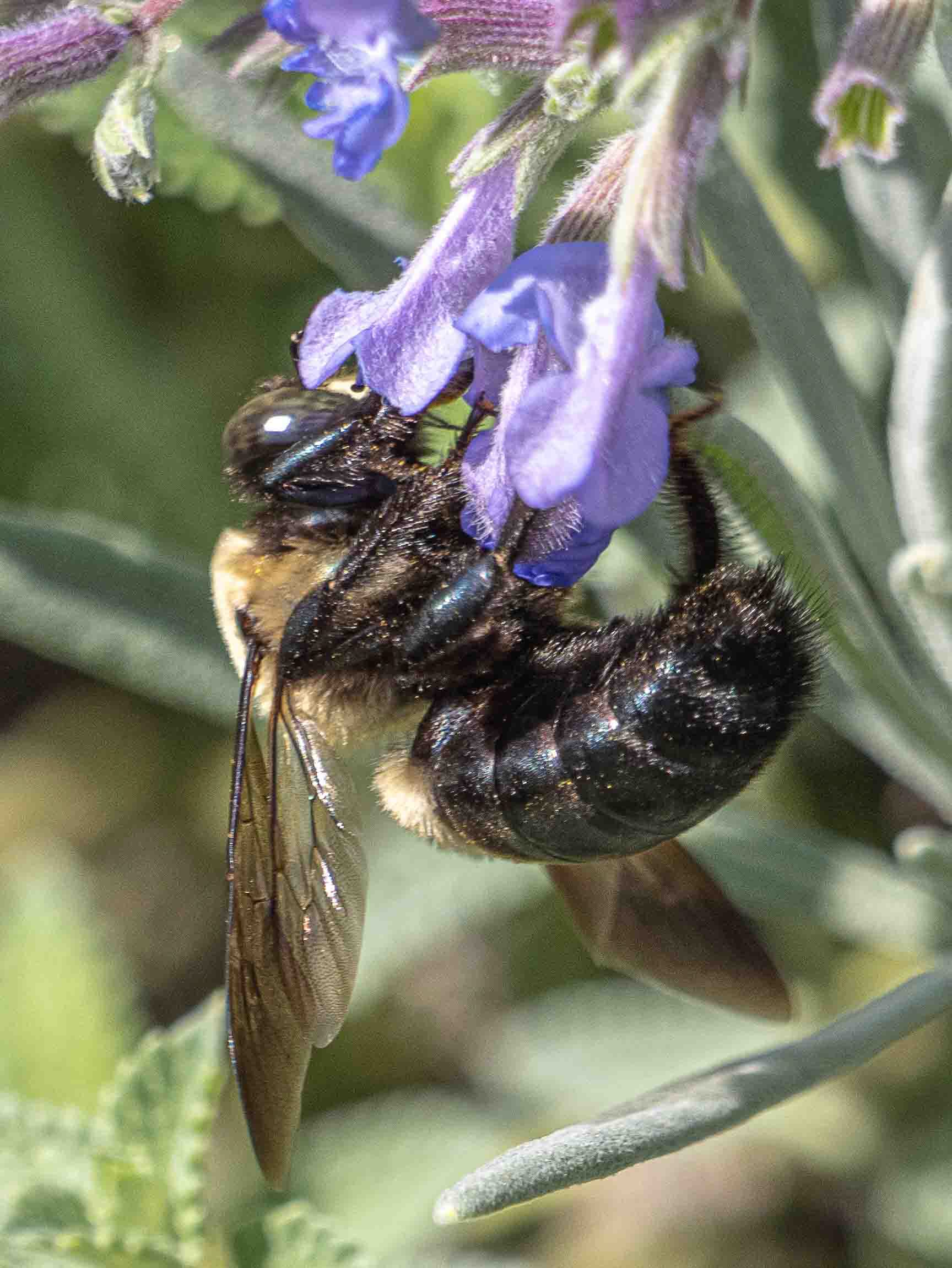
The much larger and more familiar Eastern Carpenter Bee bores into wood while the Ceratina nests in the broken stems of Raspberry canes, elderberry, goldenrod, Joe-Pye weed and similar plants with a soft pith. The female Ceratina tunnels into the stem to create a nest. They deposit a ball of pollen and nectar, lay an egg, then seal the cell with chewed pith. Nests may have up to a dozen cells.
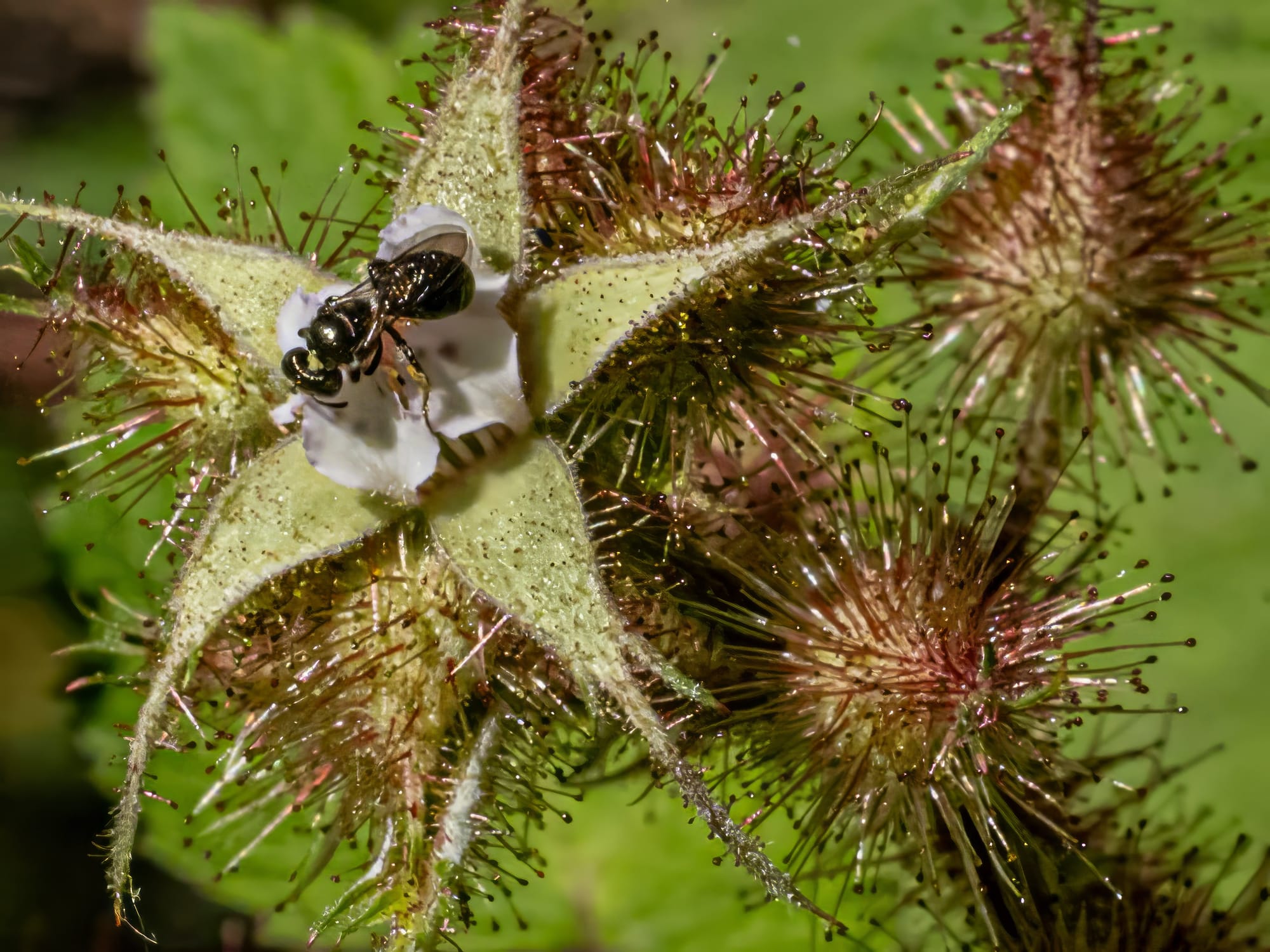
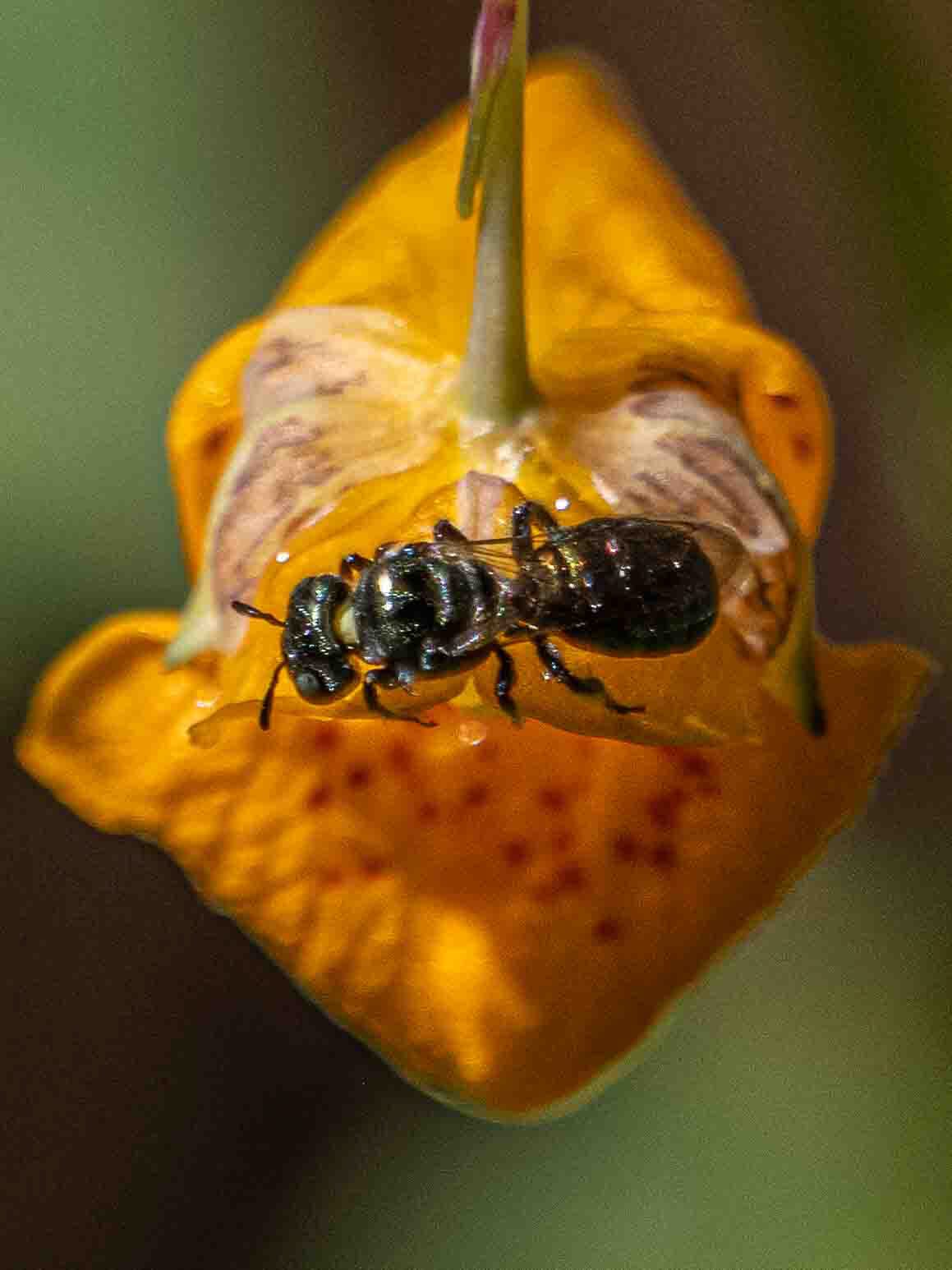
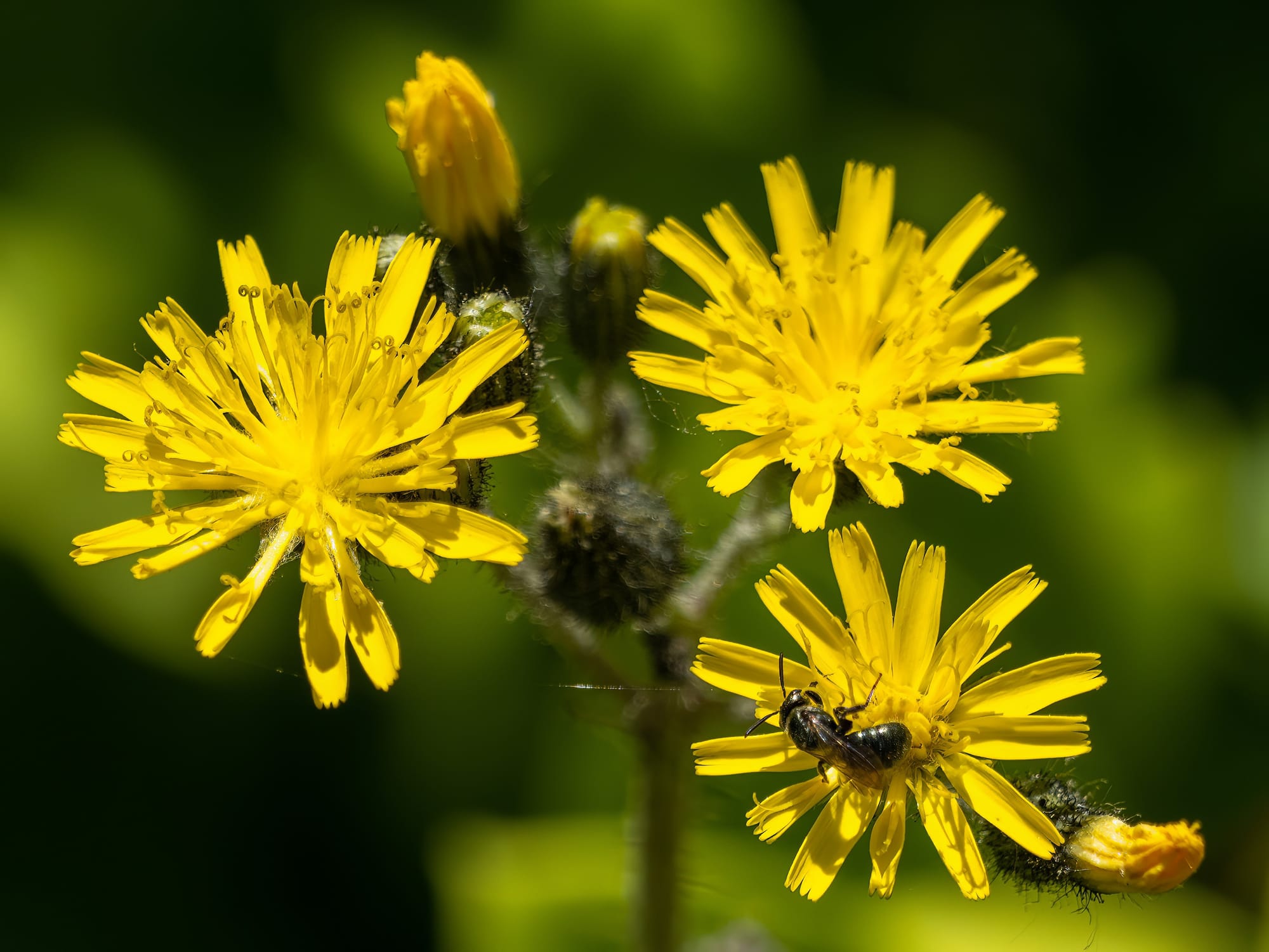
Ceratina also visit other flowers, Wineberry, Touch-Me-Not (or Jewelweed), and Meadow Hawkweed
Unlike most solitary bees that build and provision nests then move on the Ceratina mother remains with the developing brood through the summer — continuing to guard the nest over the winter. They have an unusually long lifespan of 12 to 16 months. Most solitary bees live only a few weeks as adults.
We tend to think all bees are like the European Honeybee (Apis mellifera) — thousands of workers, a queen, a hive, but they are the exception. Most of the world's 20,000 bee species are, like Ceratina, solitary - one female, one nest, no advanced social structure.
Mothers of one the common local species, Spurred Ceratina (Ceratina calcarata), stays with the brood from egg to adulthood. Sometimes she produces a single daughter who skips dispersal and stays to help feed her siblings instead — then dies before winter without leaving the nest and reproducing. This simple social arrangement could be how honeybee colonies got started.