Vultures at Nixon Park

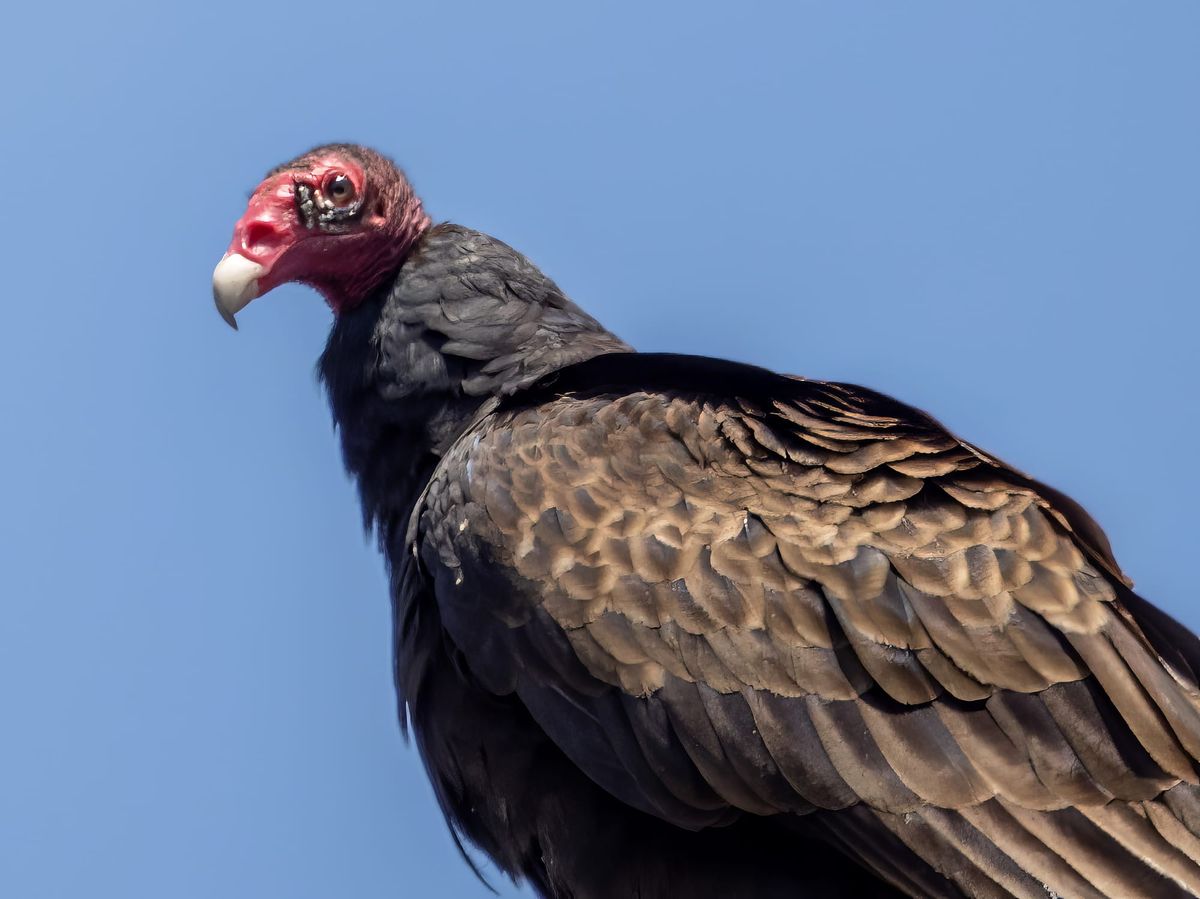
Nearly every time I visit the park there are vultures soaring overhead. Both Turkey Vultures (Cathartes aura) and Black Vultures (Coragyps atratus) are in the park year-round.
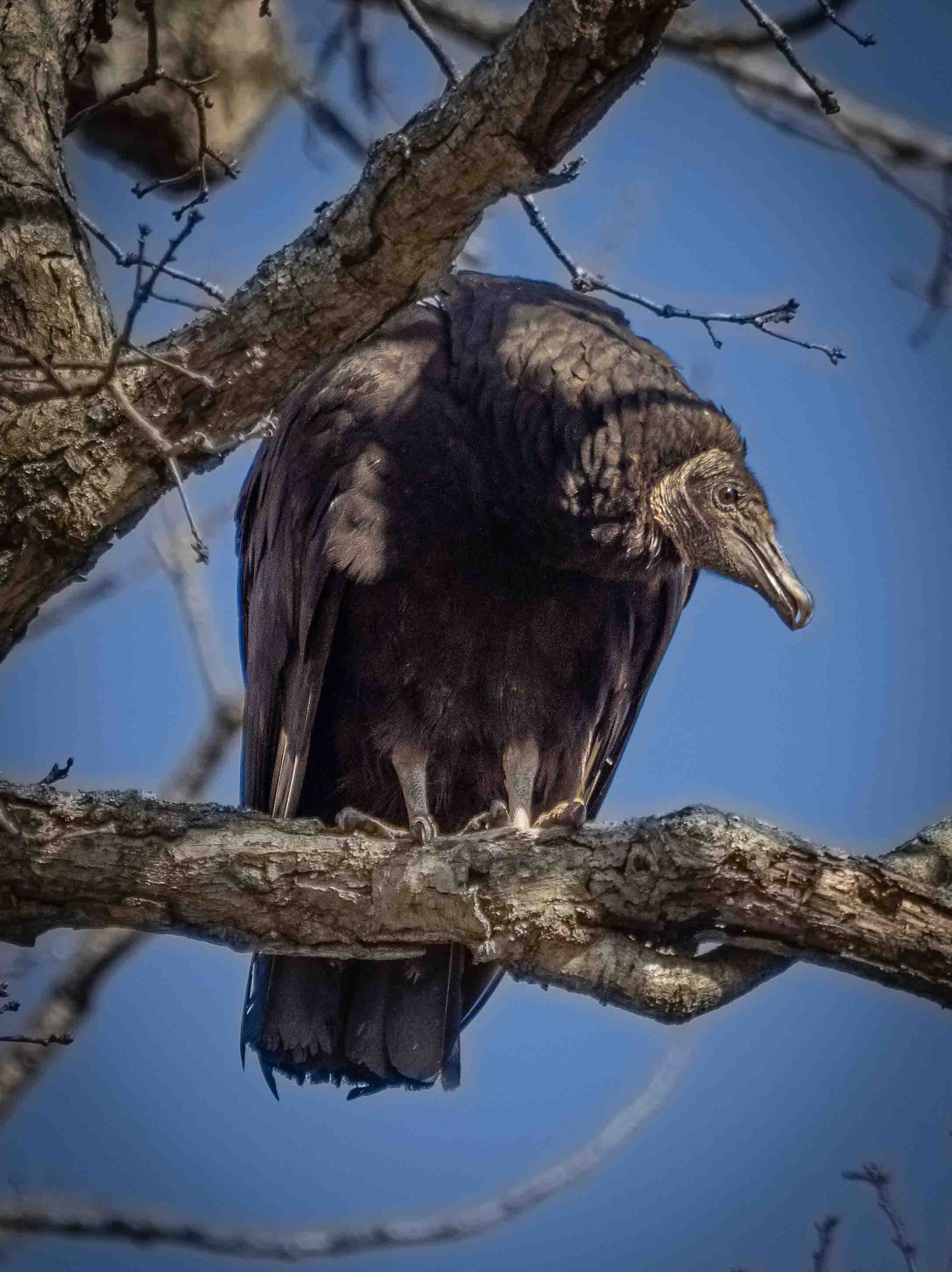
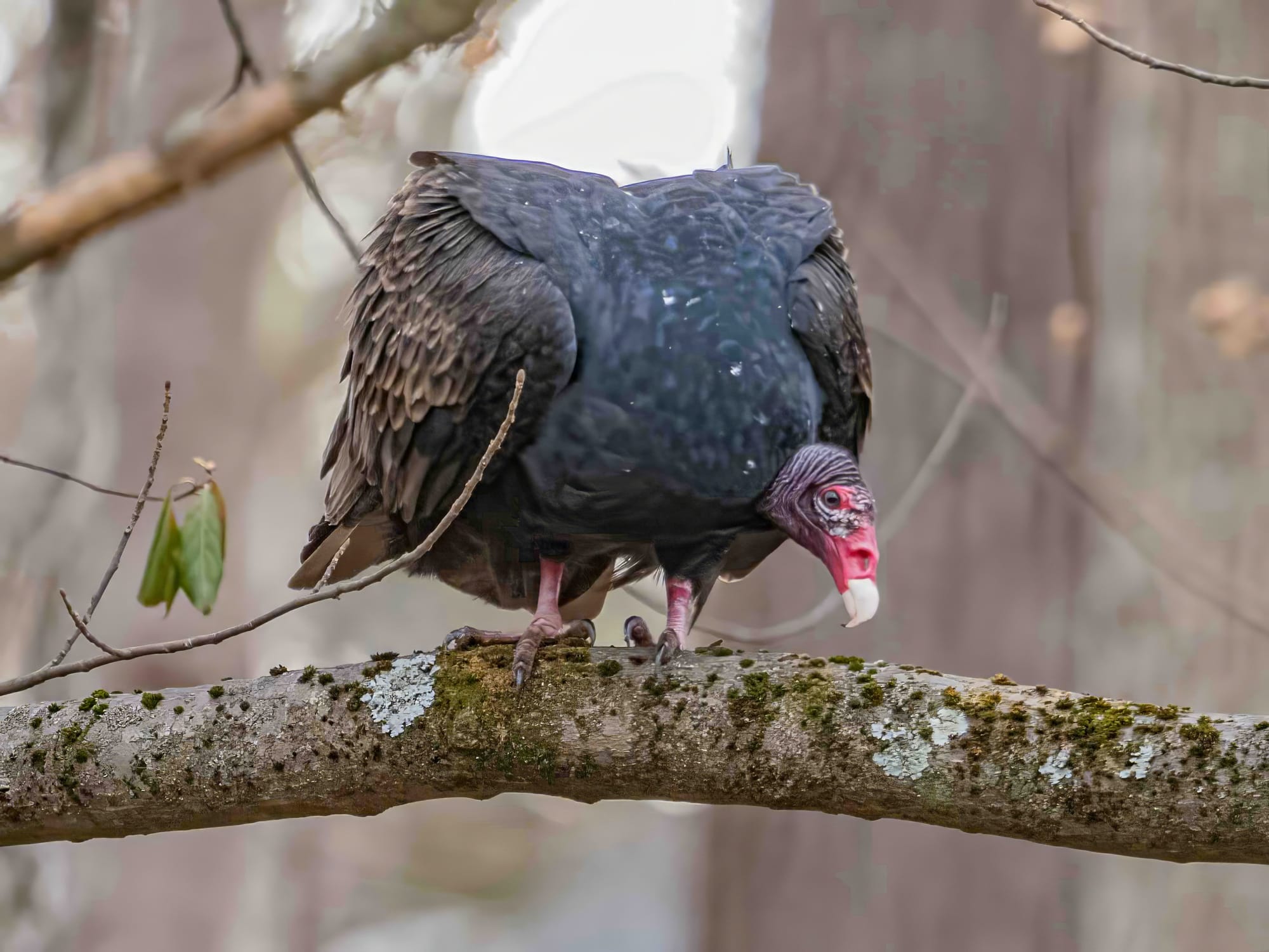
Black Vulture (Coragyps atratus), Turkey Vulture (Cathartes aura)
If you see a large bird in the air above the park it's almost certainly a vulture. Vultures spend a lot of their day aloft looking for food. If they are very far off I look for how they hold their wings. Turkey Vultures rock from side to side and hold their wings in a steep V. Black Vultures hold their wings flat, flap in quick bursts. Both Vultures heads look proportionately smaller. Hawk wings sit flatter, their head shows more clearly, and their tail is often banded.
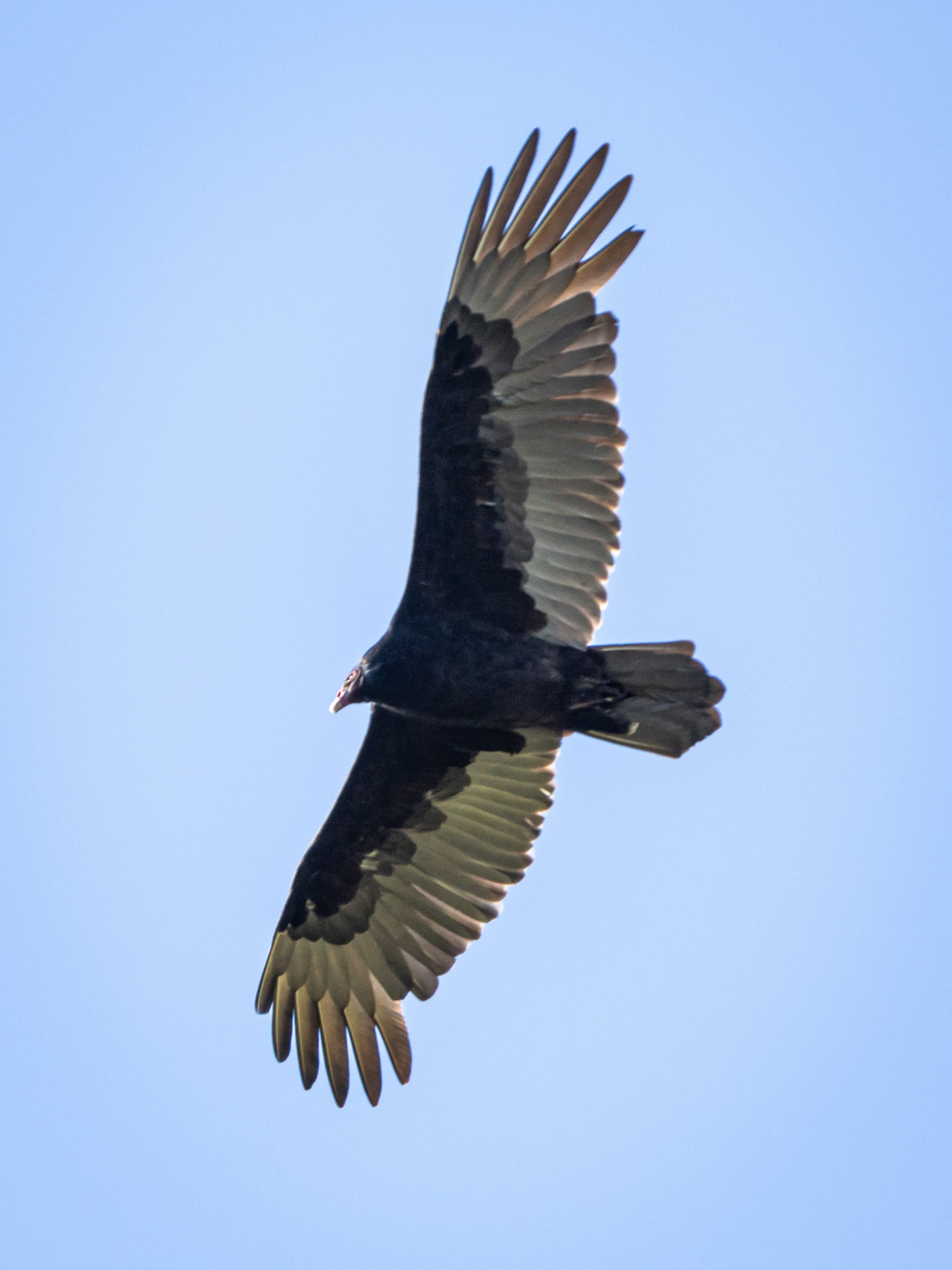
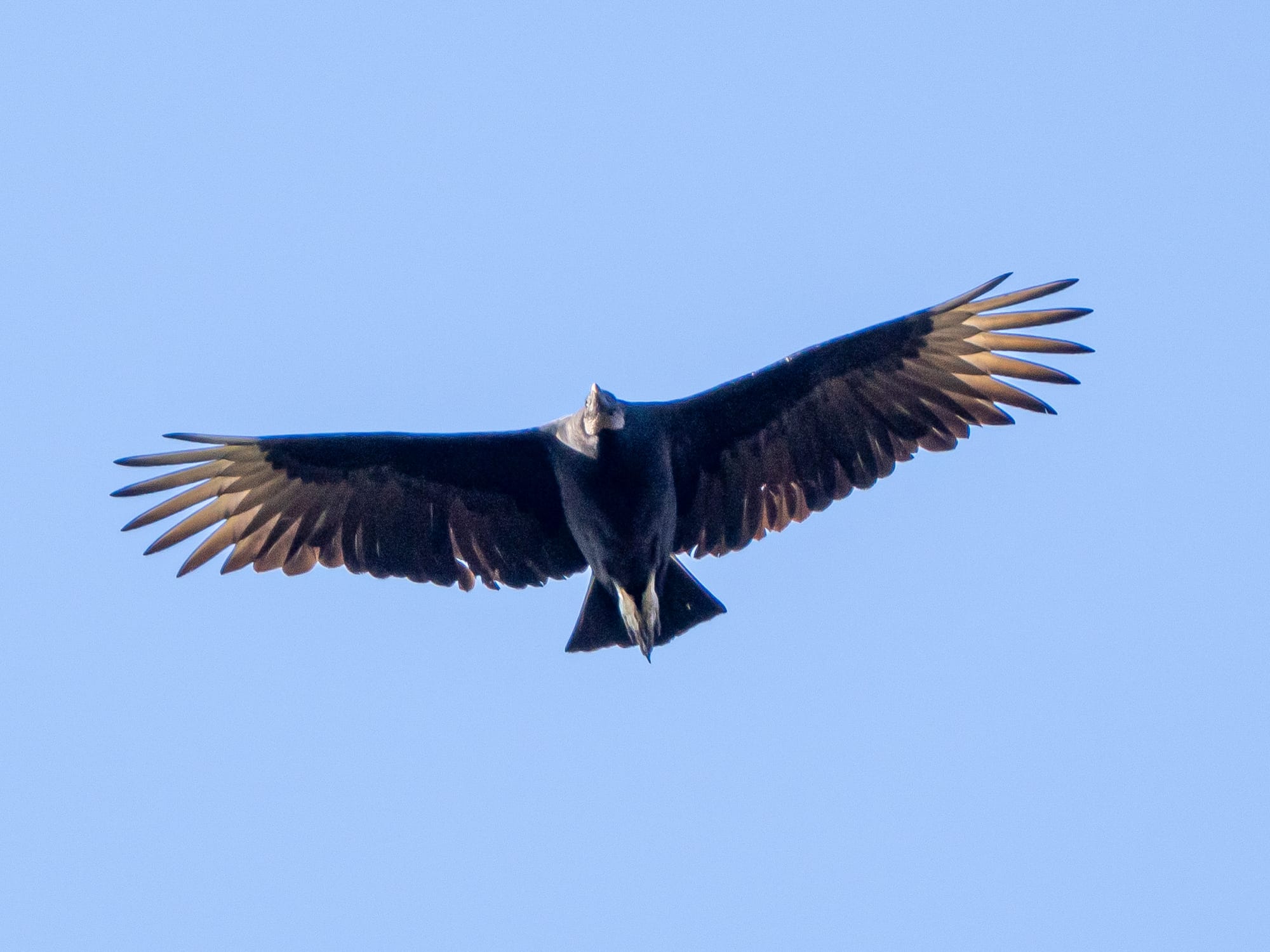
Turkey Vultures wings are black in front and white in back. Black Vultures have white areas on the tips of their wings.
The Turkey Vulture is the larger of the two species, although it's hard to compare sizes when they are overhead. You can best tell them apart by their wing markings when they are flying. Black Vulture's have white areas on the tips of their wings, Turkey Vultures wings are black in front and white in back. You can sometimes make out the red head and white beak of the Turkey Vulture or the dark gray head and beak of the Black Vulture.
Both have no head feathers. Bare heads may keep vultures clean while feeding inside carcasses. A 2008 study of Griffon Vultures found bare skin also controls body heat. Tucking the head in saves heat in cold weather. Stretching the neck out releases heat when hot.
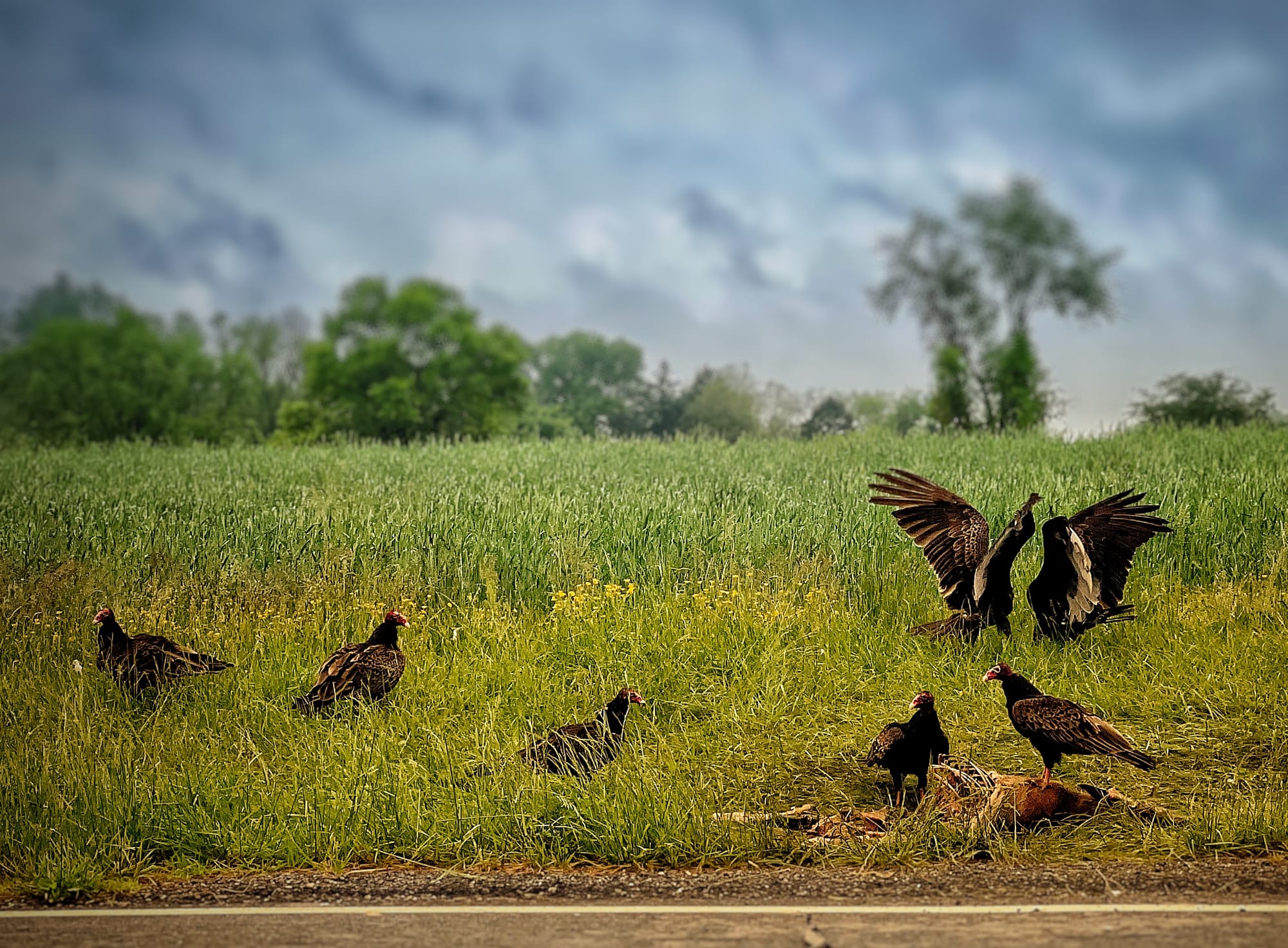
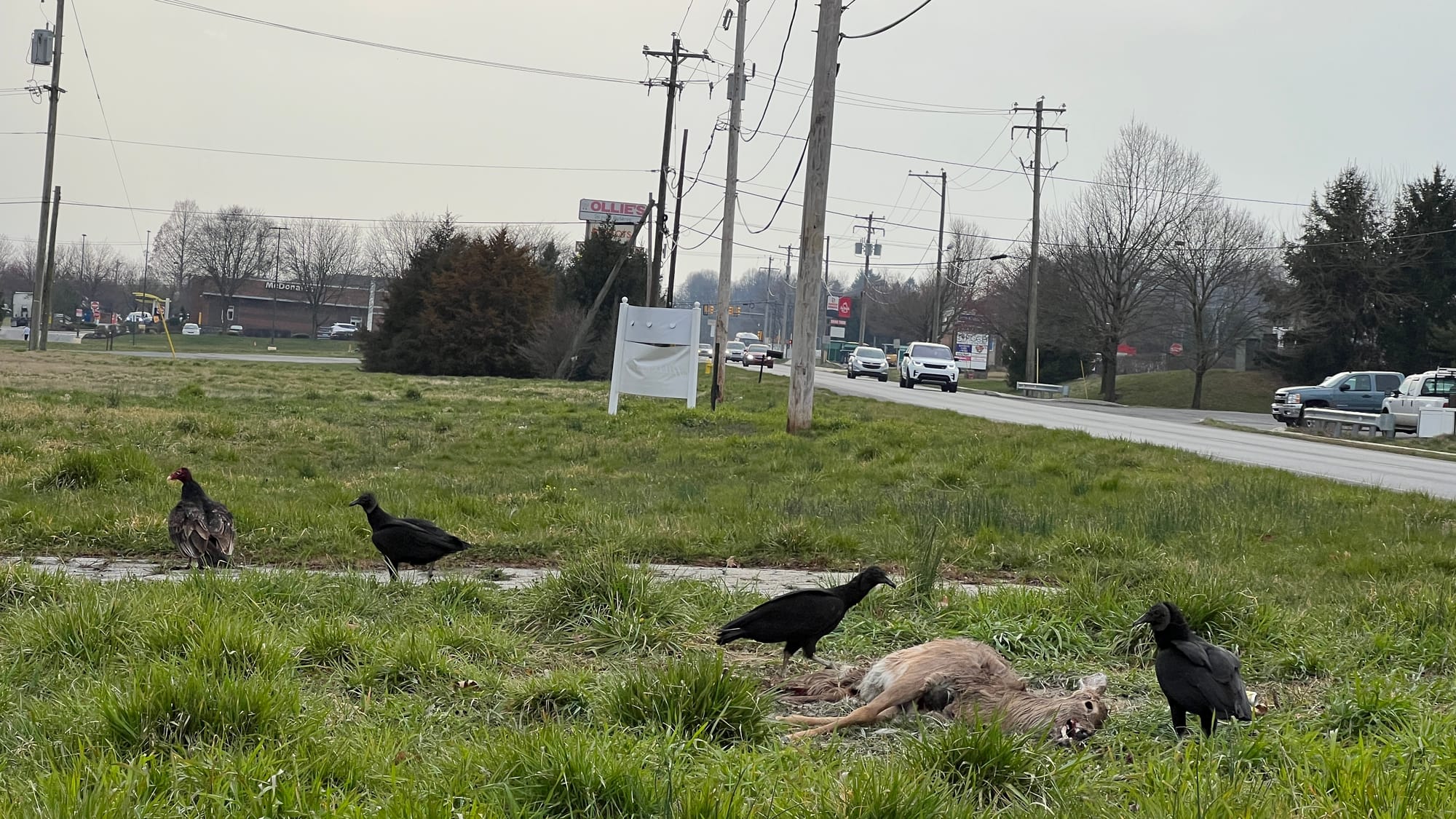
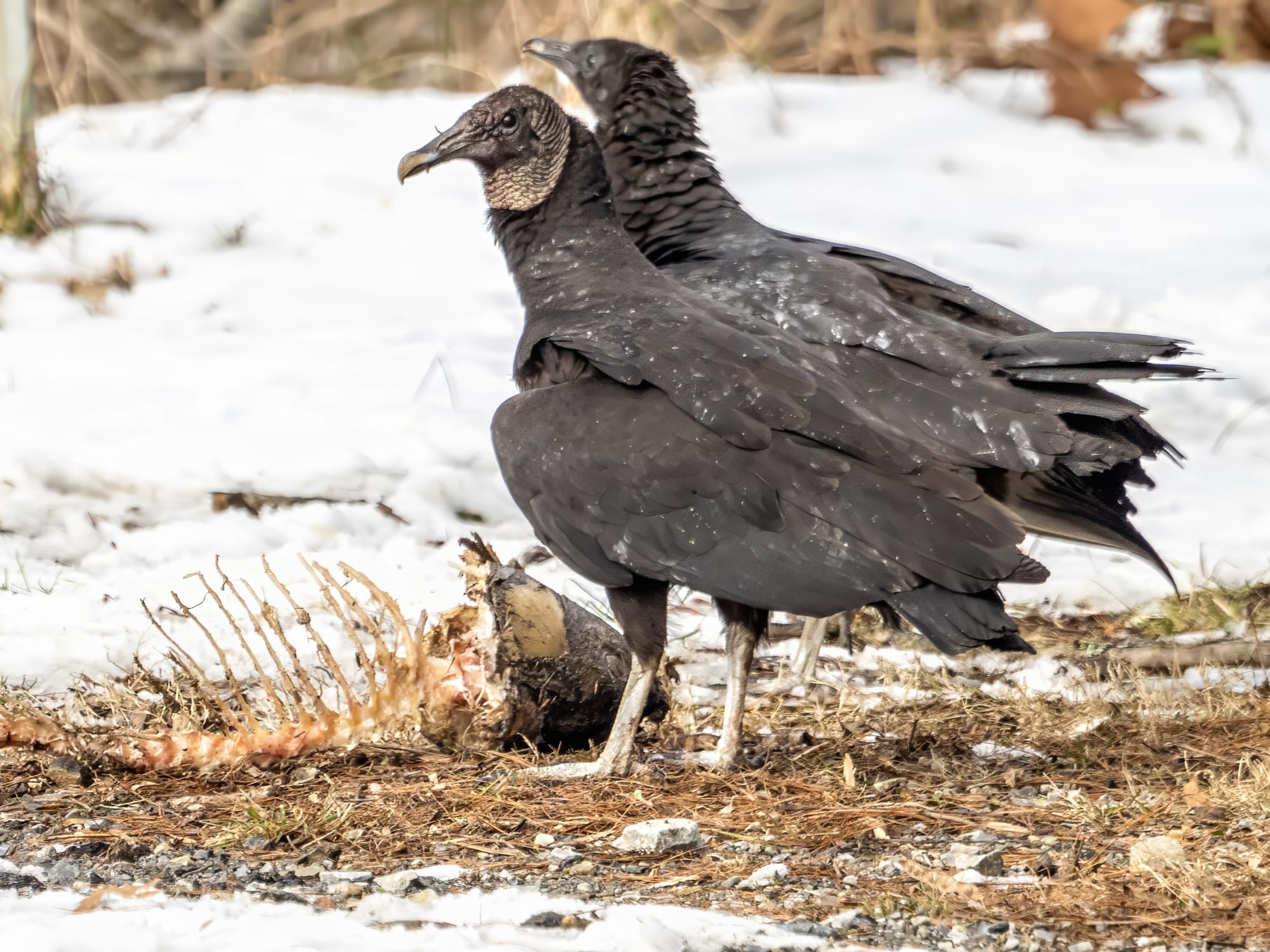
Turkey Vultures and Black Vultures feeding on road-killed deer. Two Black vultures feeding on a fish.
Both eat carrion; (animals already dead). Black Vultures may also kill and eat young birds, or the newborn young of larger mammals.
Turkey Vultures, unlike most birds including Black Vultures, have an extraordinary sense of smell. They can detect odors at a few parts per trillion enabling them to locate the carrion they feed on.
Black Vultures rely on sight alone to locate food. They will follow Turkey Vultures and will compete with them at feeding sites.
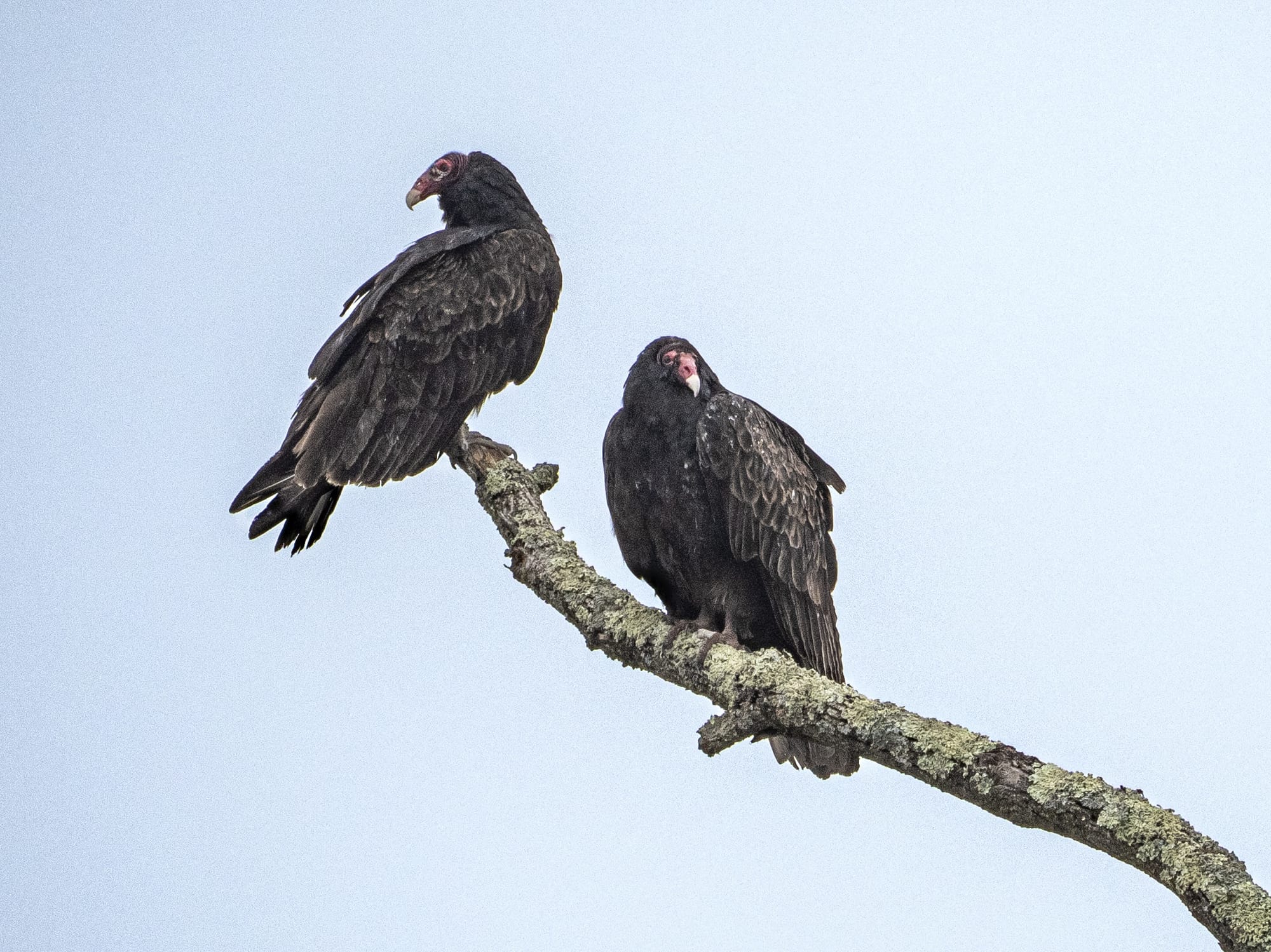
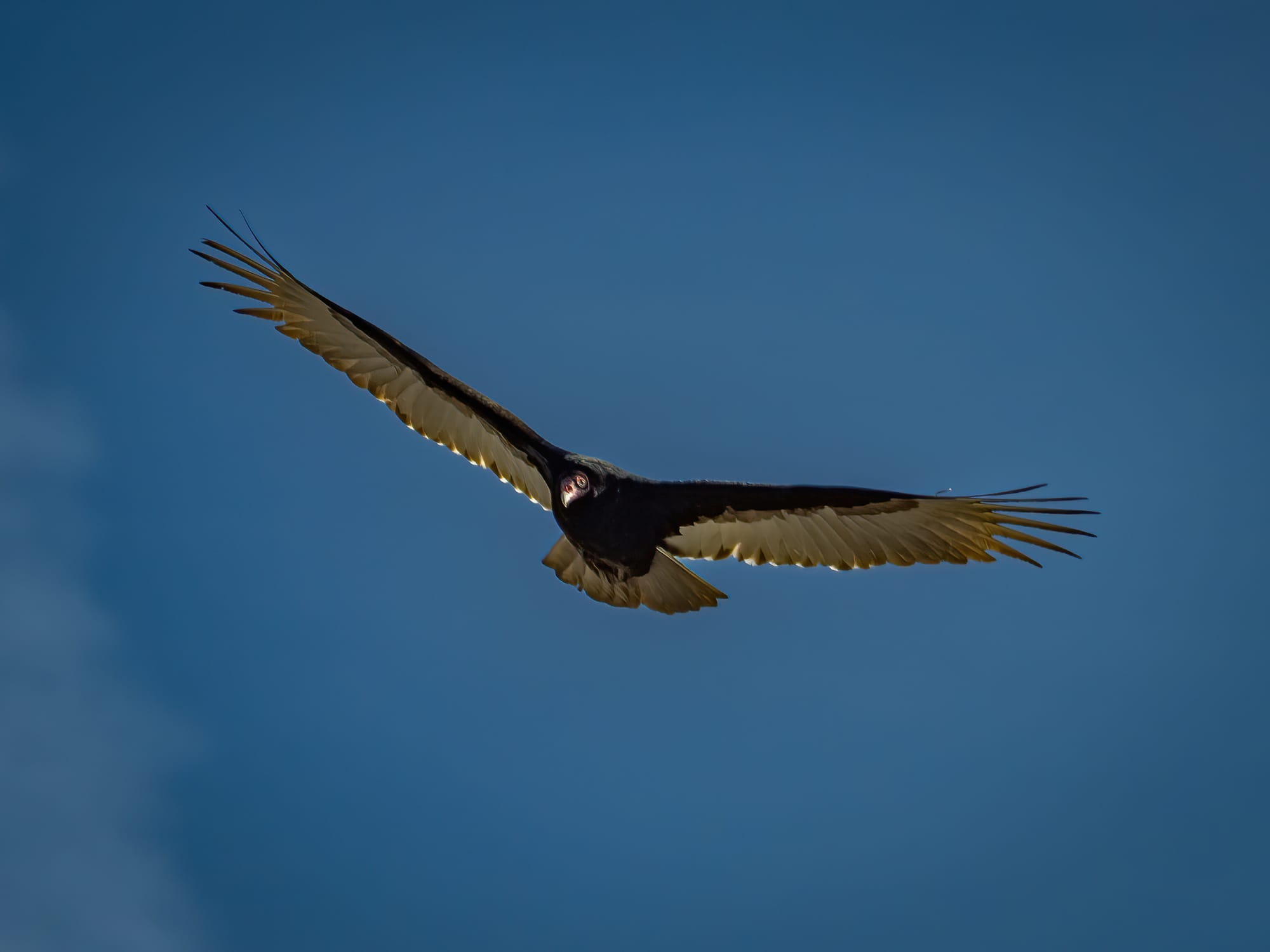
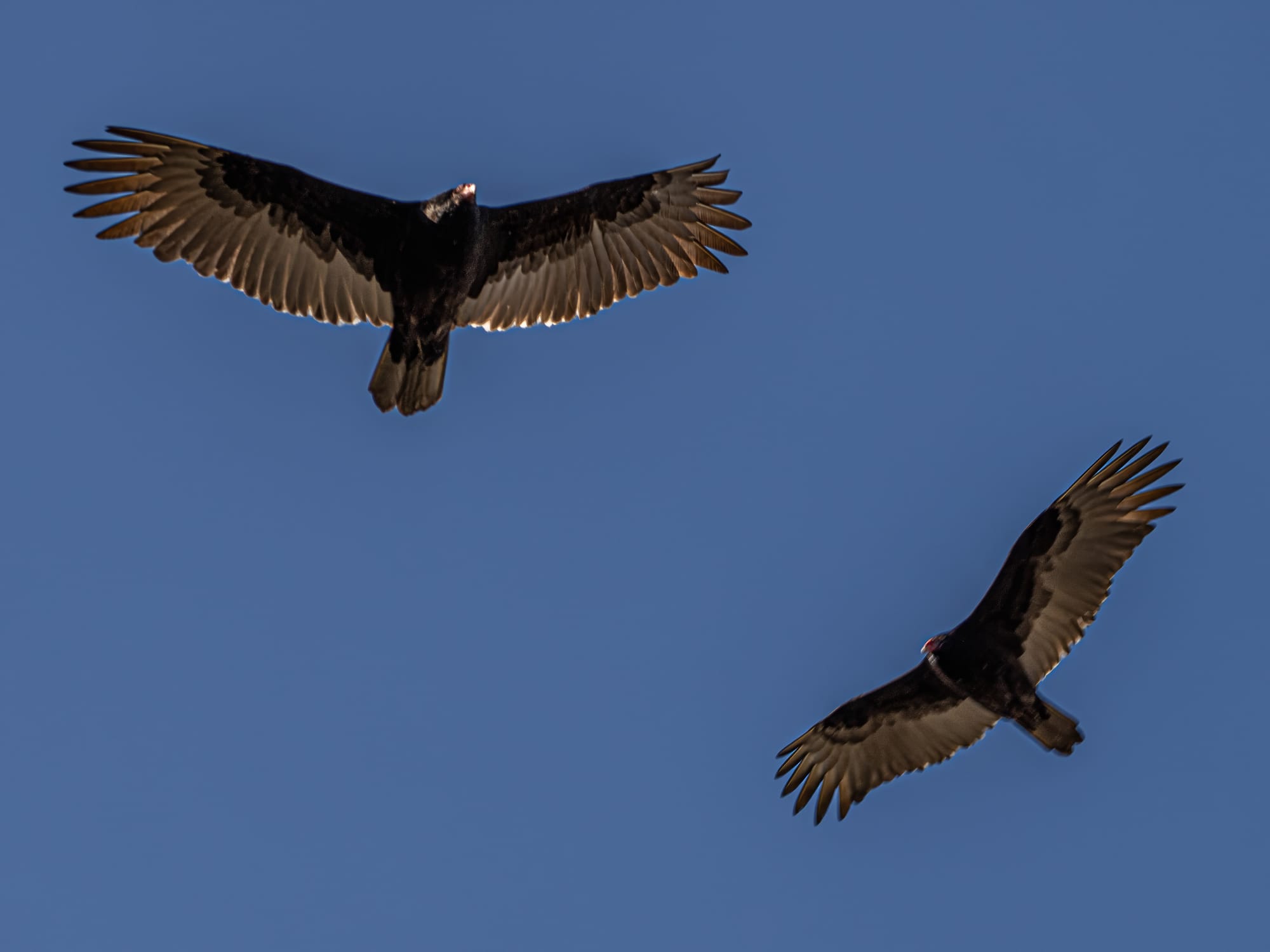
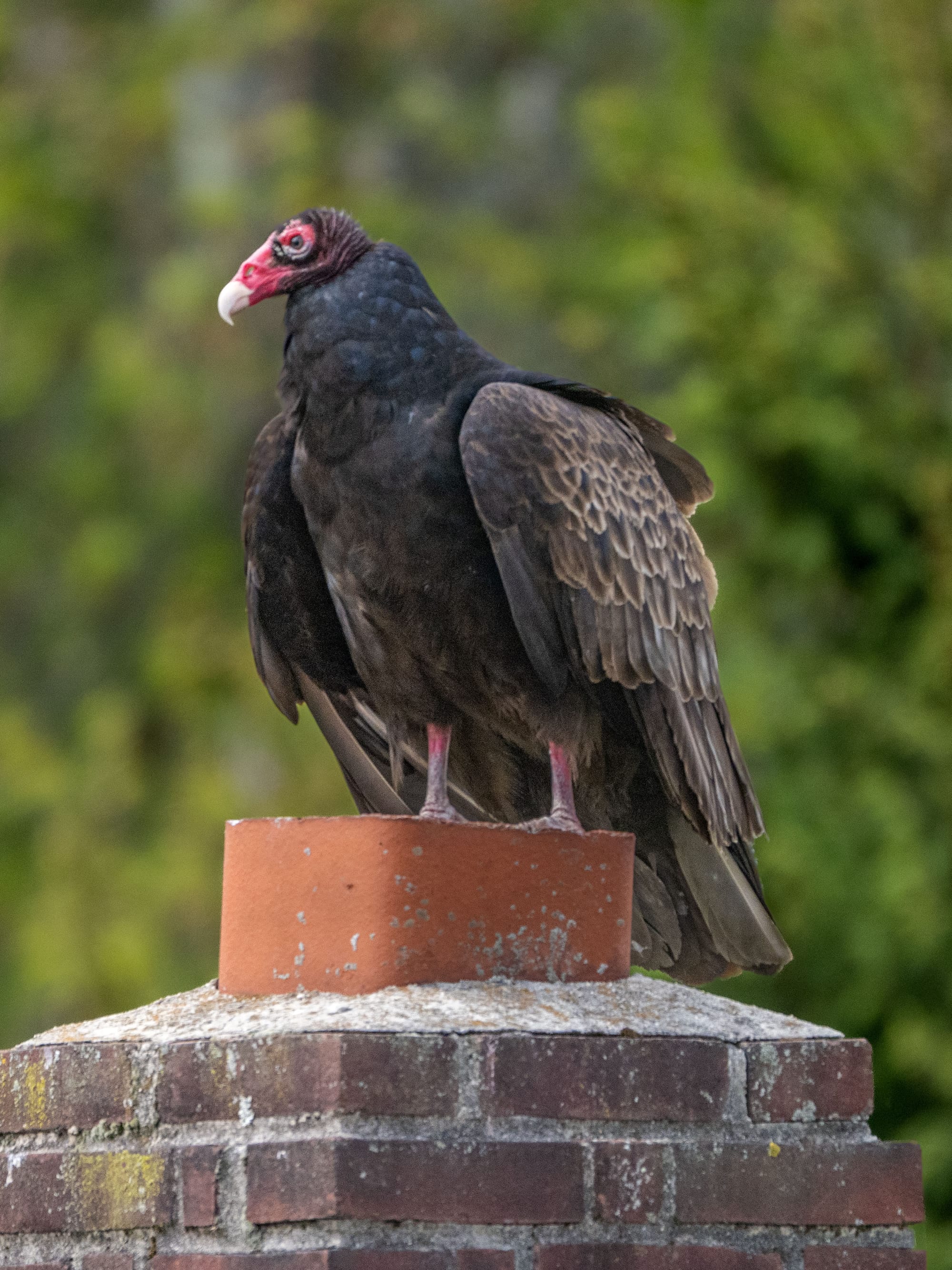
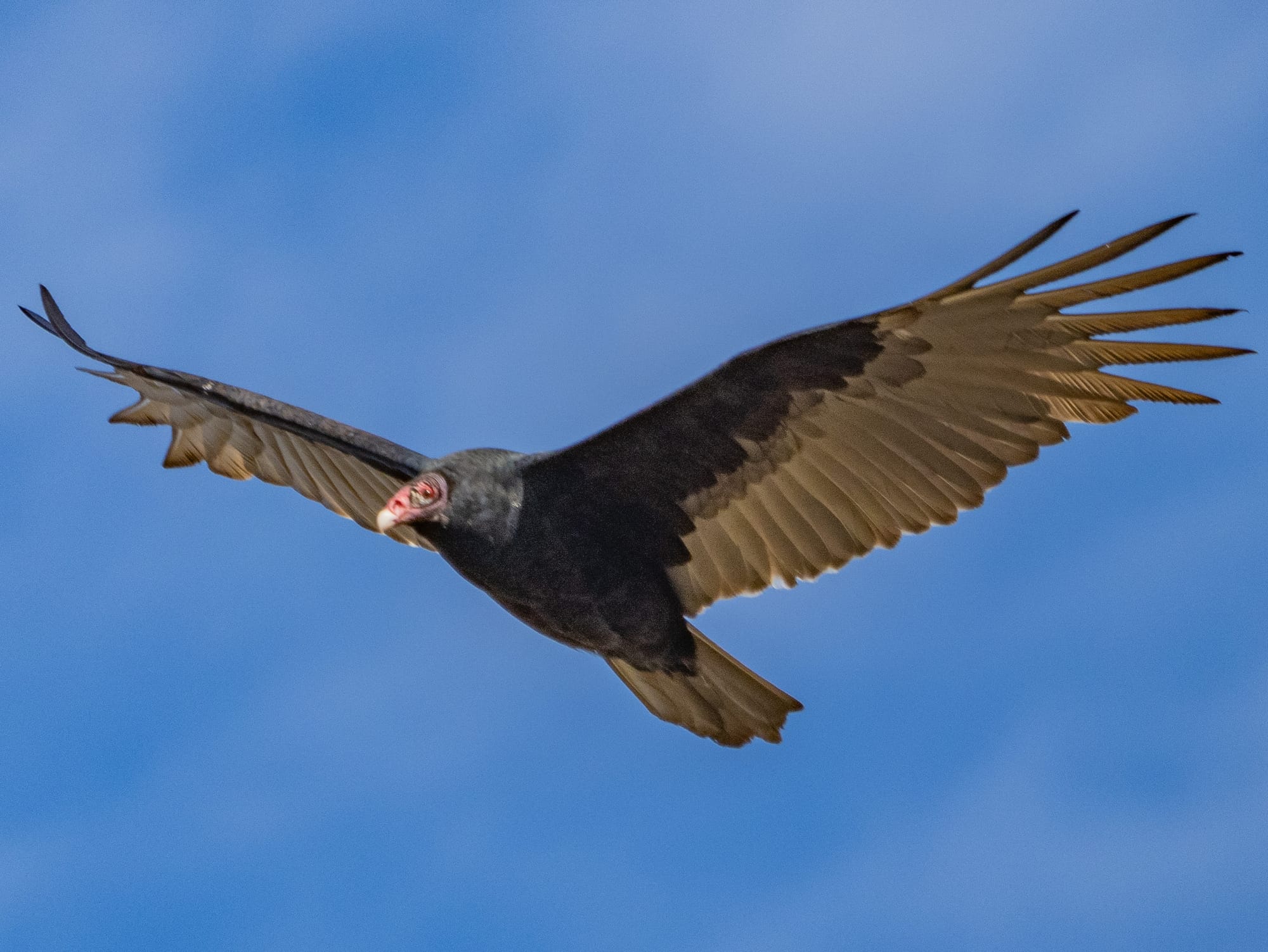
Turkey Vultures
Both species roost in groups, often by the hundreds. Black Vultures gather by the hundreds at communal roosts outside the breeding season.
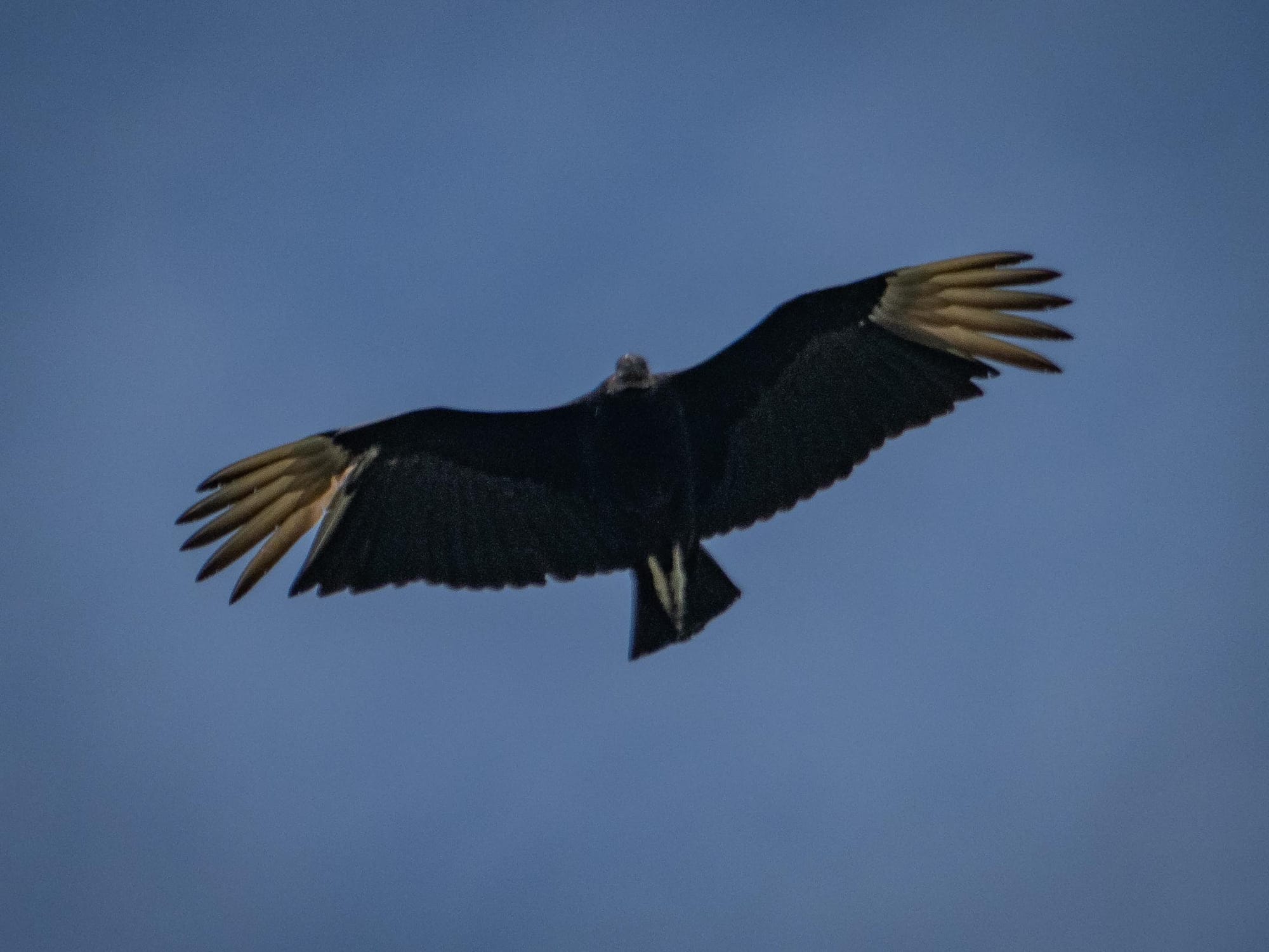
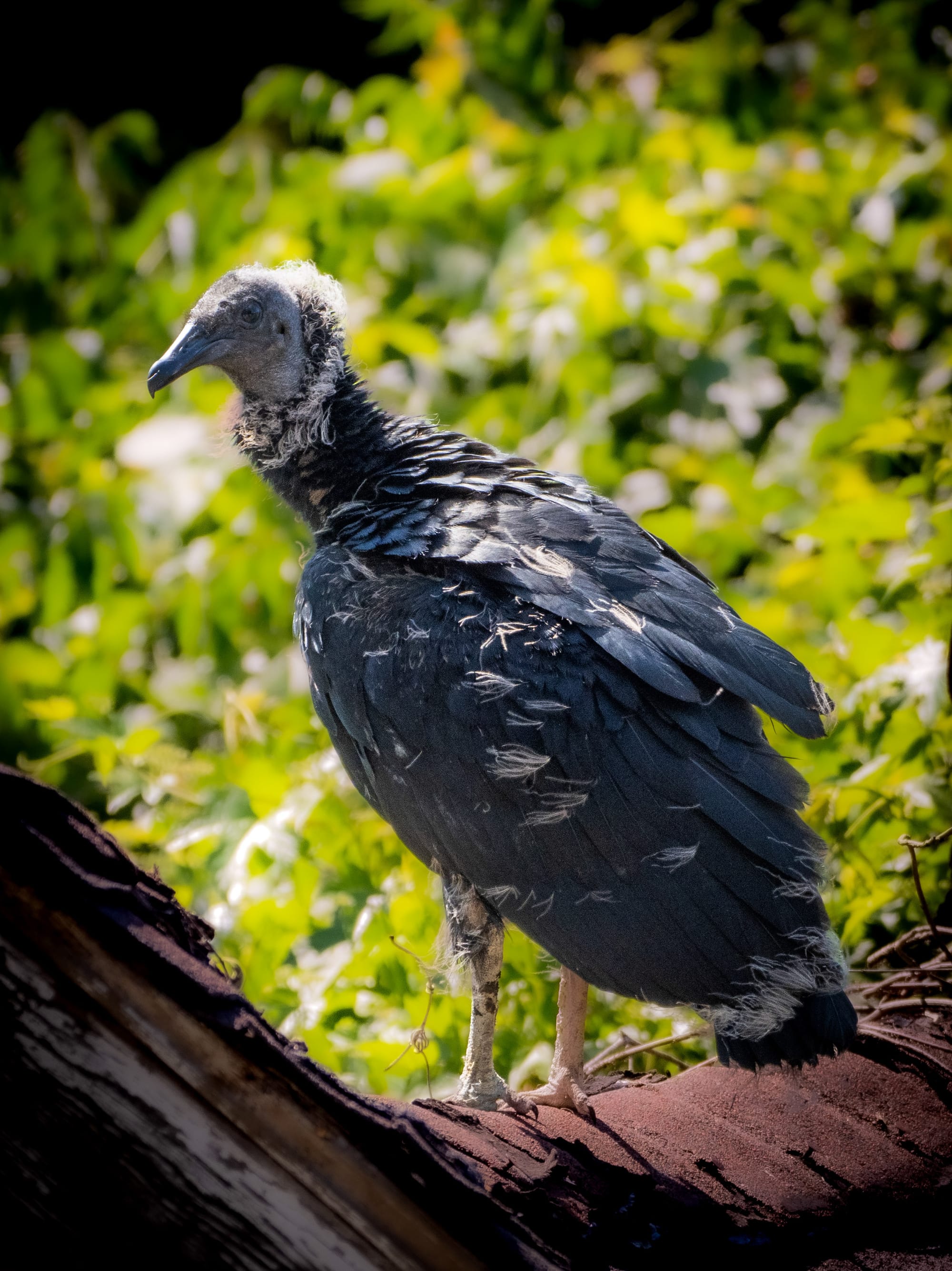
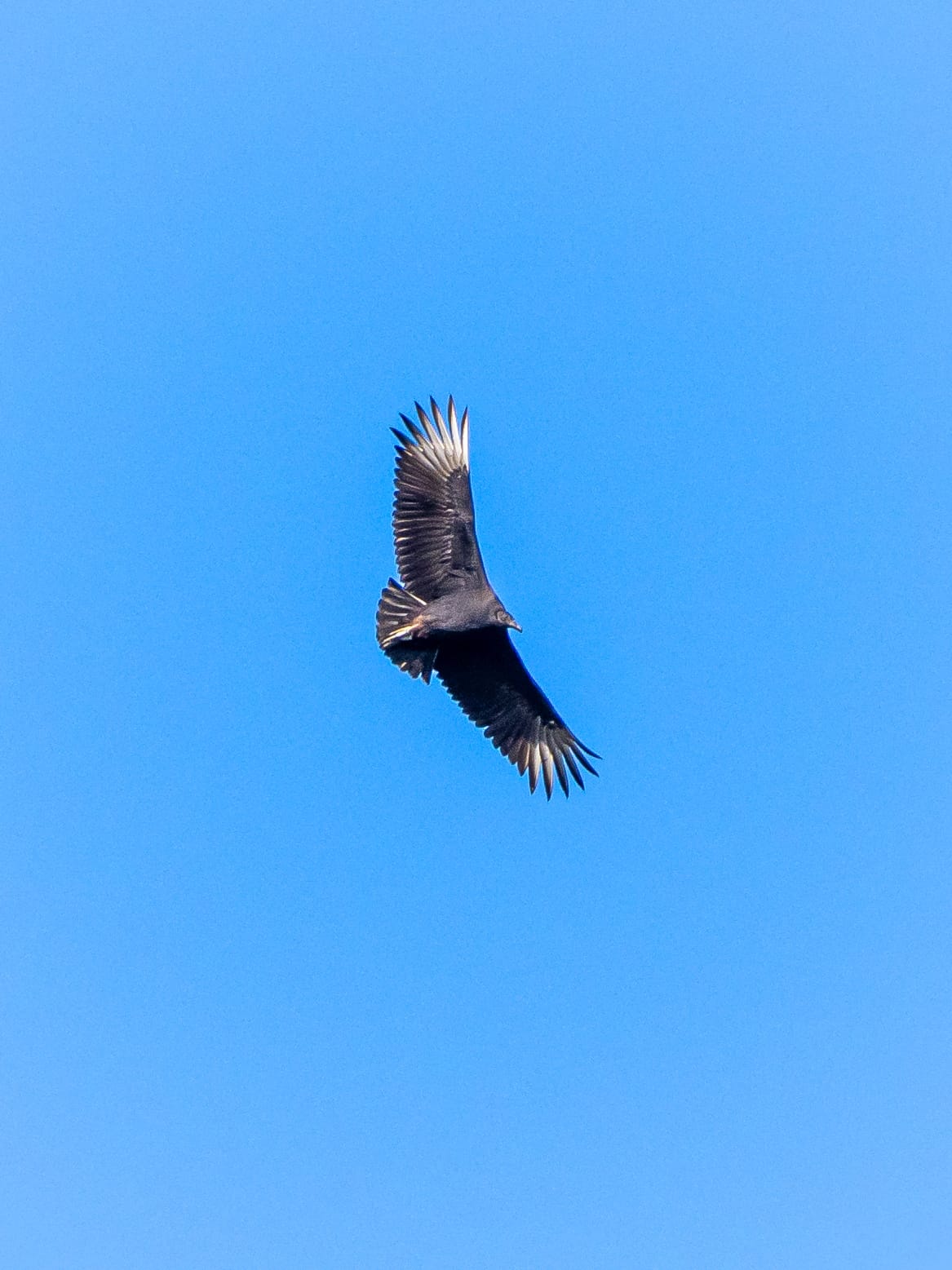
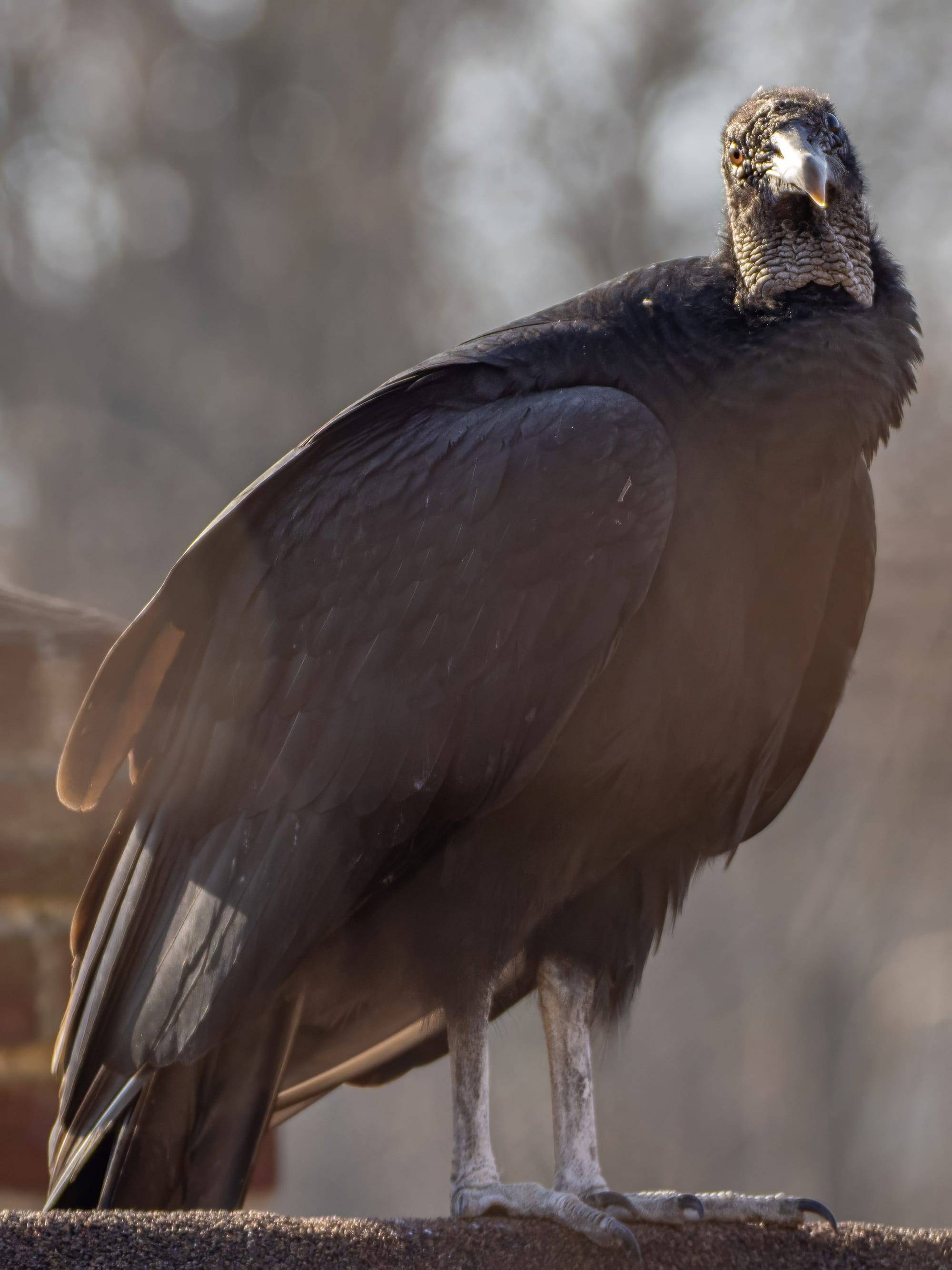
Black Vultures (the second is a Juvenile that has just made its way out of the nesting area).
Both species are mostly silent, making only hisses and grunts.
Both species find a dark, sheltered spot like a hollow log, tree cavity, thicket, or an abandoned or unoccupied building to raise their young. Both parents share in incubating the eggs and feeding their young.
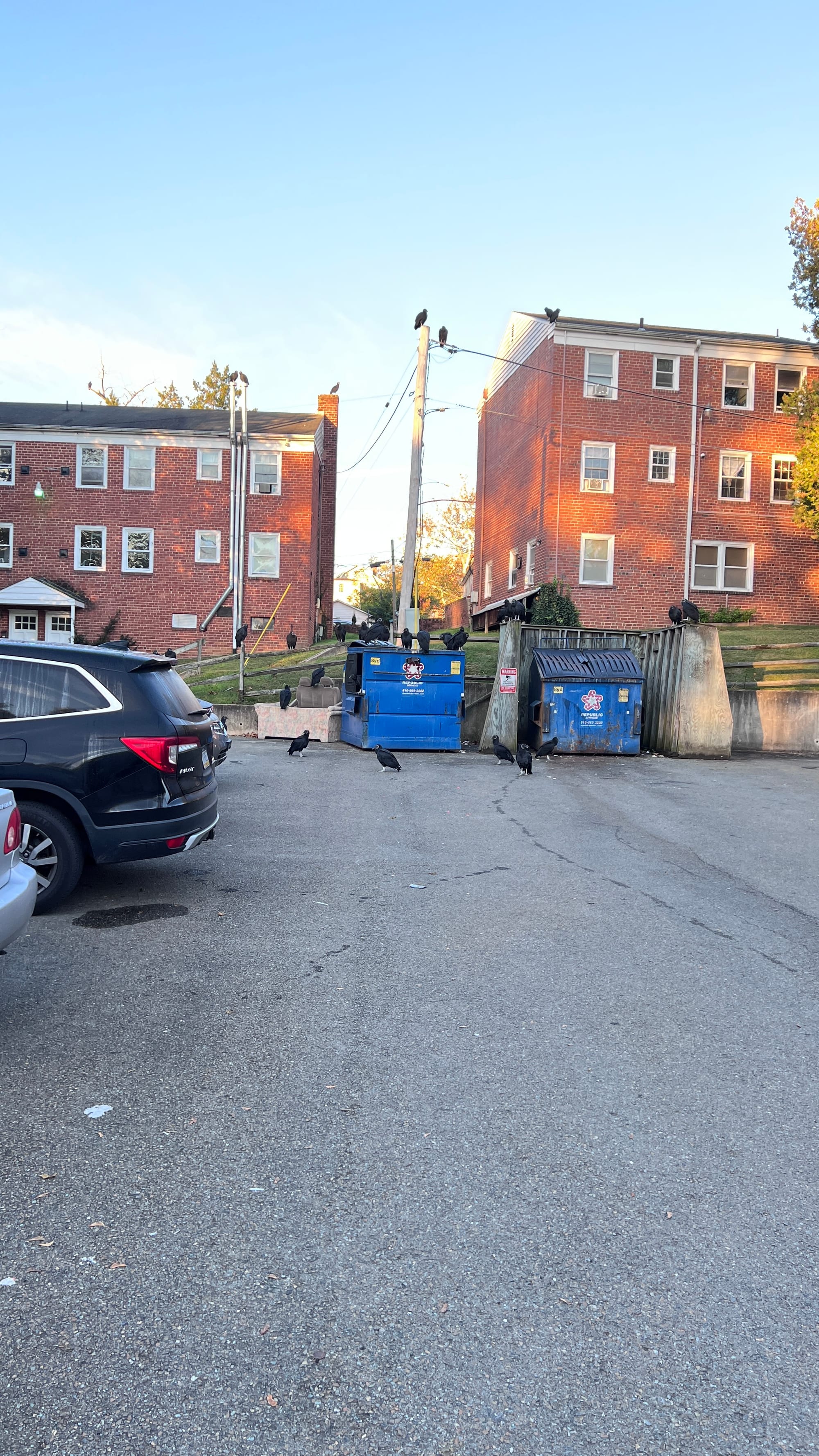
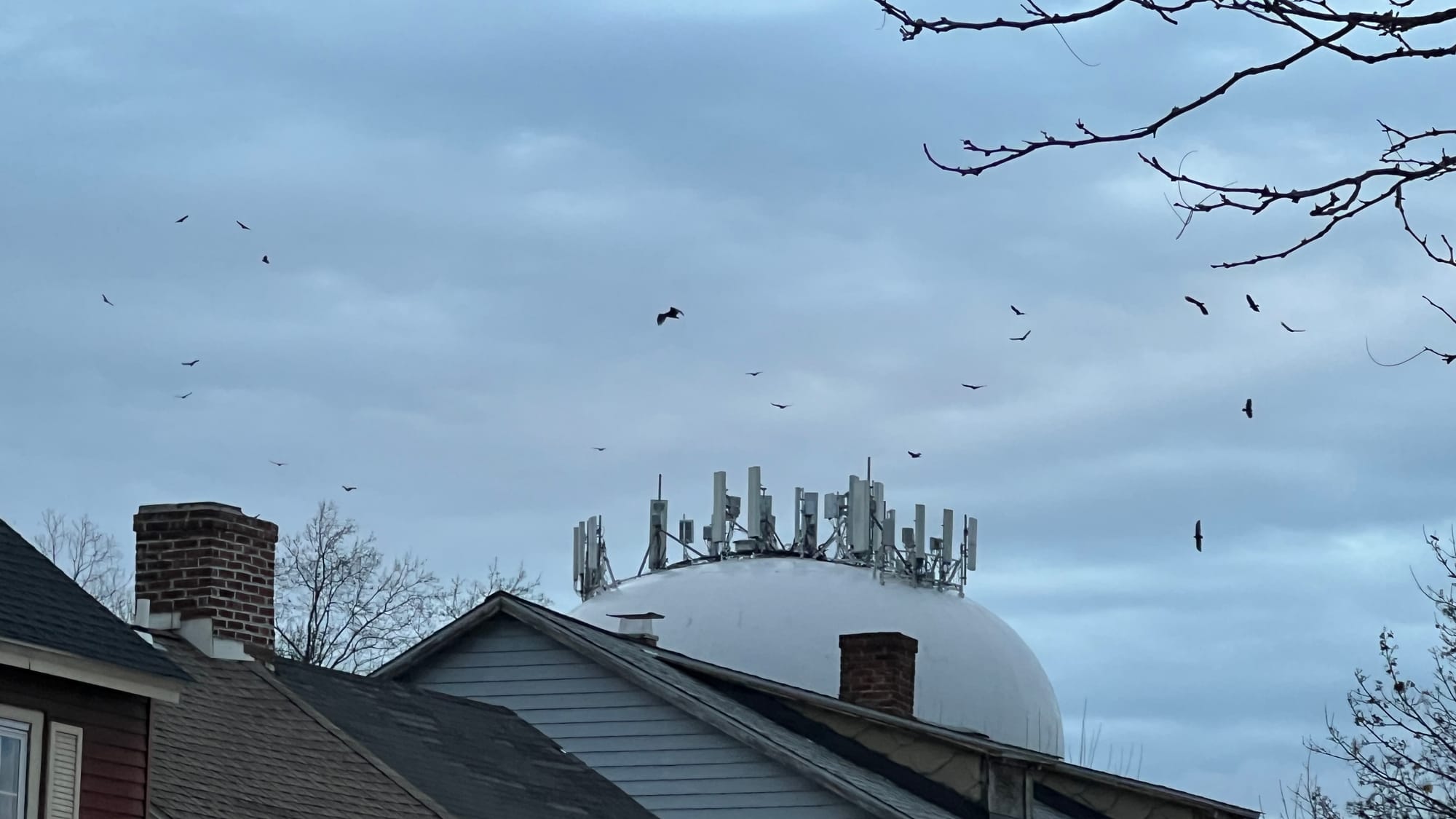
Vultures will take advantage of an open dumpster, and roost in large groups.
Black Vulture populations are increasing and have expanded their range north through the eastern United States. You may spot them around town sunning themselves in the morning on the water tower or taking advantage of an open dumpster.