A flash of yellow

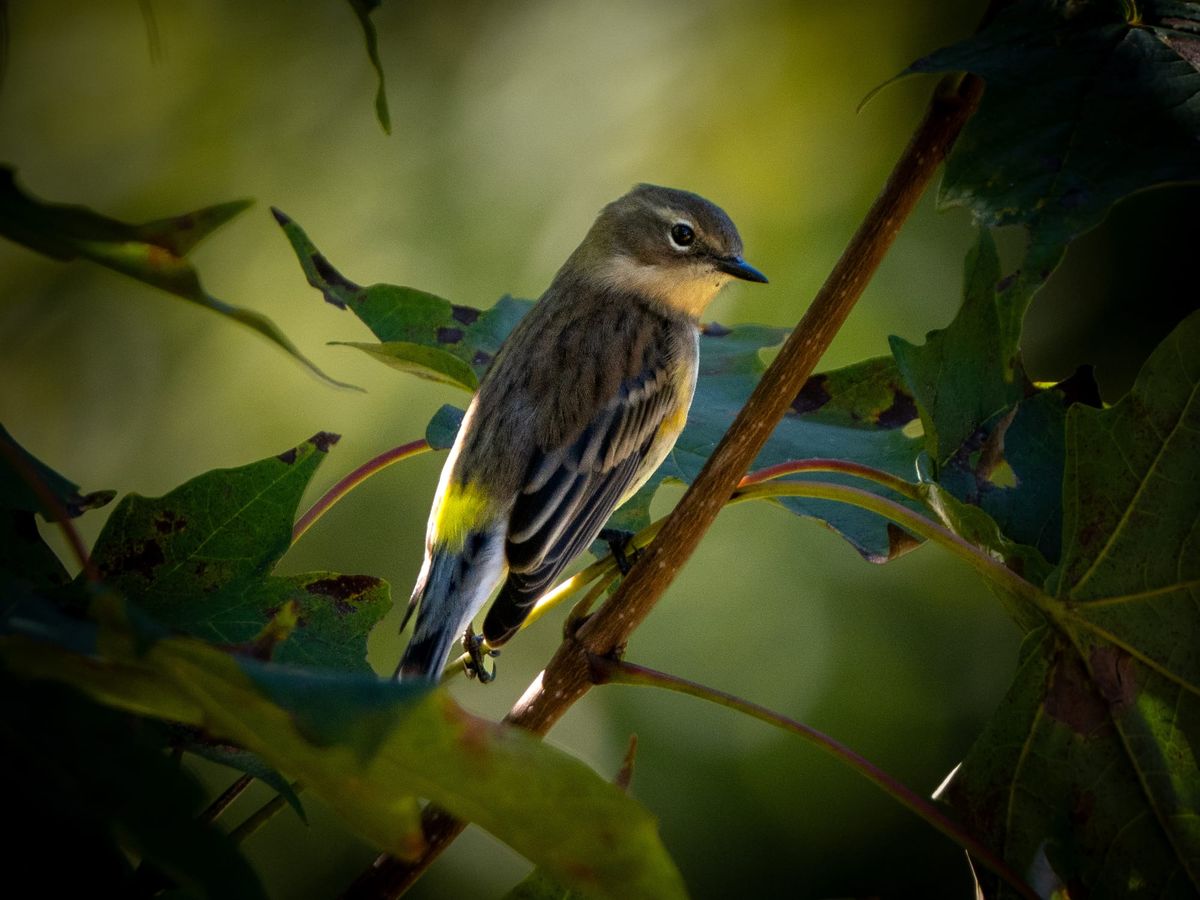
Over the past week or so the edge of the forest around the ponds has been alive with dozens of sparrow-sized birds darting in and out of the trees, swooping over the ponds for insects, diving back for cover and calling out a flat, husky "chek" as they change direction. You may also see them feeding on berries.
If you catch a flash of yellow as they dart around you've seen a Yellow-rumped Warbler (Setophaga coronata). Setophaga is Greek for "moth eater." Coronata is Latin for "crowned." You may hear them called by another nickname: "butter butt".
There's both an eastern and western subspecies; eastern birds are the Myrtle Warbler, western are Audubon's Warbler, rarely spotted in our part of the country.
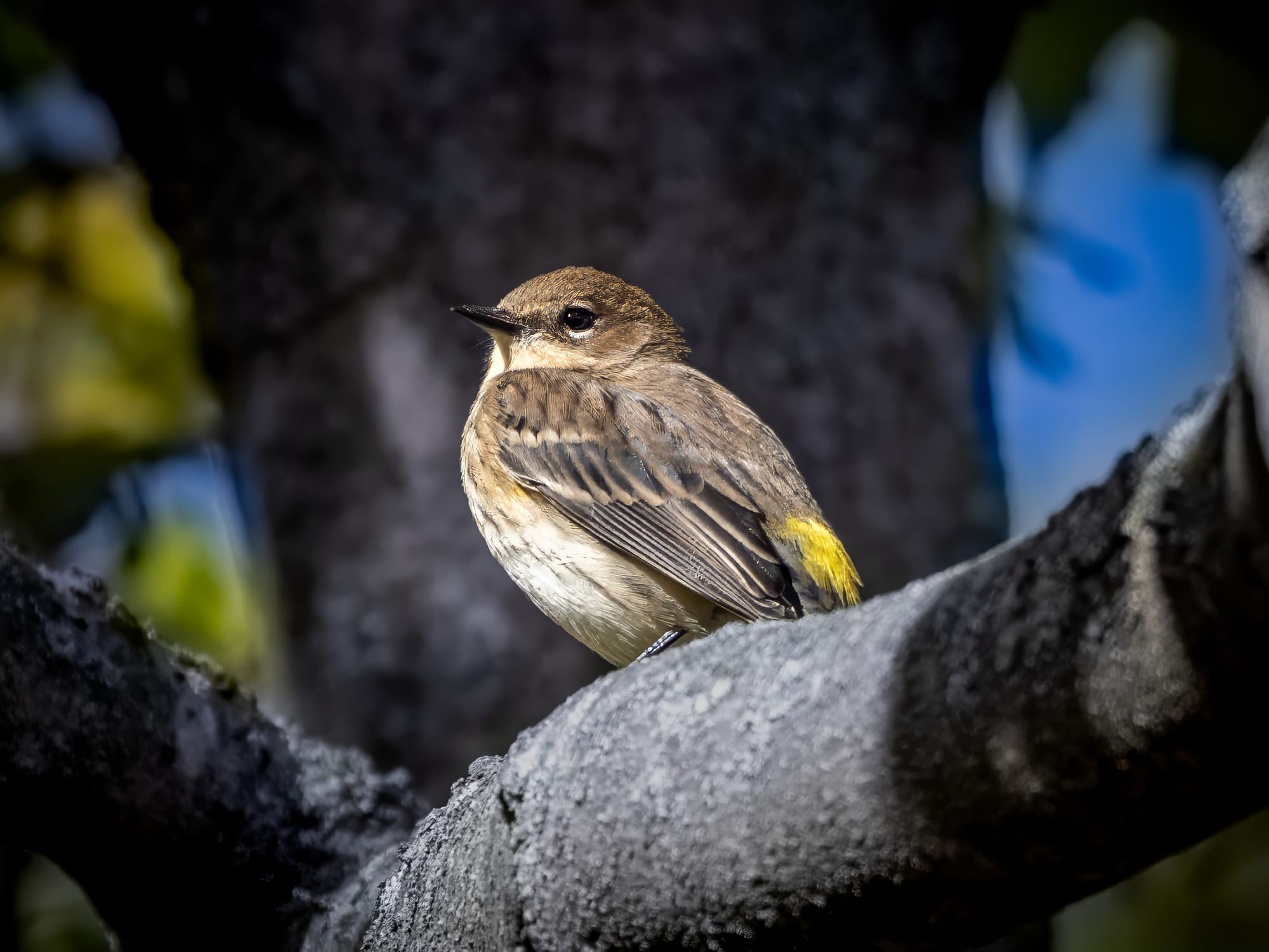
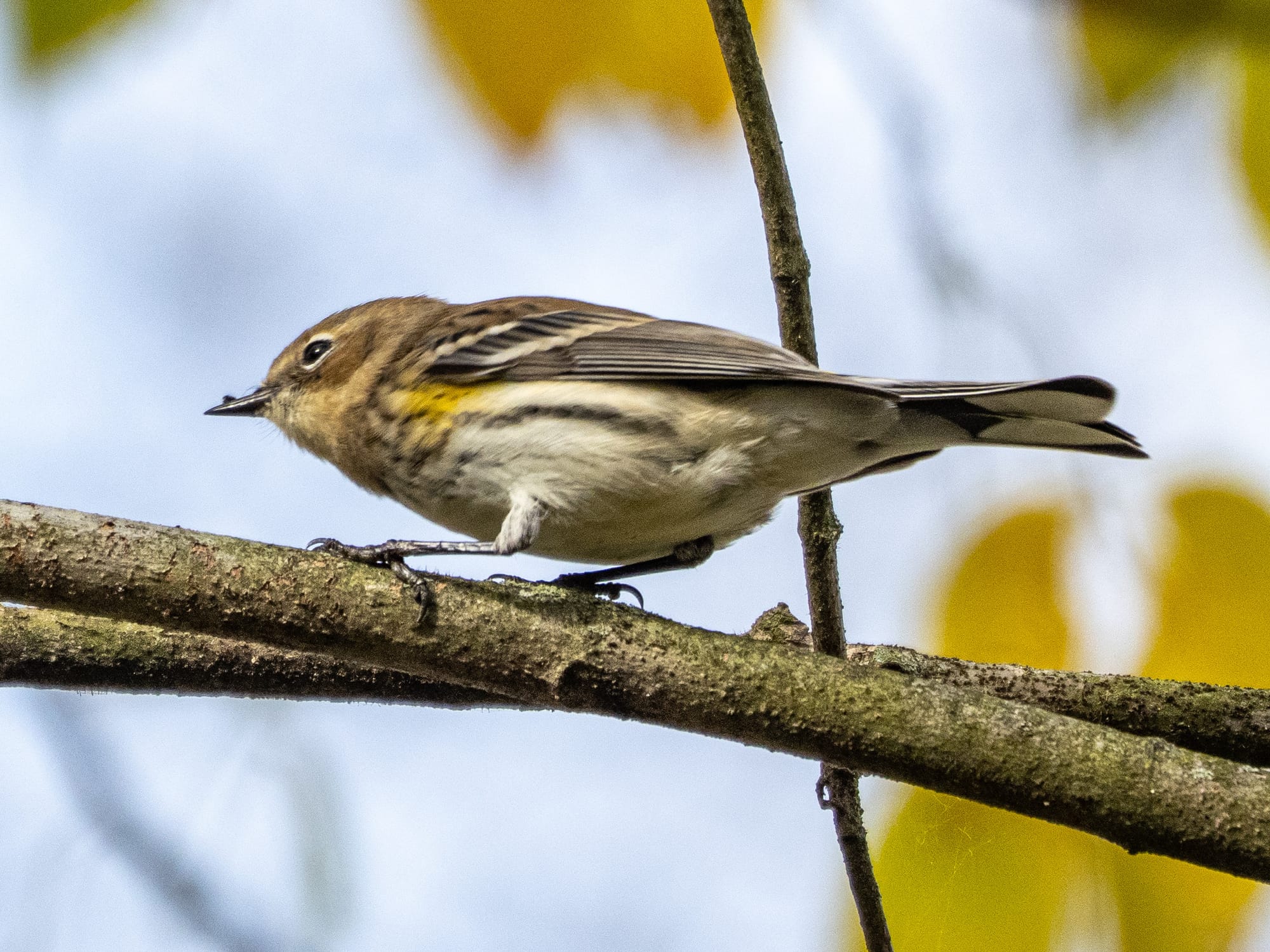
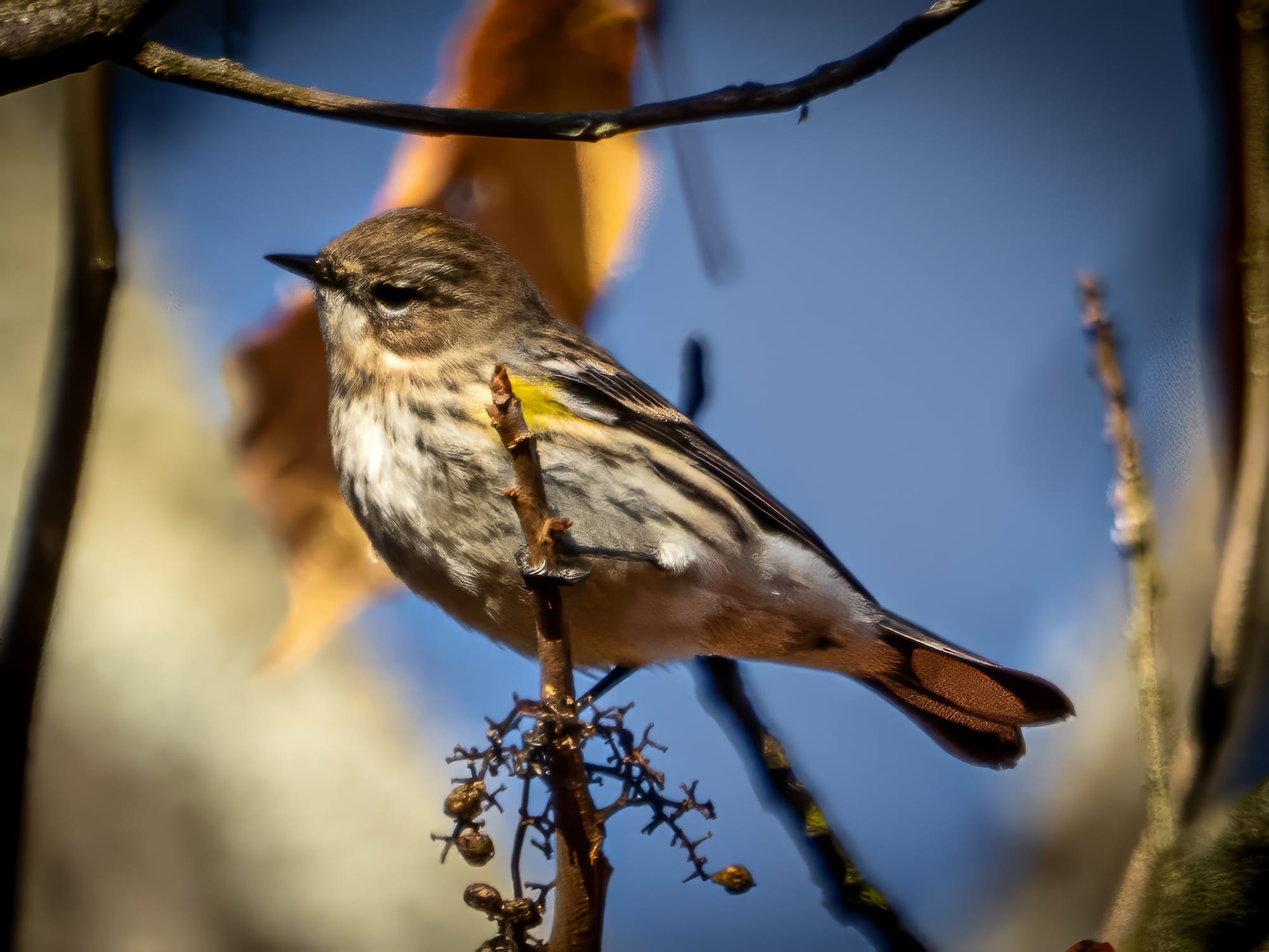
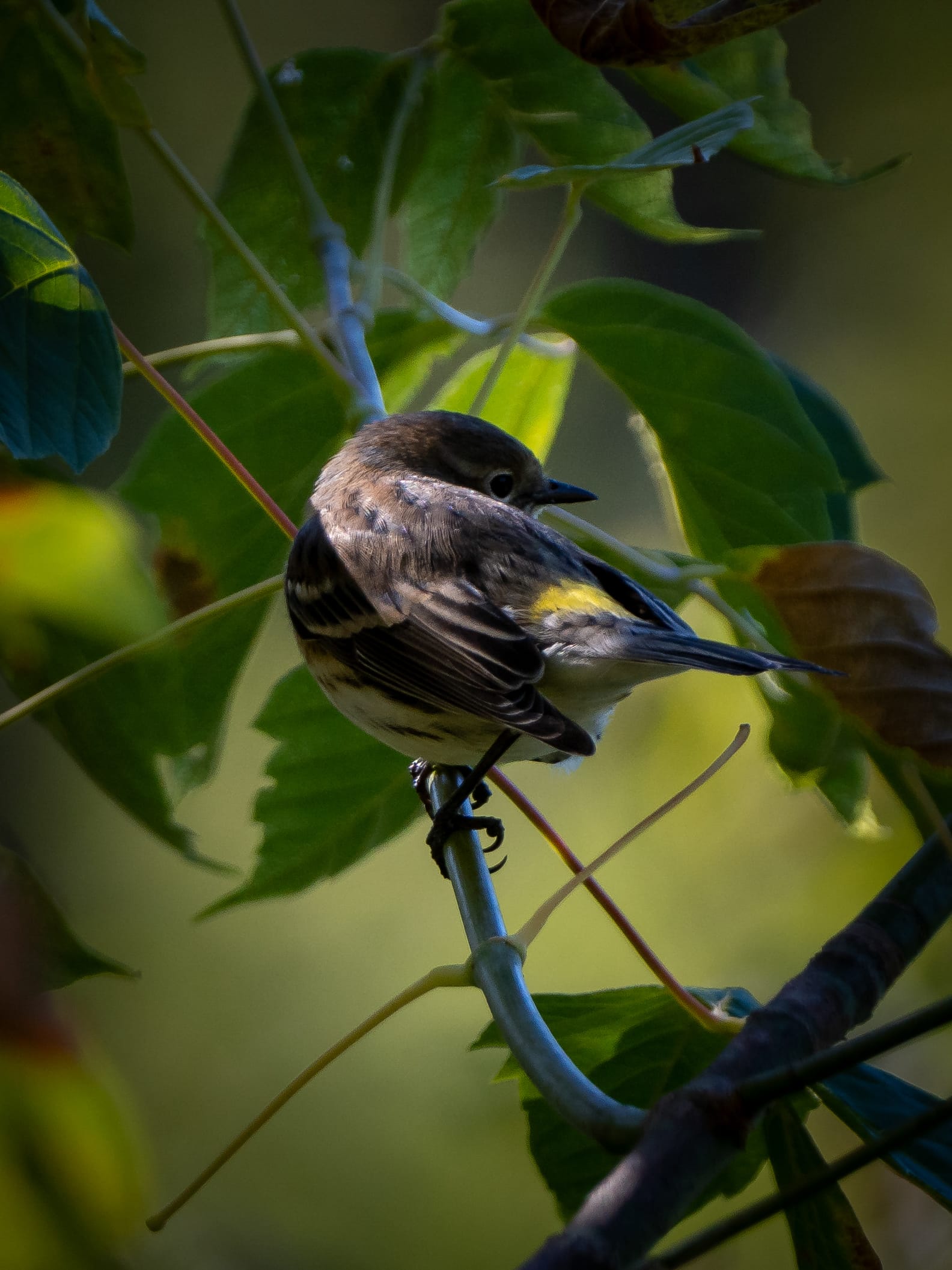
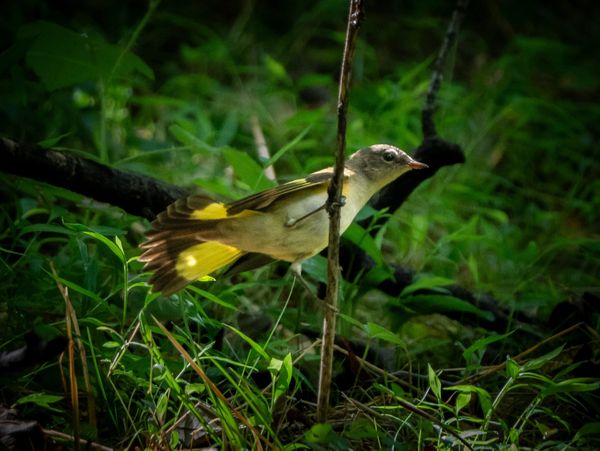
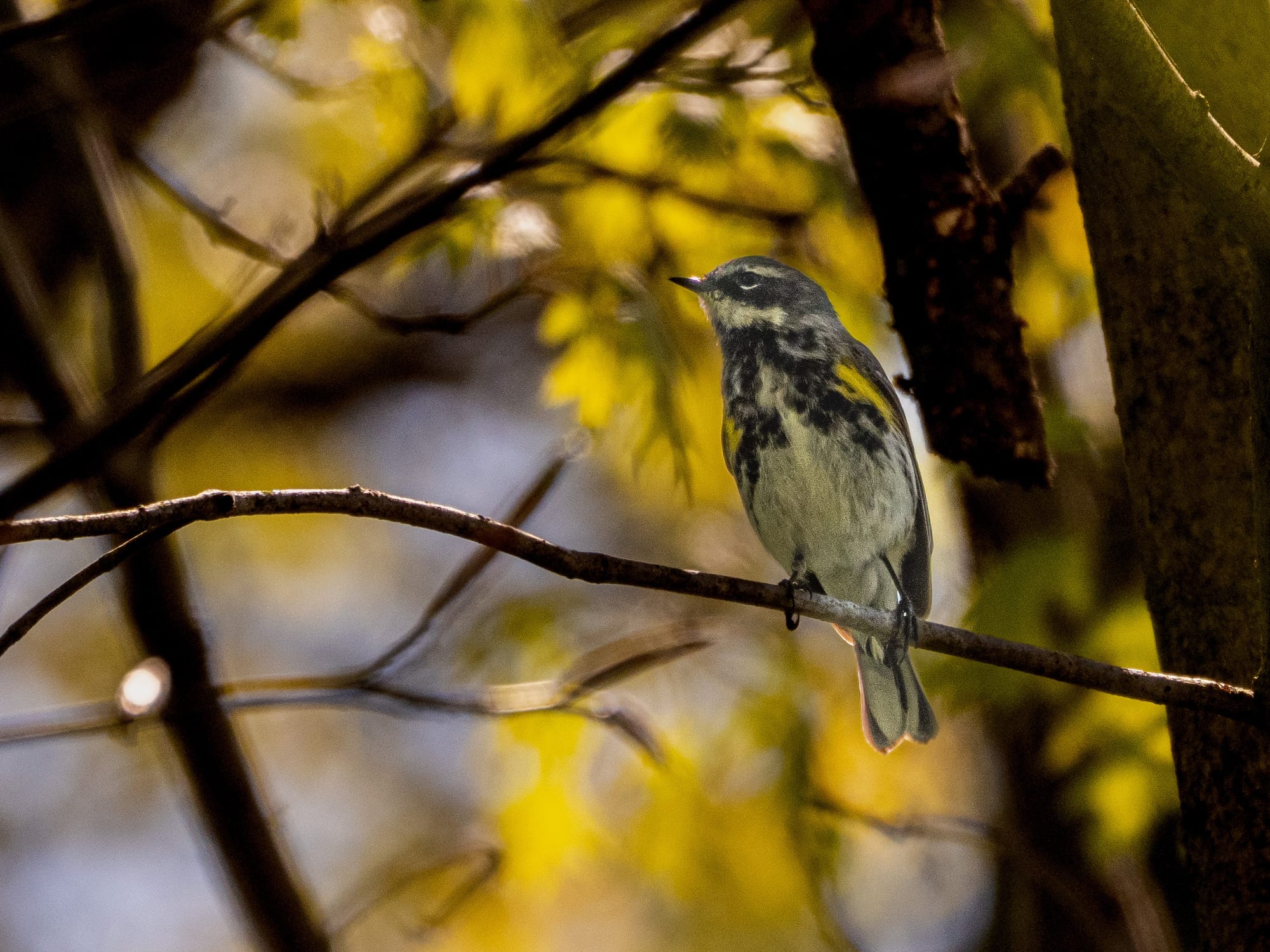
Fall Yellow-rumped or Myrtle Warblers
They are warm brownish-olive above, with dusky streaks, two white wing bars, and a yellow patch on each side of the breast and at the right angle you can see a bright yellow rump. They have a yellow crown patch that usually stays hidden.
They pass through Nixon Park in the spring on their way north to build their nests in mature conifer and mixed woods and pass through again during the fall migration south.
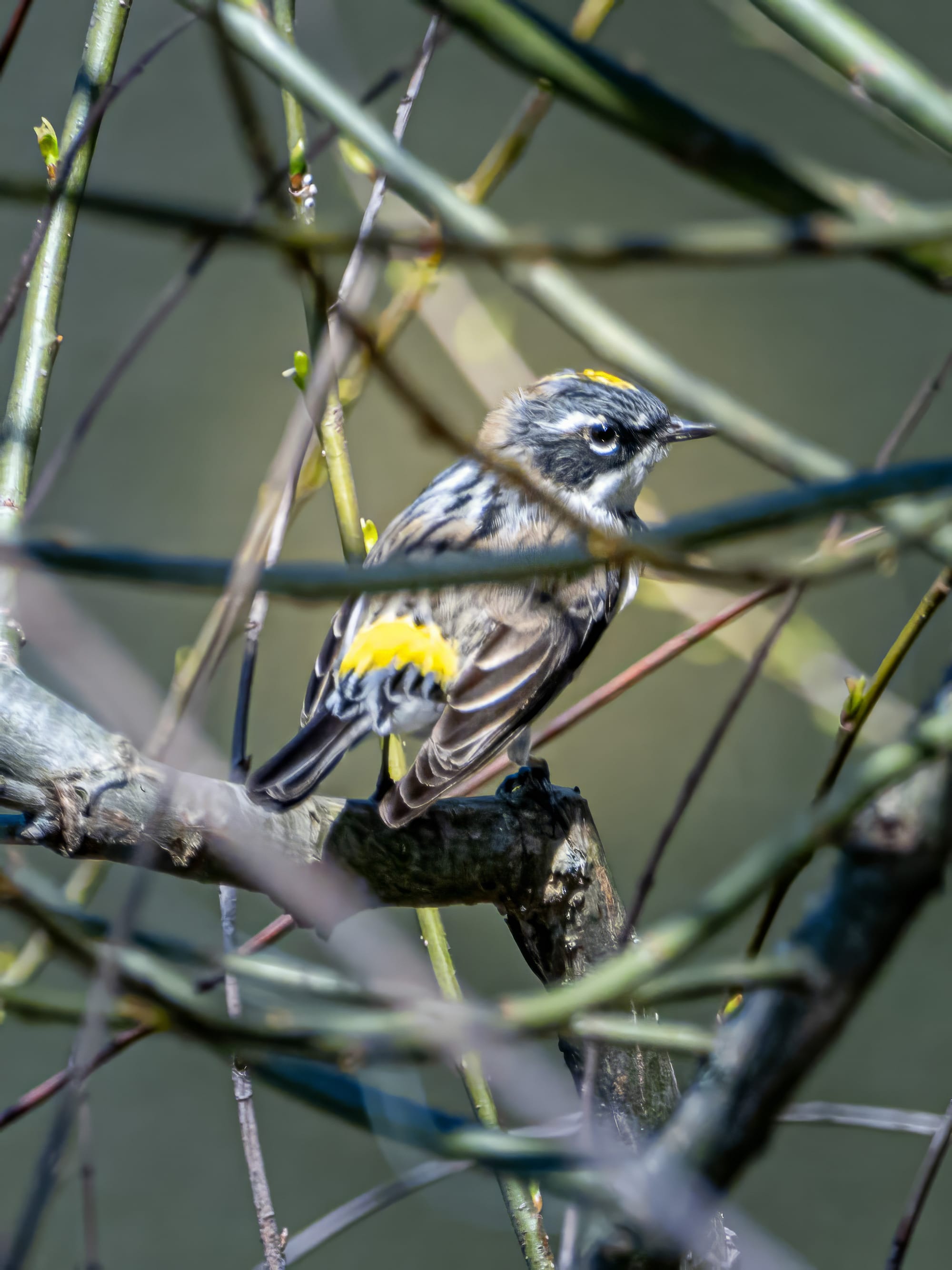
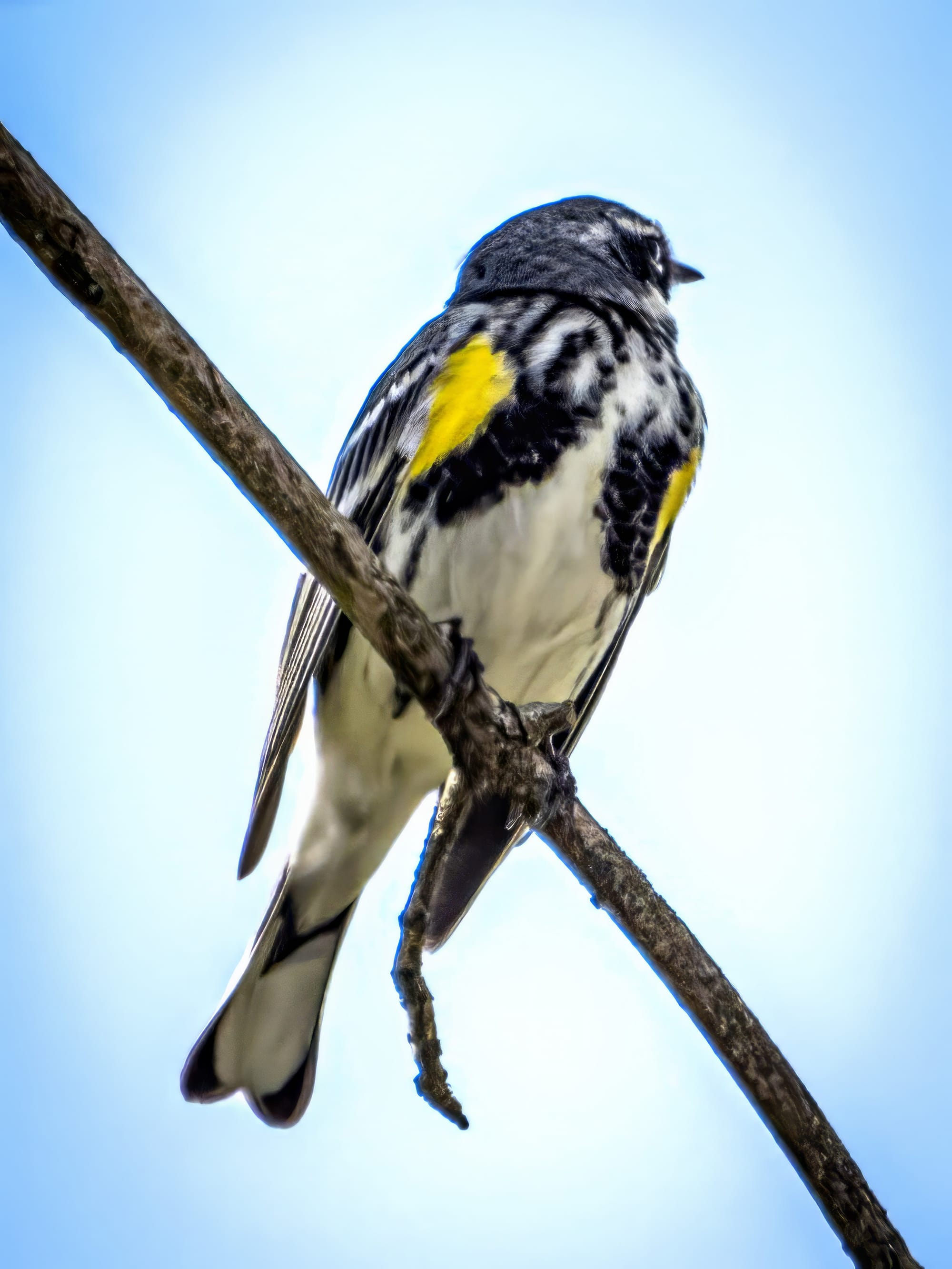
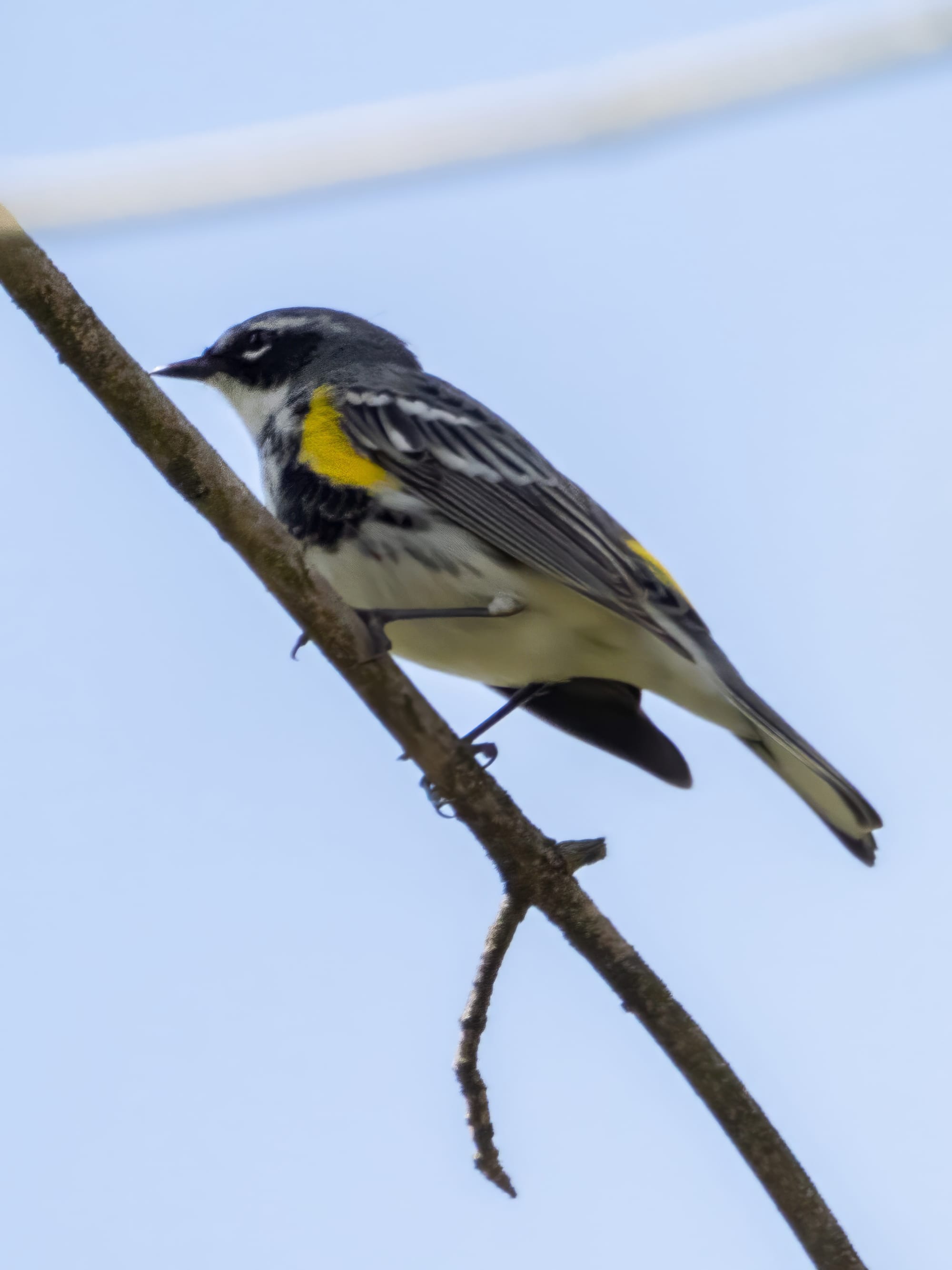
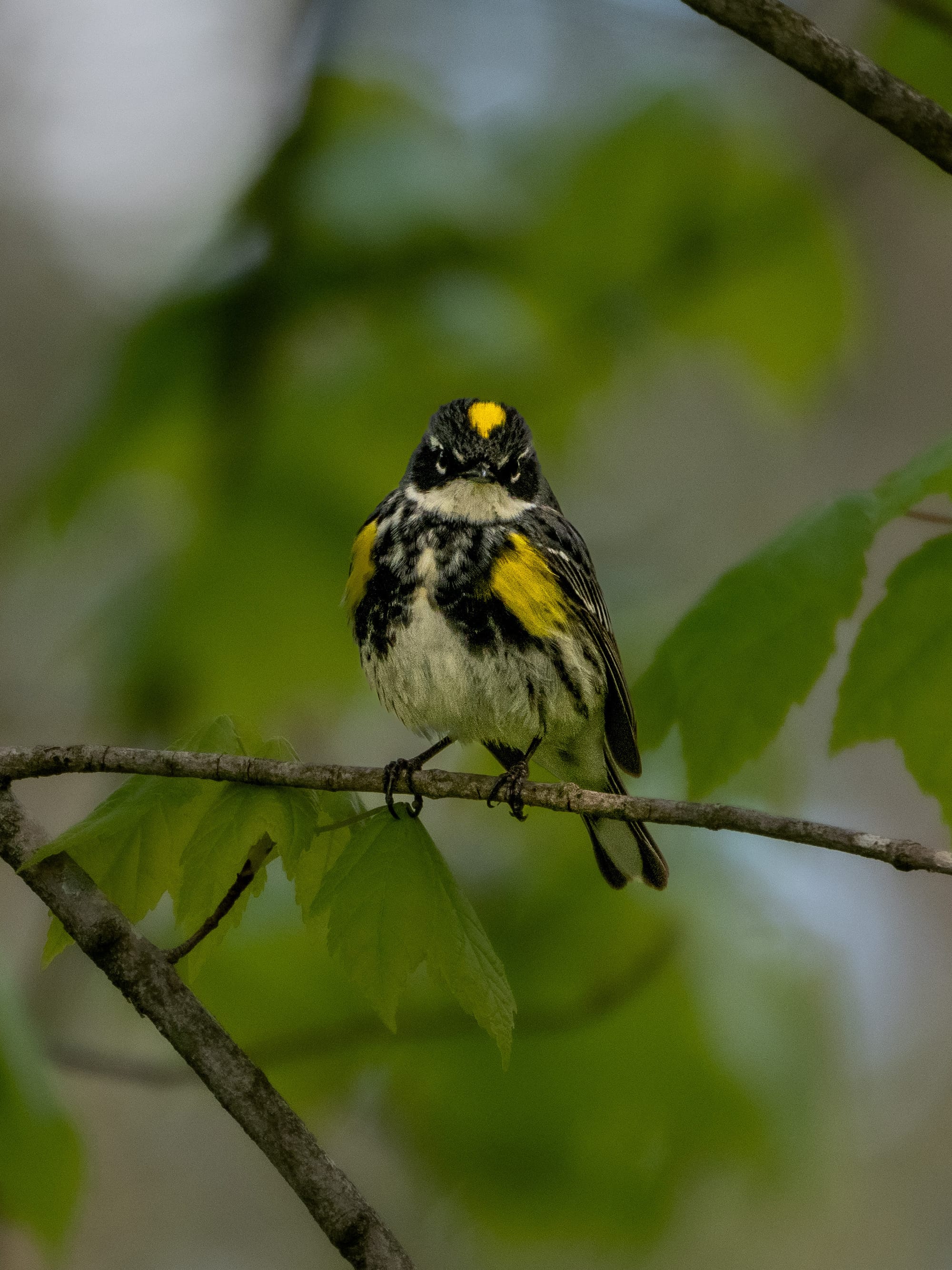
Spring male Yellow-rumped or Myrtle Warblers
A spring male looks like a different bird: a deeper gray back, brighter wing bars, black breast, and prominent crown patch. After breeding, a complete molt gives males their brown fall plumage. A partial molt before the next breeding season brings back their spring colors.
Females stay browner and duller than males through spring.
They'll be around for the next several weeks, keep your eyes and ears open and you may spot a flash of yellow as the leaves begin to turn. If you miss them this fall they'll be back in April in their brighter plumage.