Periscoping Snakes

The last two weeks of Tuesday Nature Walks have been great fun.
Sign up here for May nature walks, every Tuesday from 9:30-10:30 am.
If these days and times don't work for you contact me here and we'll see if we can make other arrangements.
Often when I am walking through the park something rustles along the path's edge as it retreats to the cover of the woods so fast I can't tell what was there.
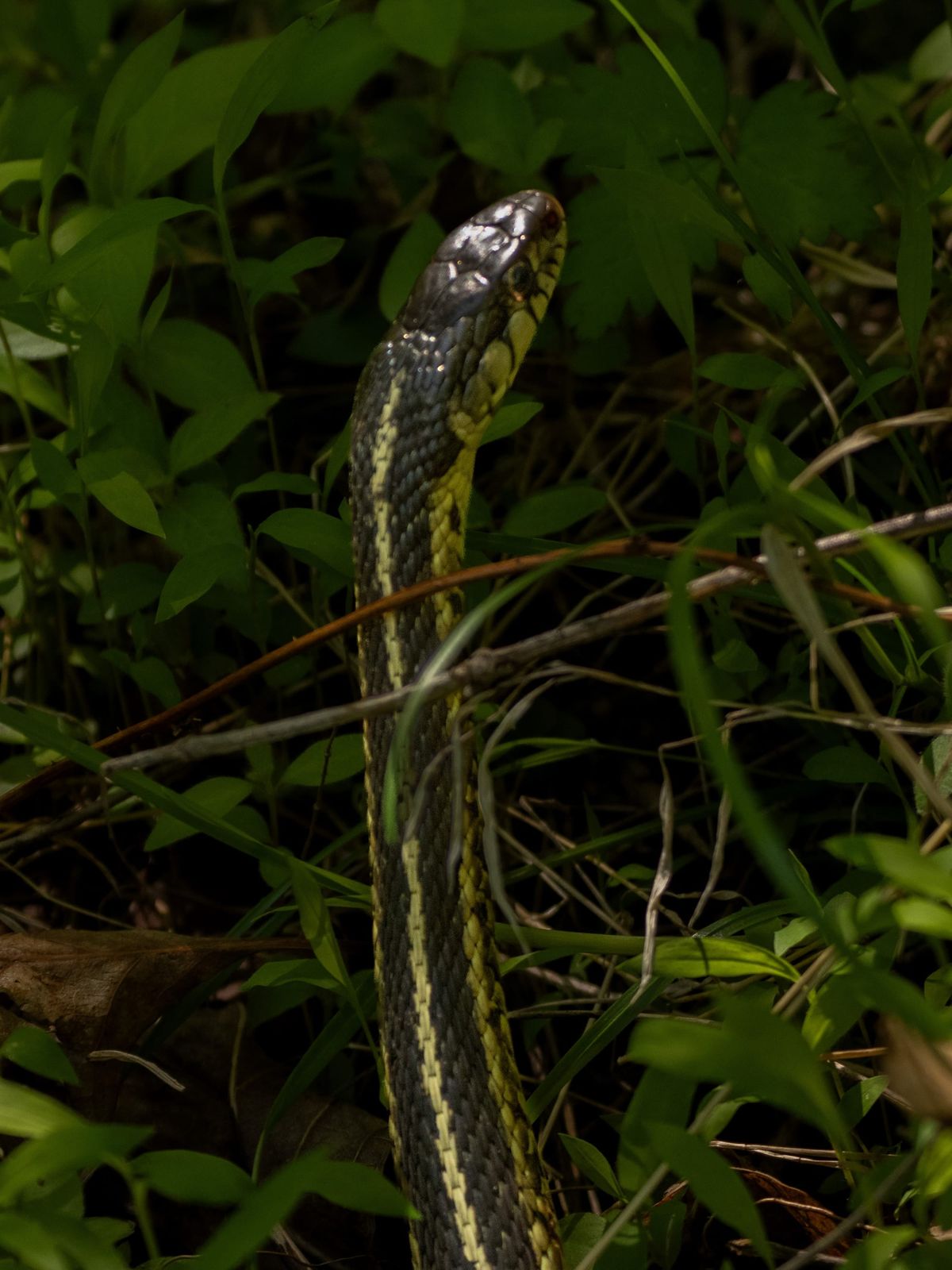
Twice in the past week the rusting turned out to be common garter snakes (Thamnophis sirtalis), who both stopped long enough to get their picture taken.
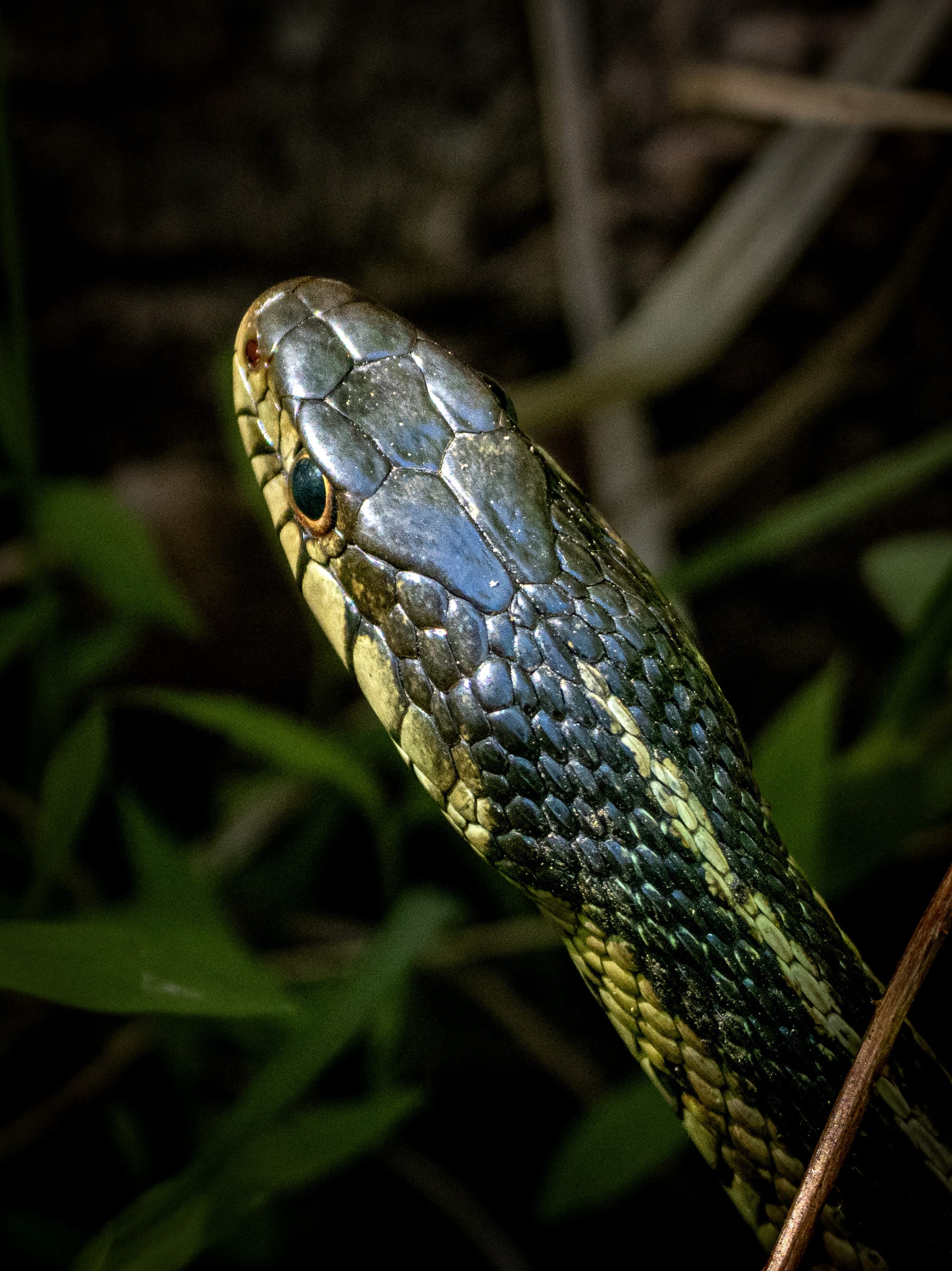
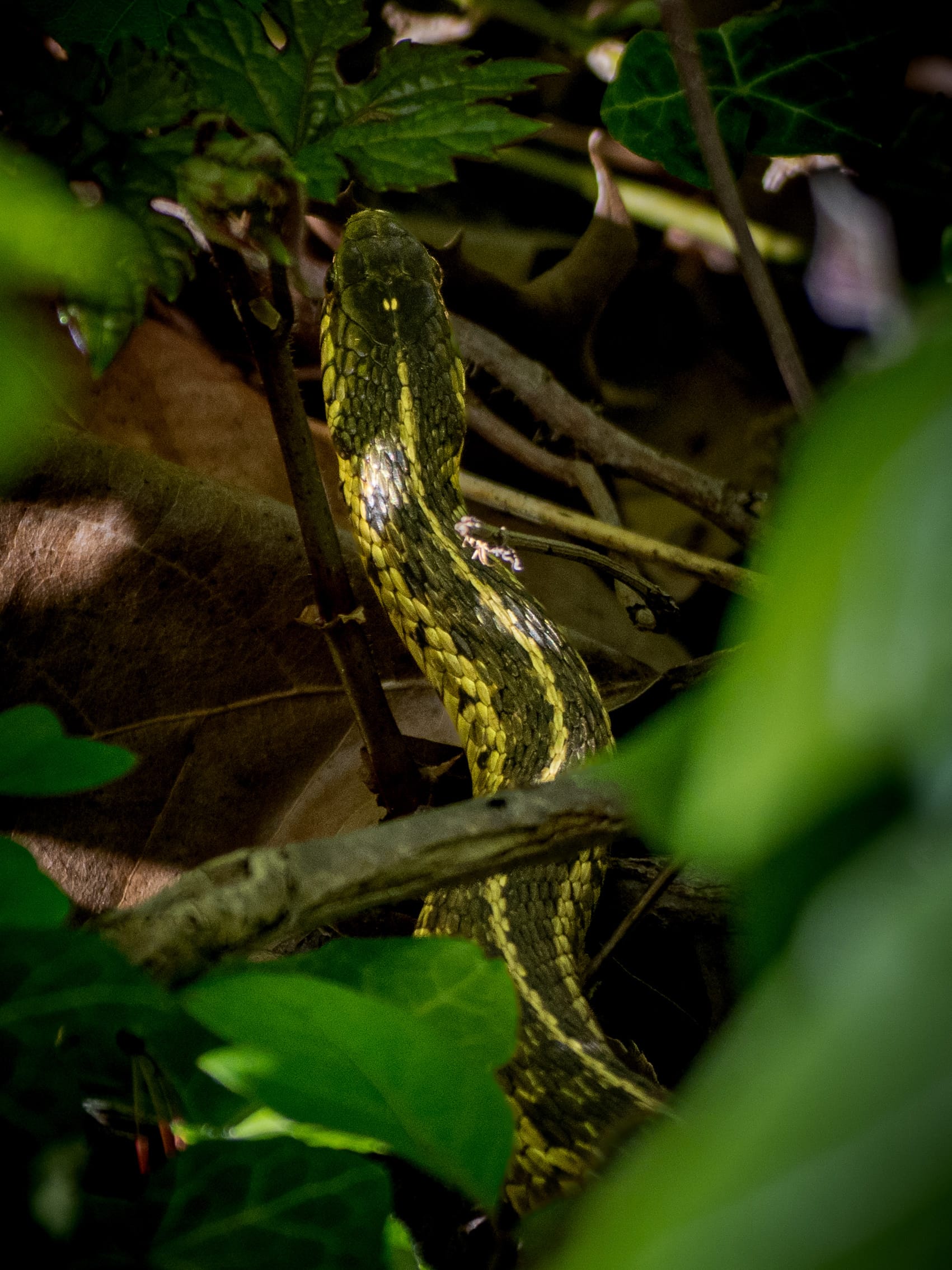
The two periscoping Garter Snakes I saw this week.
The latin or scientific name is derived from Ancient Greek thamnos, meaning "bush" or "shrub," and ophis, meaning "snake." Sirtalis, (latin for "like a garter") refers to the longitudinal stripes that resemble the pattern of garters used to hold up stockings - at least a pattern familiar to Carl Linnaeus in 1758 when he first assigned the name.
Those yellow stripes against the dark body of the snake mimics the light and shadow of the plants along the edge of the forest and the snake effectively disappears. I had to look very carefully even though I knew exactly where the snake was. I had the time to look because both snakes I saw this week froze with their heads and the front third of their bodies a few inches off the ground.
Some research revealed this posture is a called periscoping. Periscoping is primarily so snakes can see over the grass and leaf litter to track movement as they flick their tongue to collect scents.
They freeze because the camouflage works best when they remain still. It's reported that periscoping snakes will sway in time to the movement of wind-blown vegetation so the camouflage remains effective. (Neither of my two snakes did this as it was still.)
The temptation to pick them up should be tempered by knowing a cornered or handled garter snake will release a foul-smelling musk to repel a predator (or an observer).
As you walk look and listen, if you see or hear some rustling look for a periscoping snake. It has noticed you and is deciding if you are a threat or just a part of the scenery.
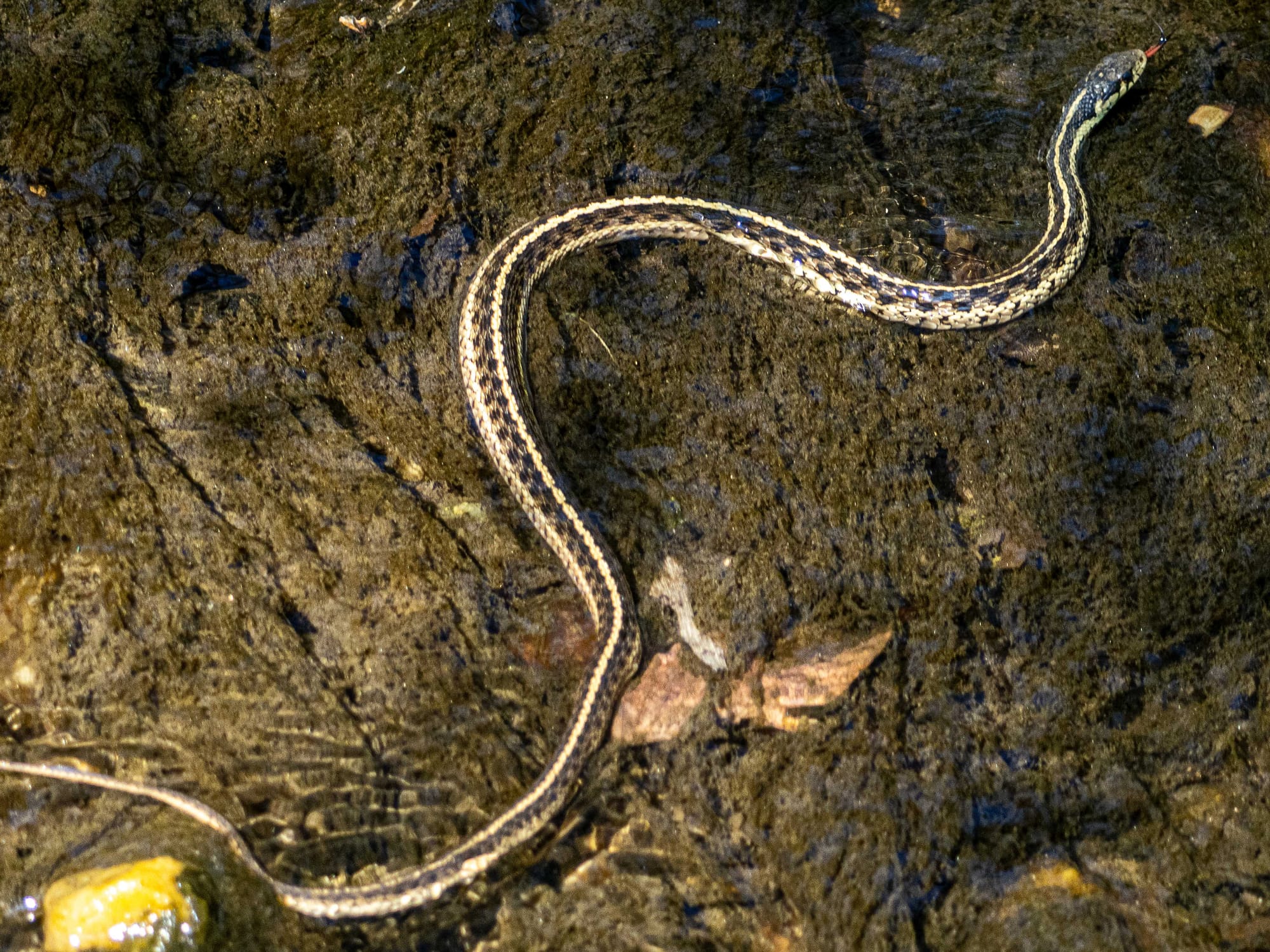
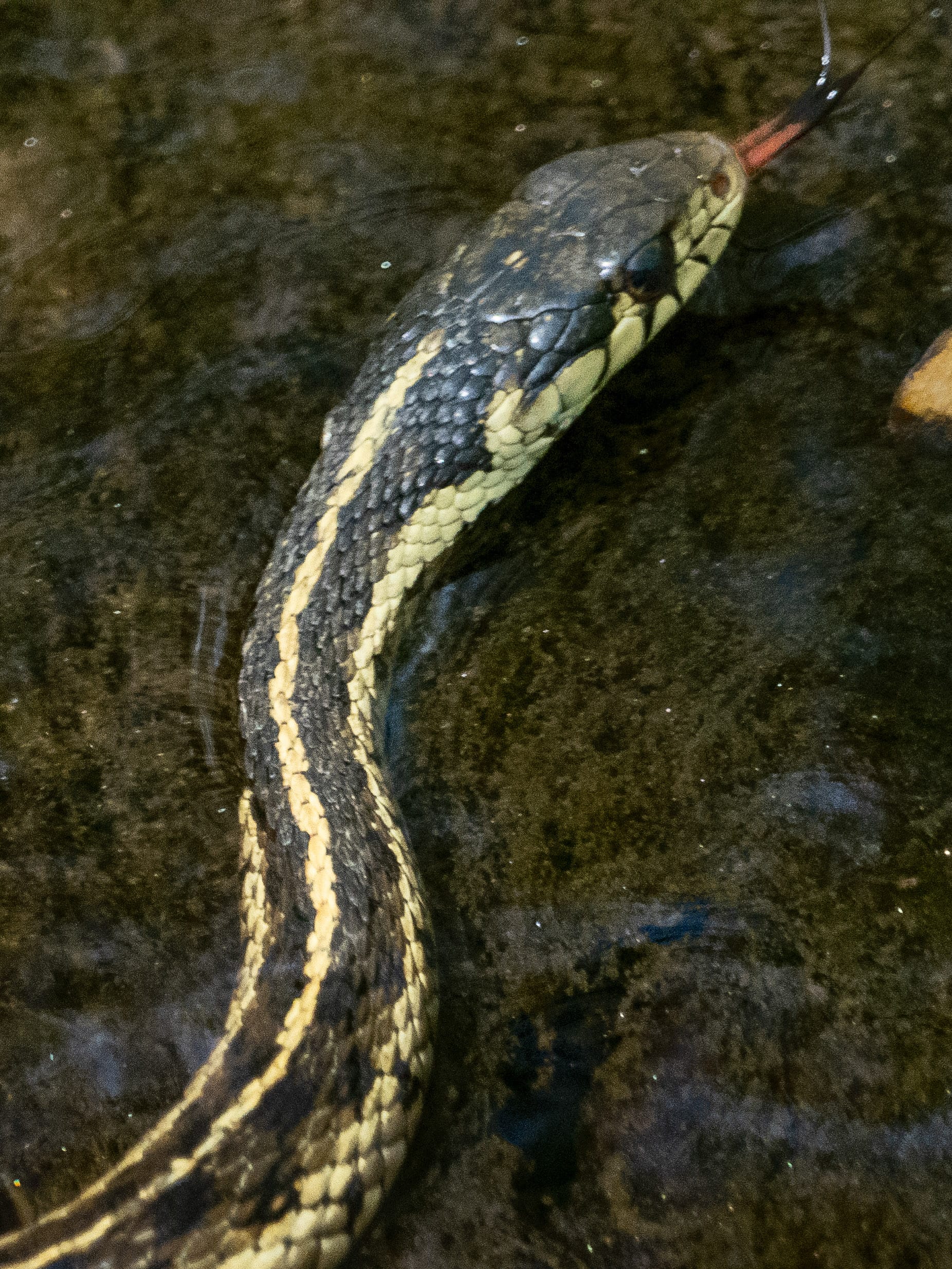
Garter Snakes are generally 18-26 inches long. They are harmless to humans.