Hawks at Nixon Park

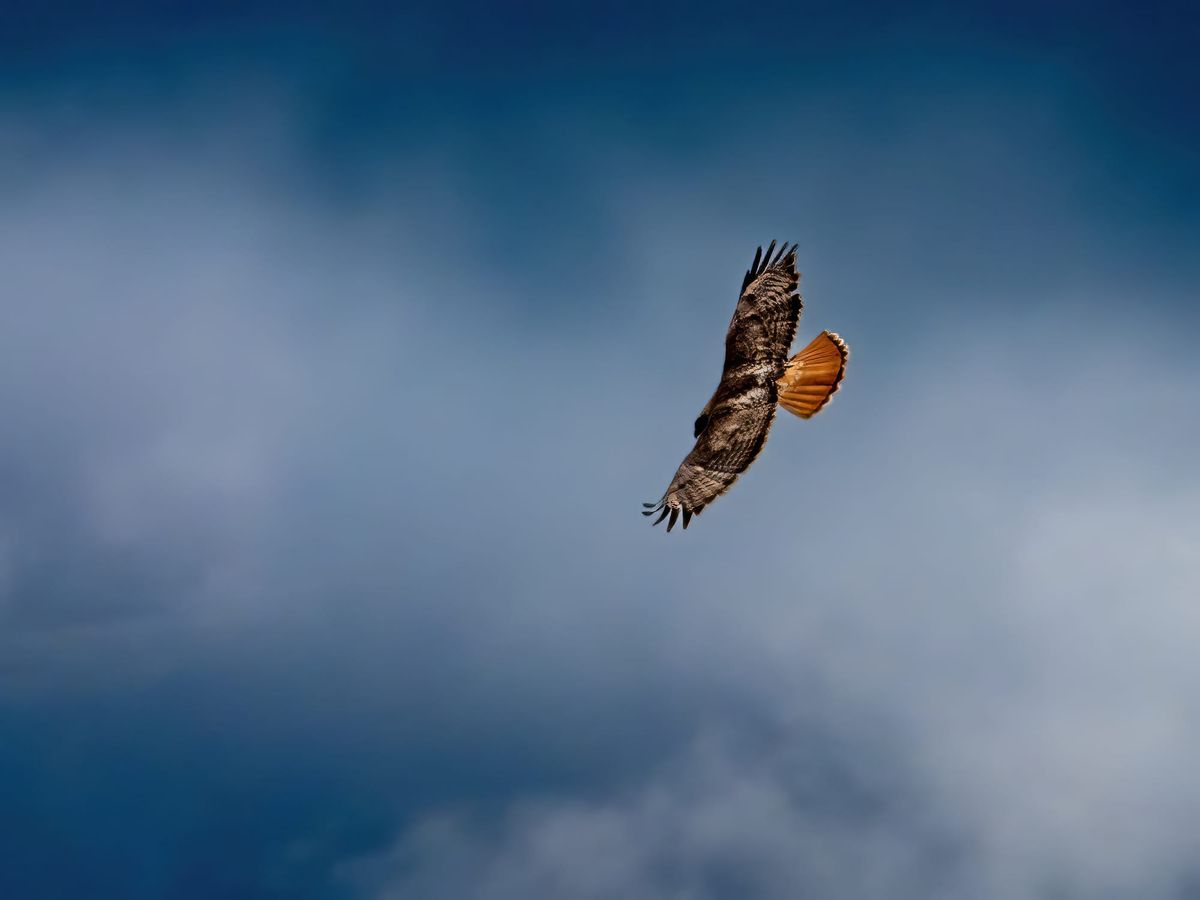
I have observed four species of hawks that are year-round residents of Nixon Park.
Two are Accipiters: woodland or bird hawks with short wings and a long tails enabling them to hunt and chase birds through the forest.
Two are Buteos; broad wings and shorter tails designed for soaring to hunt small mammals and reptiles like voles, rabbits, and snakes.
Accipiters - Sharp-shinned Hawk (Accipiter striatus) and Cooper’s Hawk (Astur cooperii)
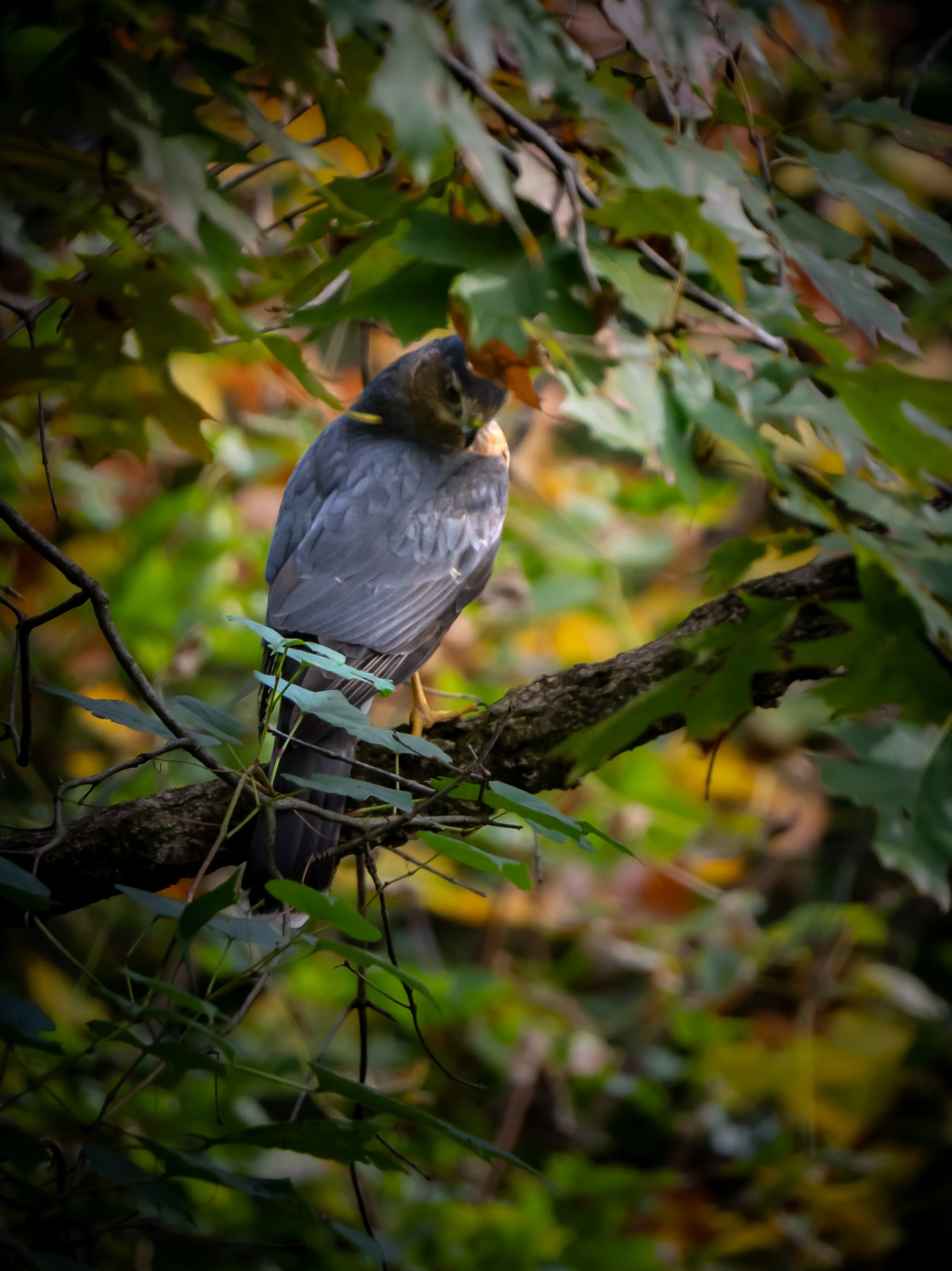
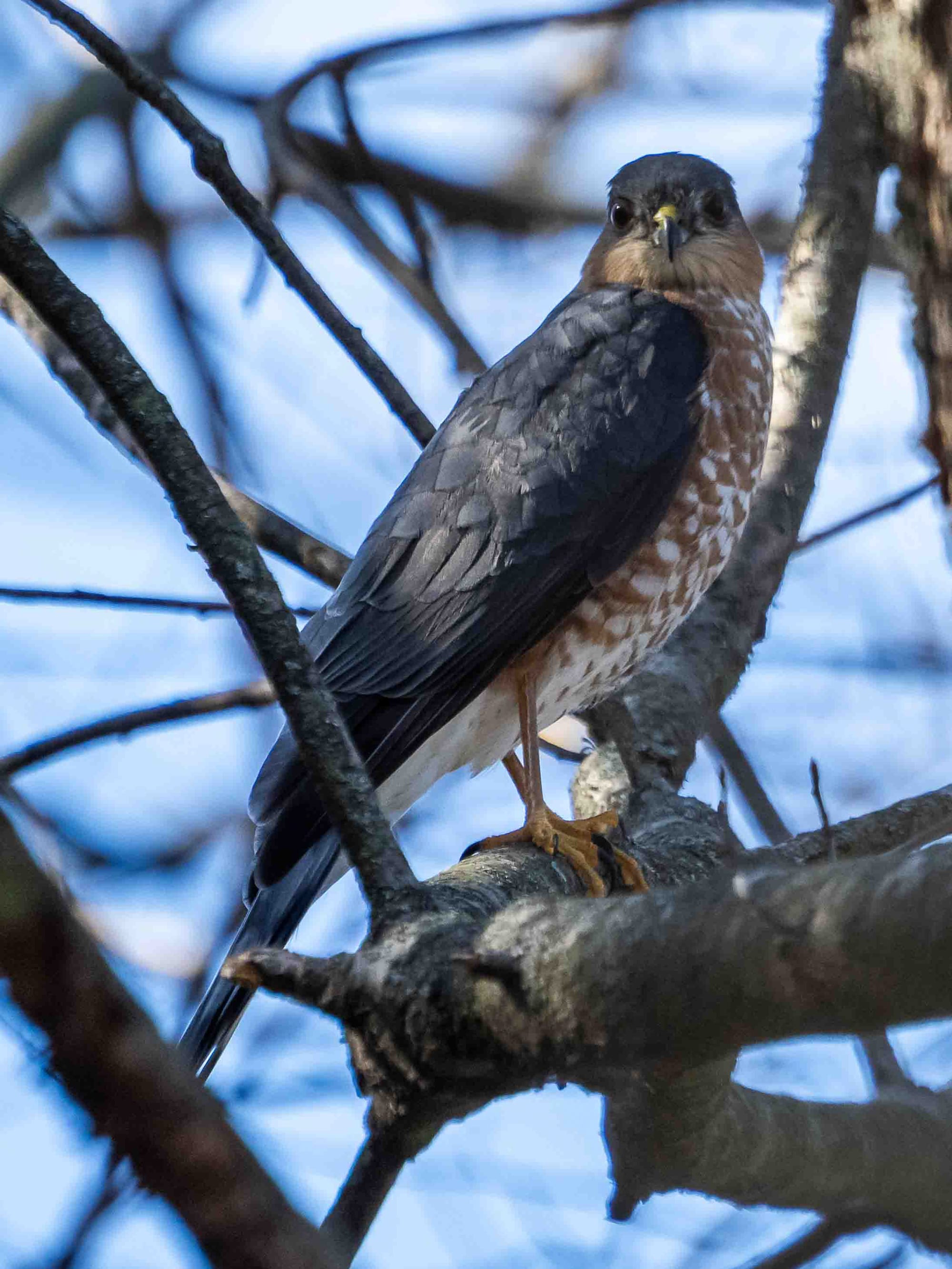
Cooper's Hawk, Sharp-shinned Hawk
Because they rely on stealth you are less likely to spot Sharp-shinned or Cooper’s Hawks at the park than other birds their size. At first light they begin the hunt; a shape in the trees, a flurry of fast wingbeats, a short glide on the periphery of your vision. You may occasionally see them circling over an open field but not as often as other hawks. Cooper’s Hawks are smaller than other hawks you're likely to see at the park and Sharp-shinned Hawks smaller still - about the size of a Blue Jay.
Sharp-shinned and Cooper’s Hawks hunt from cover; through trees, shrubs, and edges - from behind whatever hides them. Sharp-shinned Hawks attack this way most of the time, Cooper’s Hawks attack in the open about half the time. Most attacks fail, about one in ten to about one in four, depending on the study.
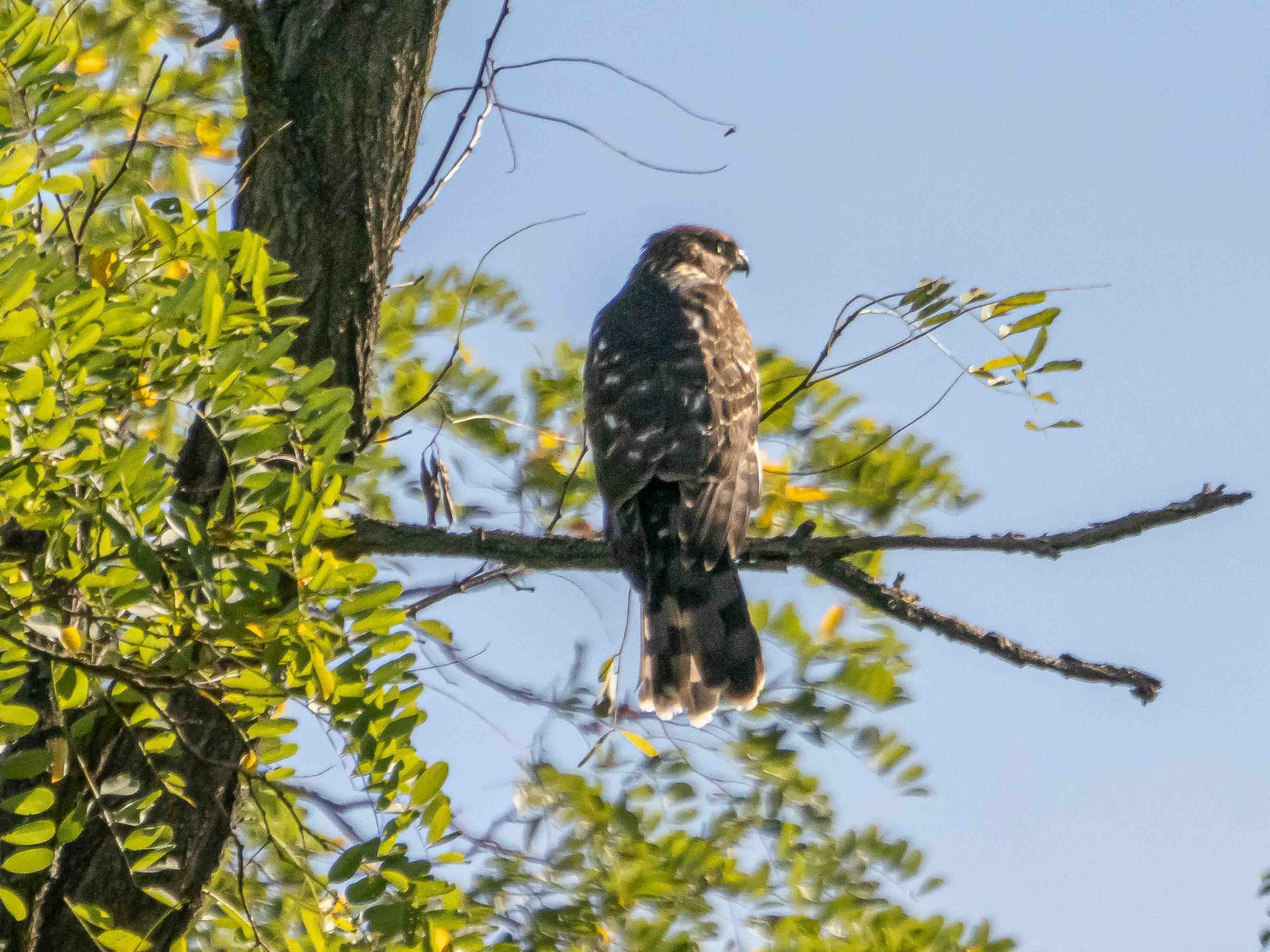
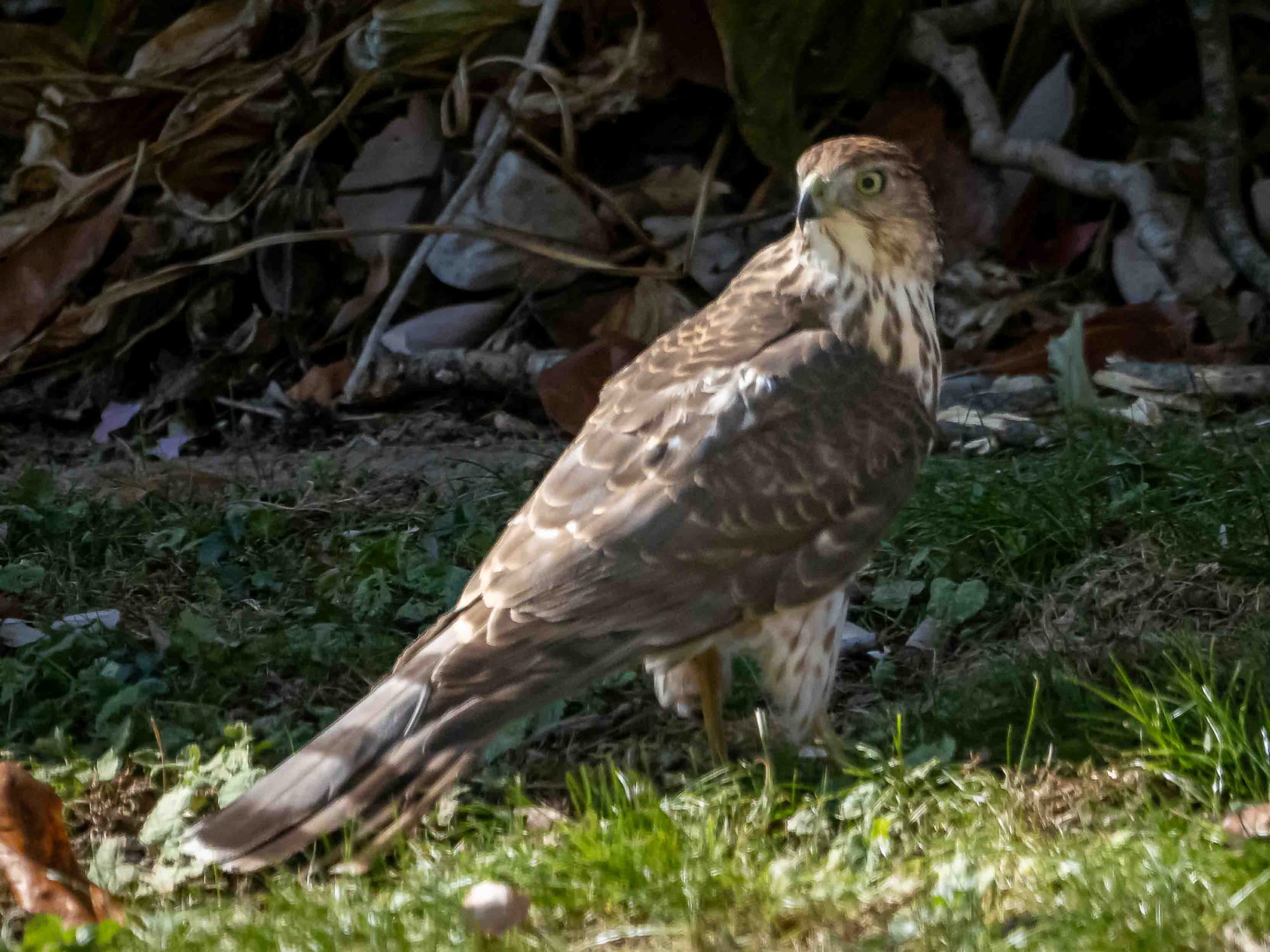
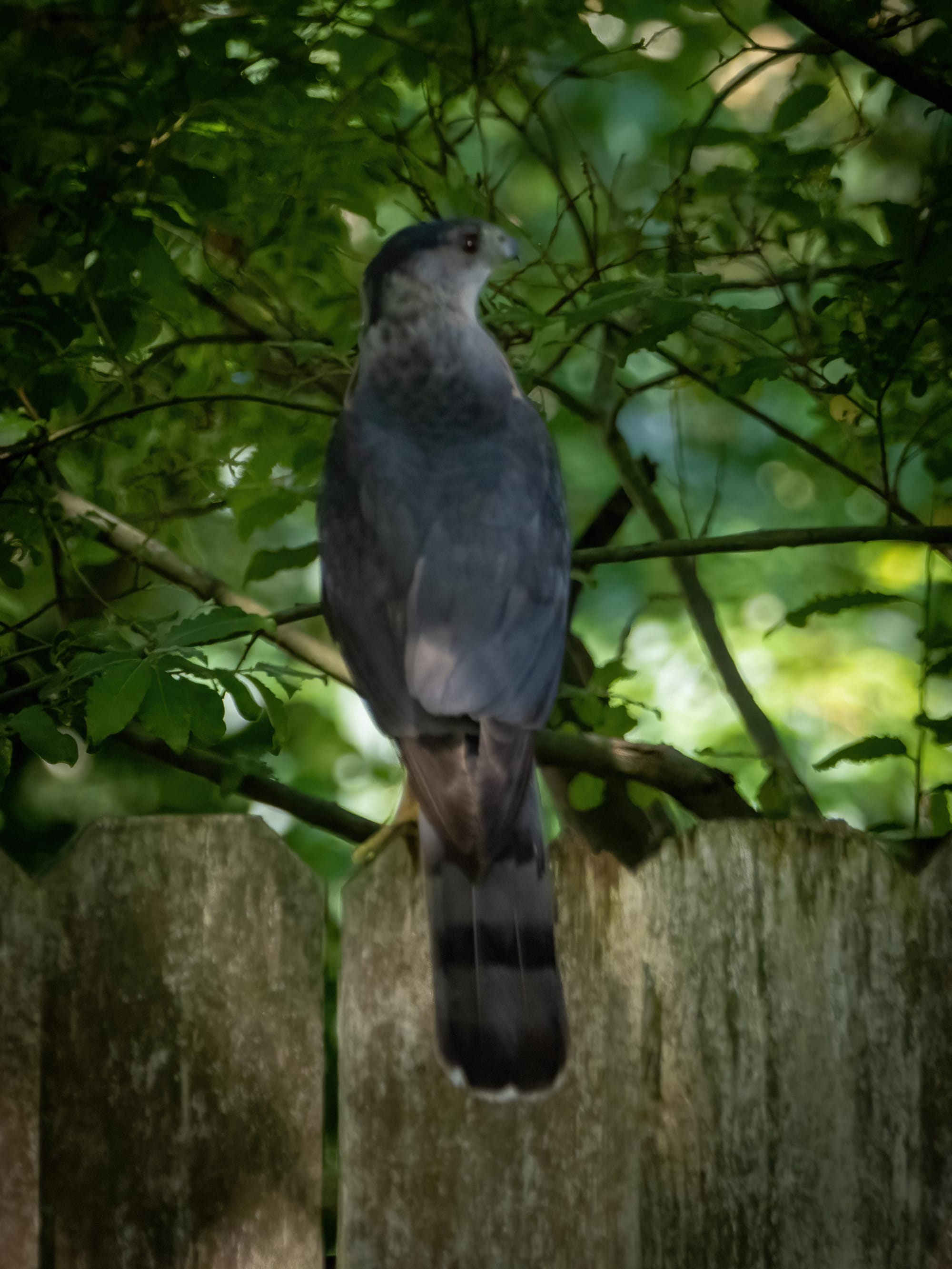
Cooper's Hawks
Birds like Starlings and Mourning Doves are the majority of prey for both and both take some small mammals. Sharp-shinned Hawks take smaller birds. Cooper’s Hawks take larger birds, such as jays and pigeons, and larger mammals, such as squirrels and rabbits.
It takes some practice to tell them apart - Cornell's Bird Lab has this excellent resource on differentiating Sharp-shinned Hawks from Cooper's Hawks.
Buteos - Red-tailed Hawk (Buteo jamaicensis) and Red-shouldered Hawk (Buteo lineatus)
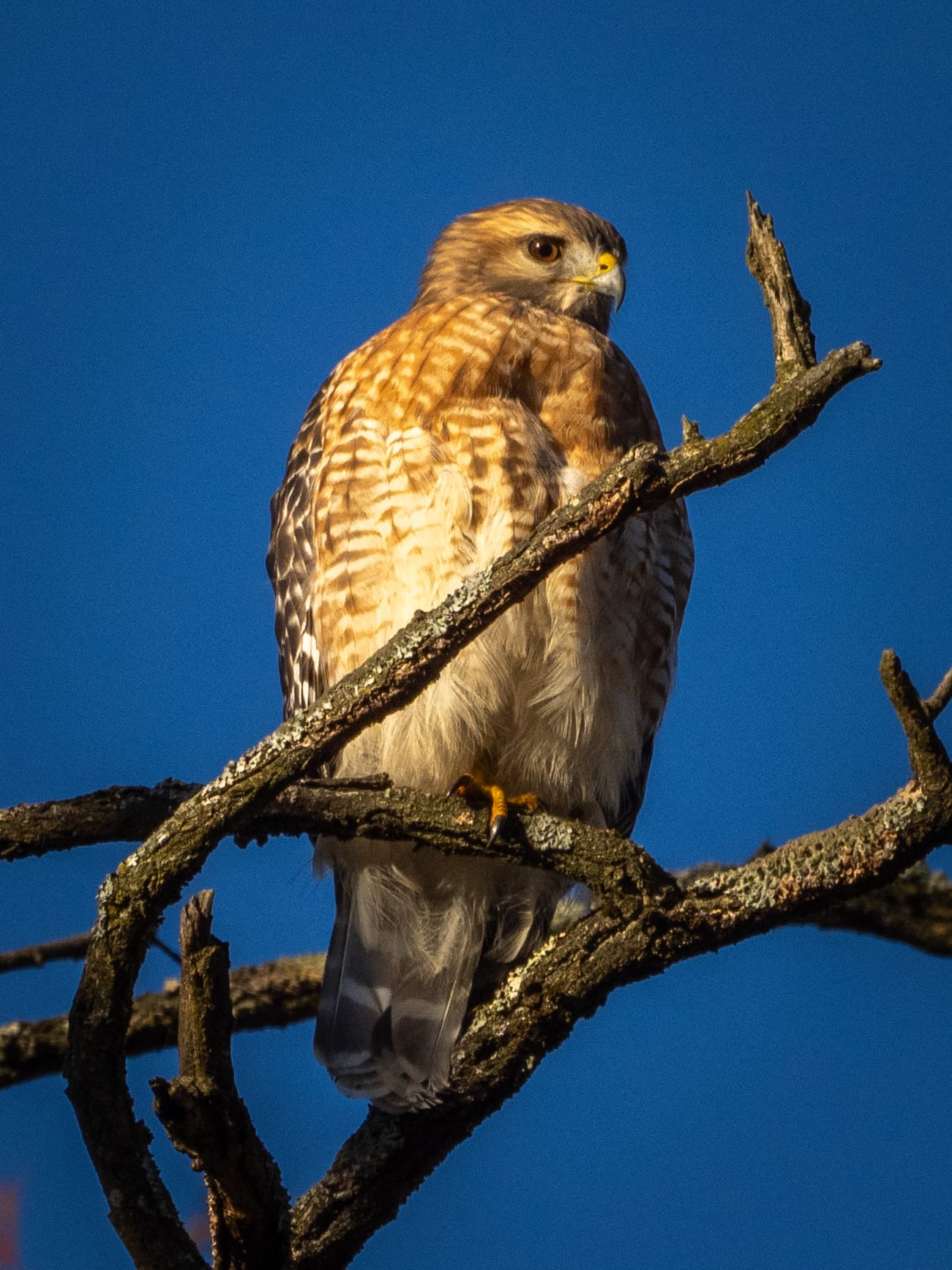
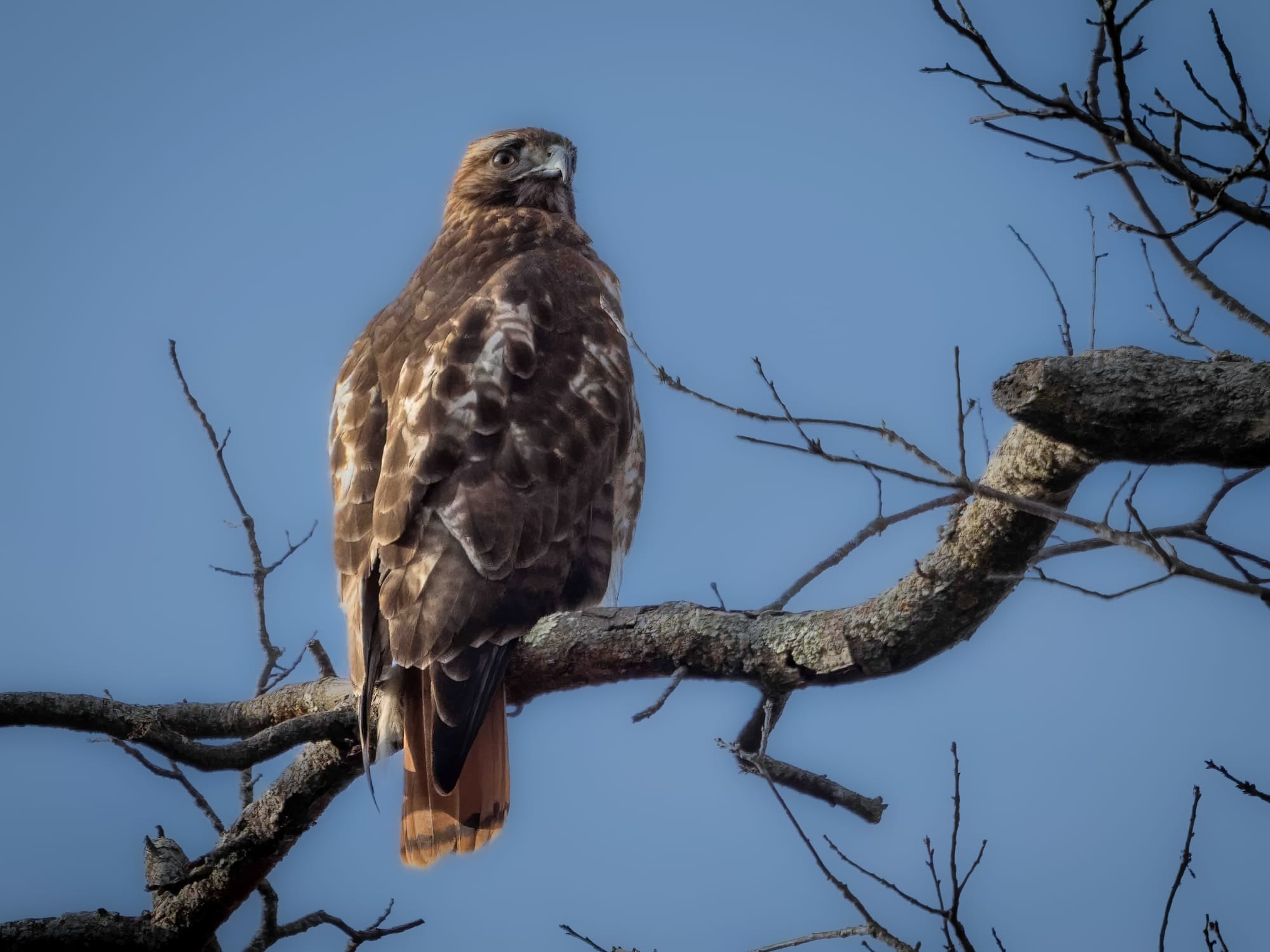
Red-Shouldered Hawk, Red-tailed Hawk
If you do spot a hawk at the park it's probably a Red-tailed Hawk. They are hard to miss: 18 to 26 inches long with a four foot wingspan. Red-shouldered Hawks resemble a smaller, slimmer Red-tailed Hawk.
Adult Red-tails have a rusty-red tail while a Red-shouldered tail is slimmer with black narrow white bands. It's easy to mistake a perching Red-shouldered for a Cooper’s Hawk but you can tell them apart from the pattern of their tail feathers. Both have white tips, but the white bands set a Red-shouldered Hawk apart.
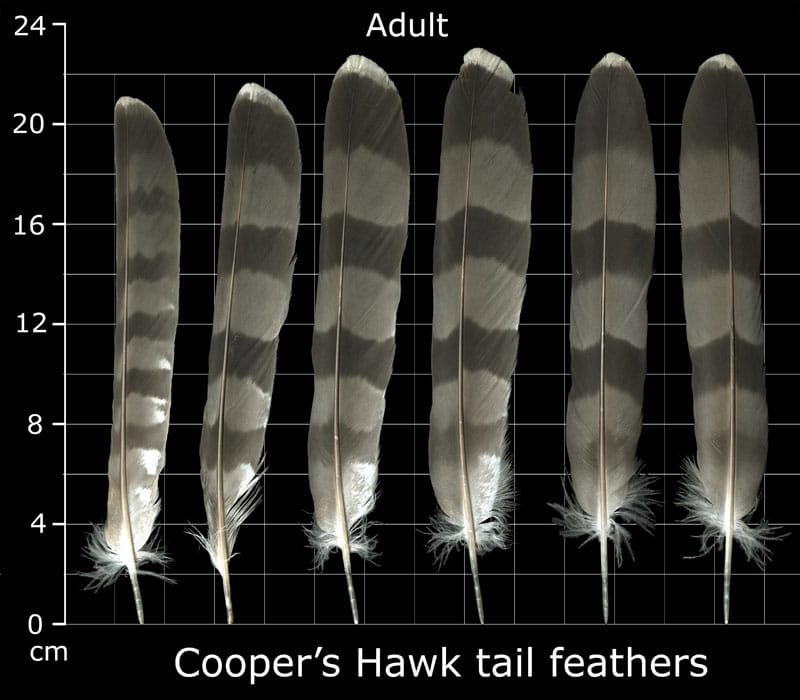
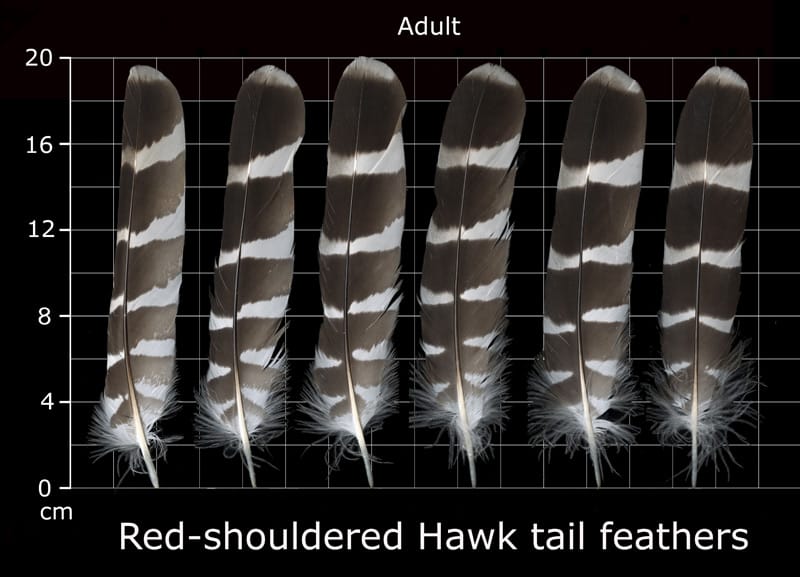
These images from the U.S. Fish and Wildlife Service's Feather Atlas
Red-tailed Hawks are most often spotted soaring overhead or watching the ground from a high perch. One study of three pairs of nesting Red-tailed Hawks found they caught prey in about four of five attempts. Red-tails also soar over fields searching for prey but these strikes are not as productive as perch strikes.
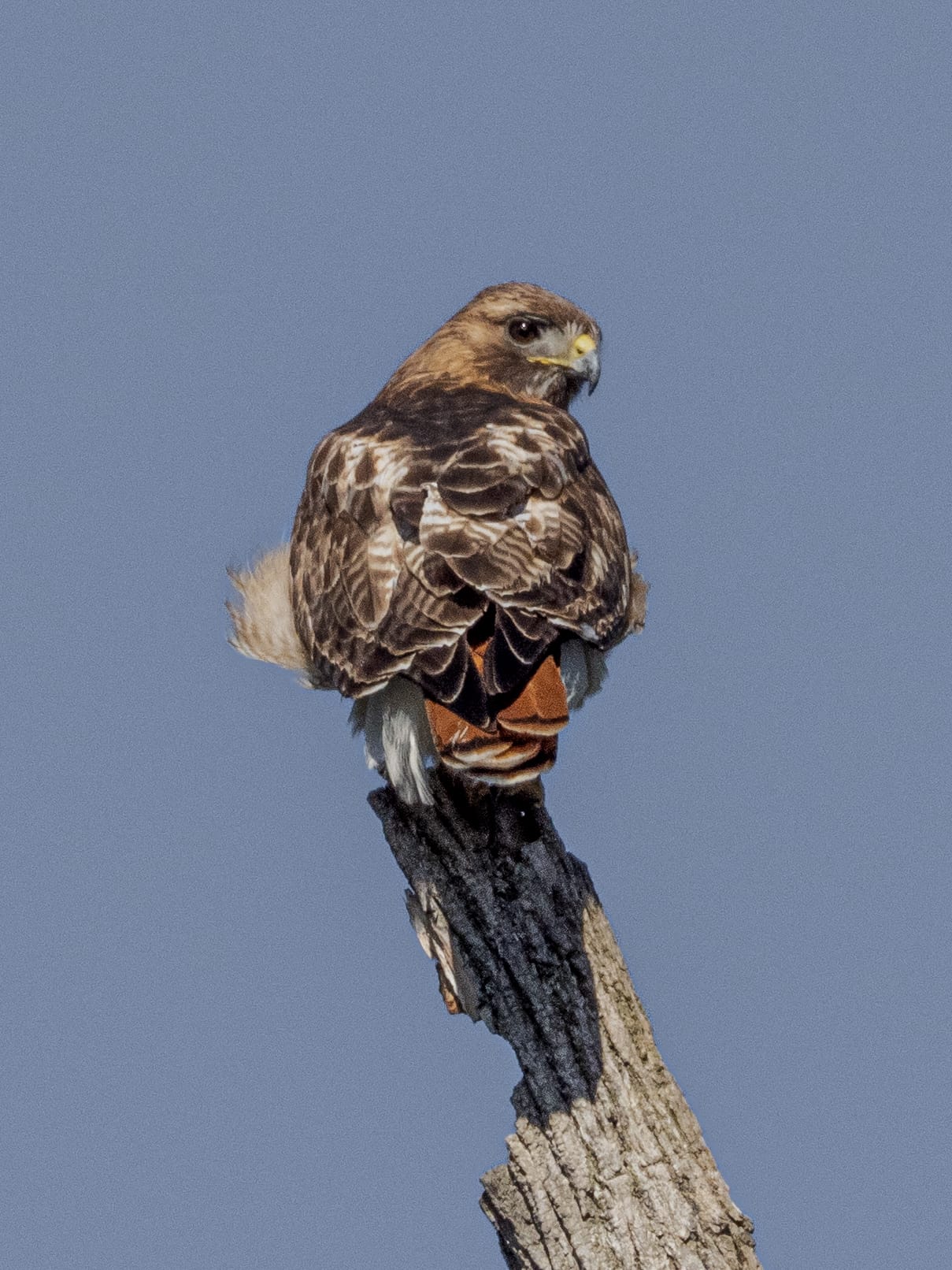
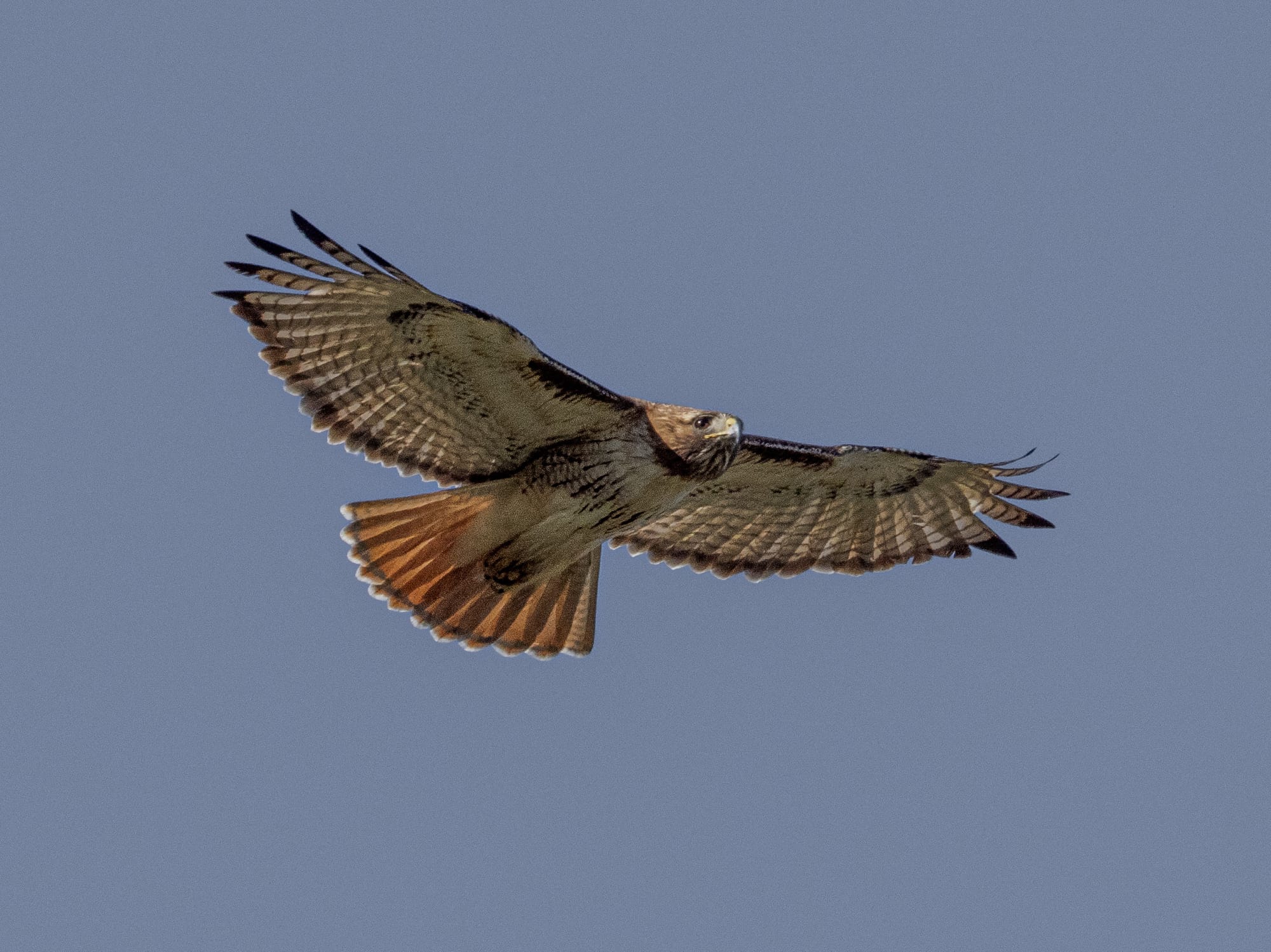
Red-Tailed Hawks
You'll see Red-shouldered Hawks perched in the tree canopy or beside a pond. They drop from their perch on their prey below.
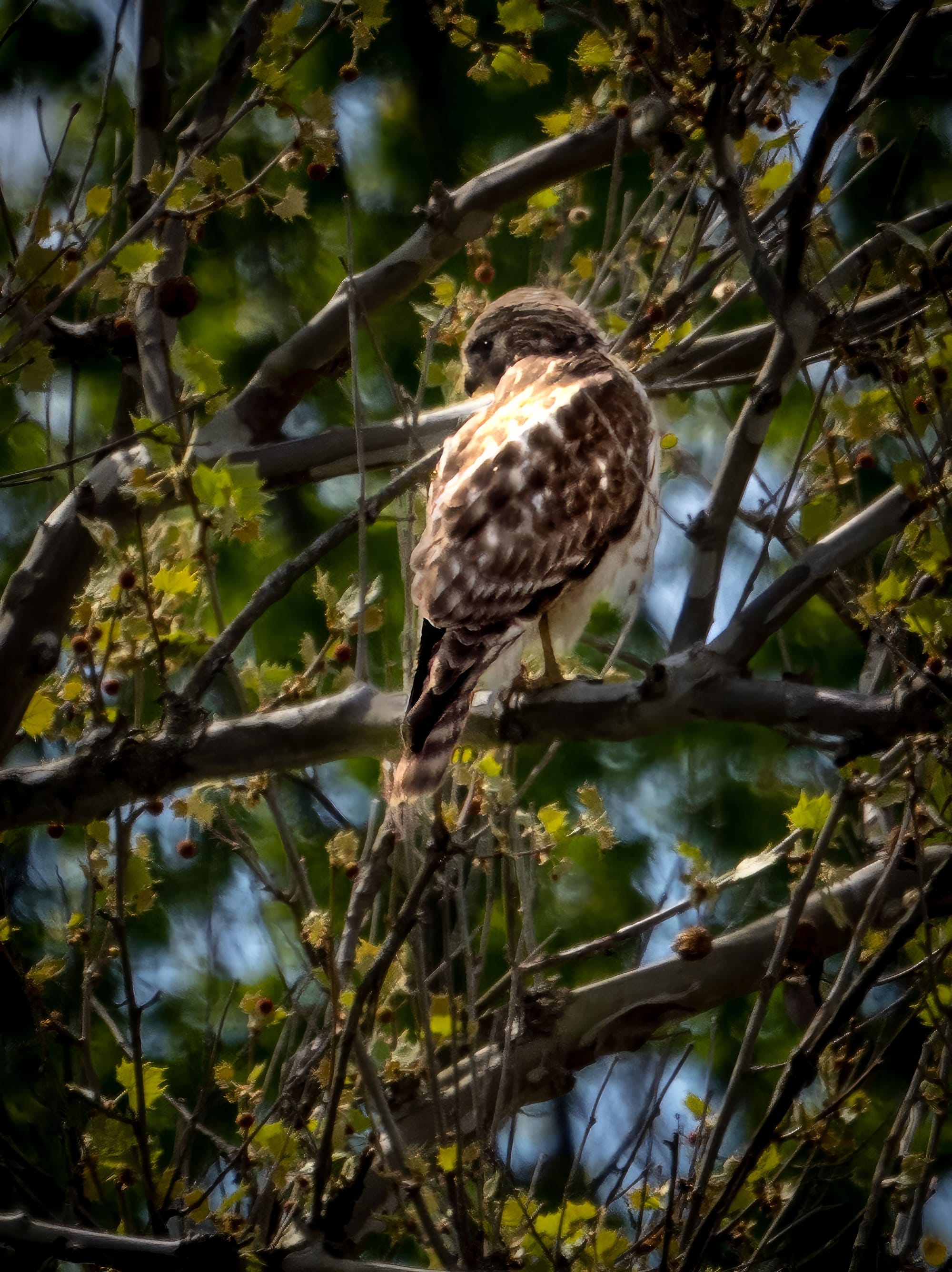
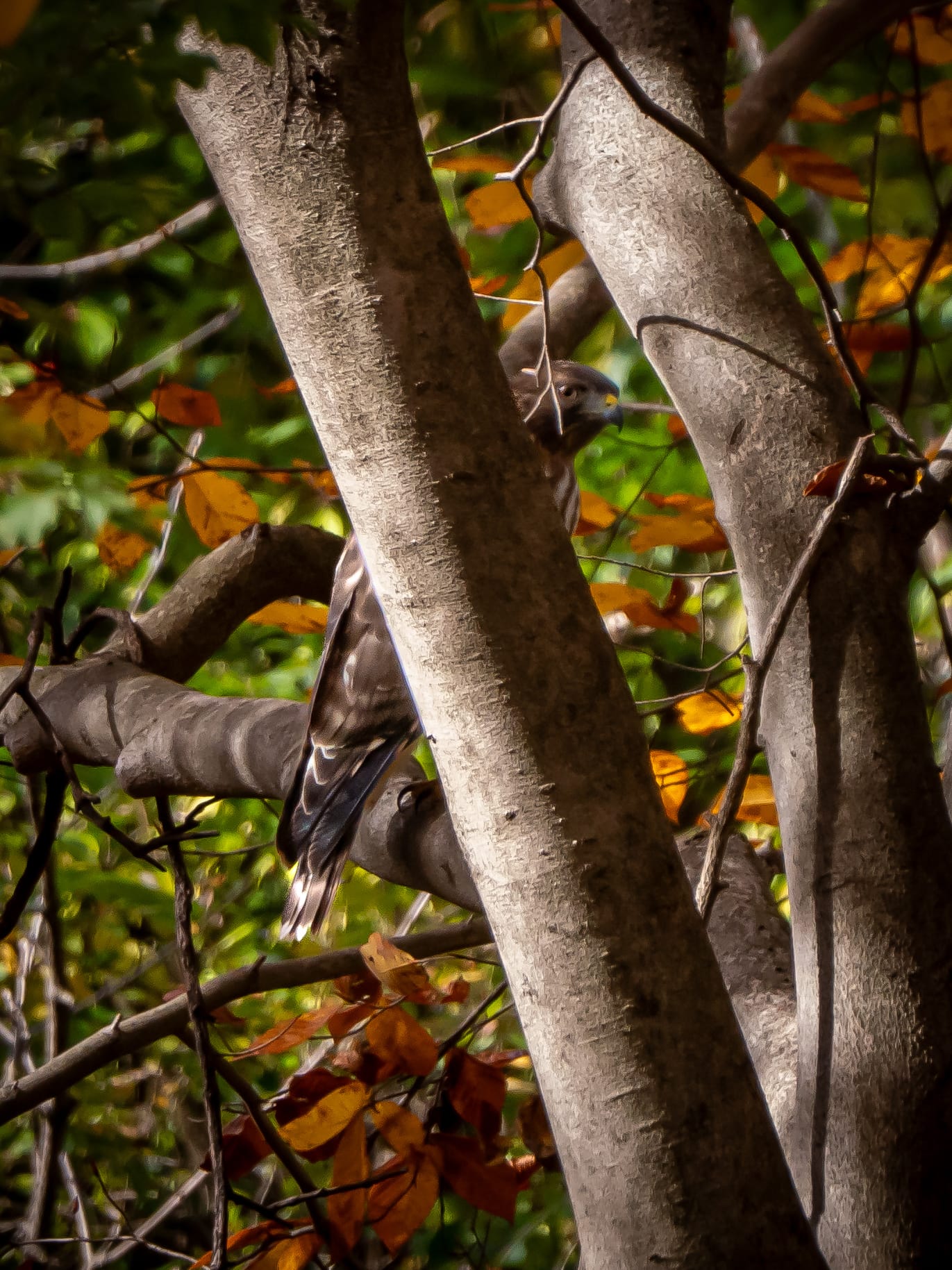
Red-Shouldered Hawks
Red-tailed Hawks hunt voles, mice, and rabbits, some birds and snakes. Red-shouldered Hawks take small mammals, frogs, and snakes, and only occasionally birds.
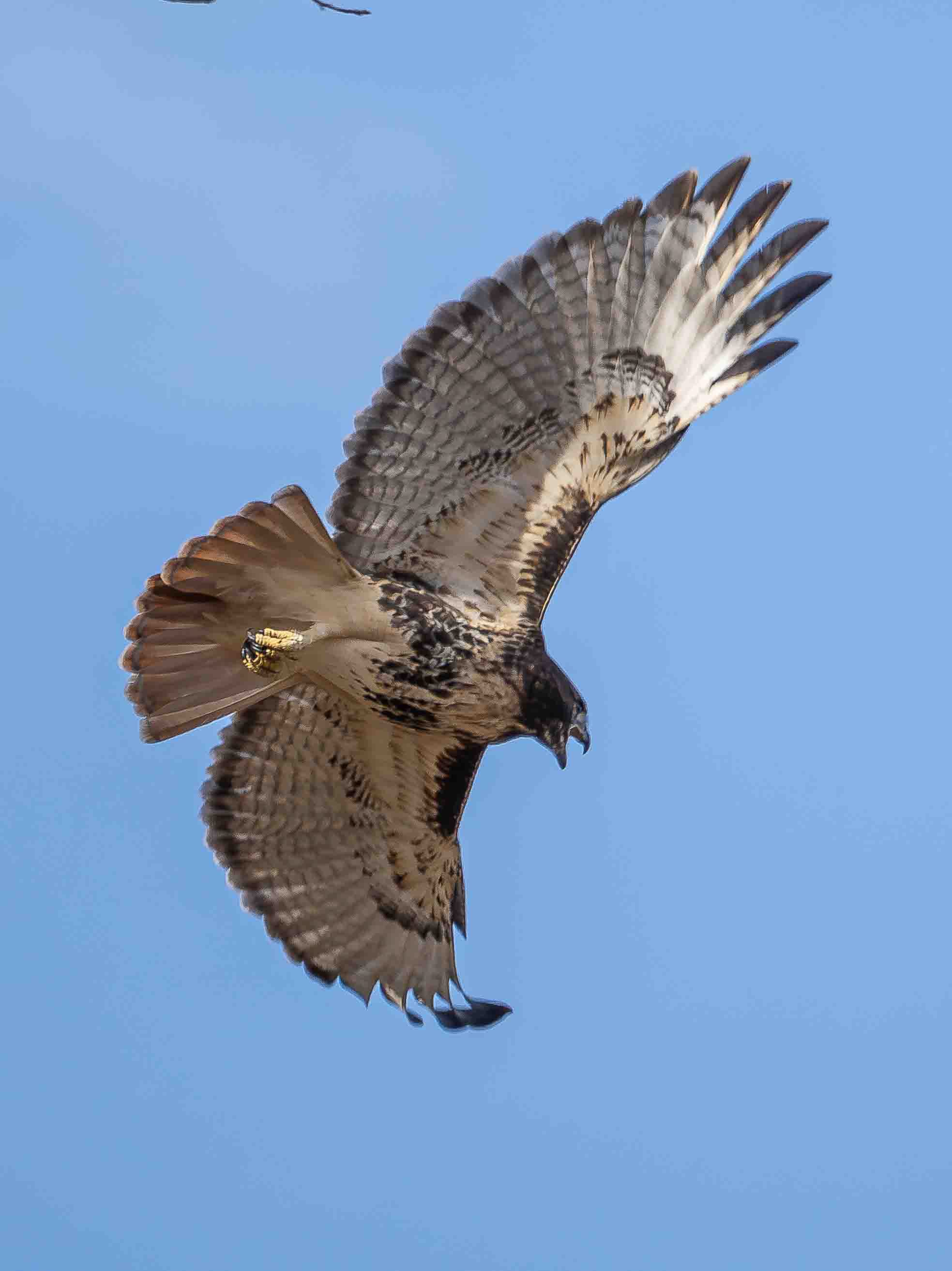
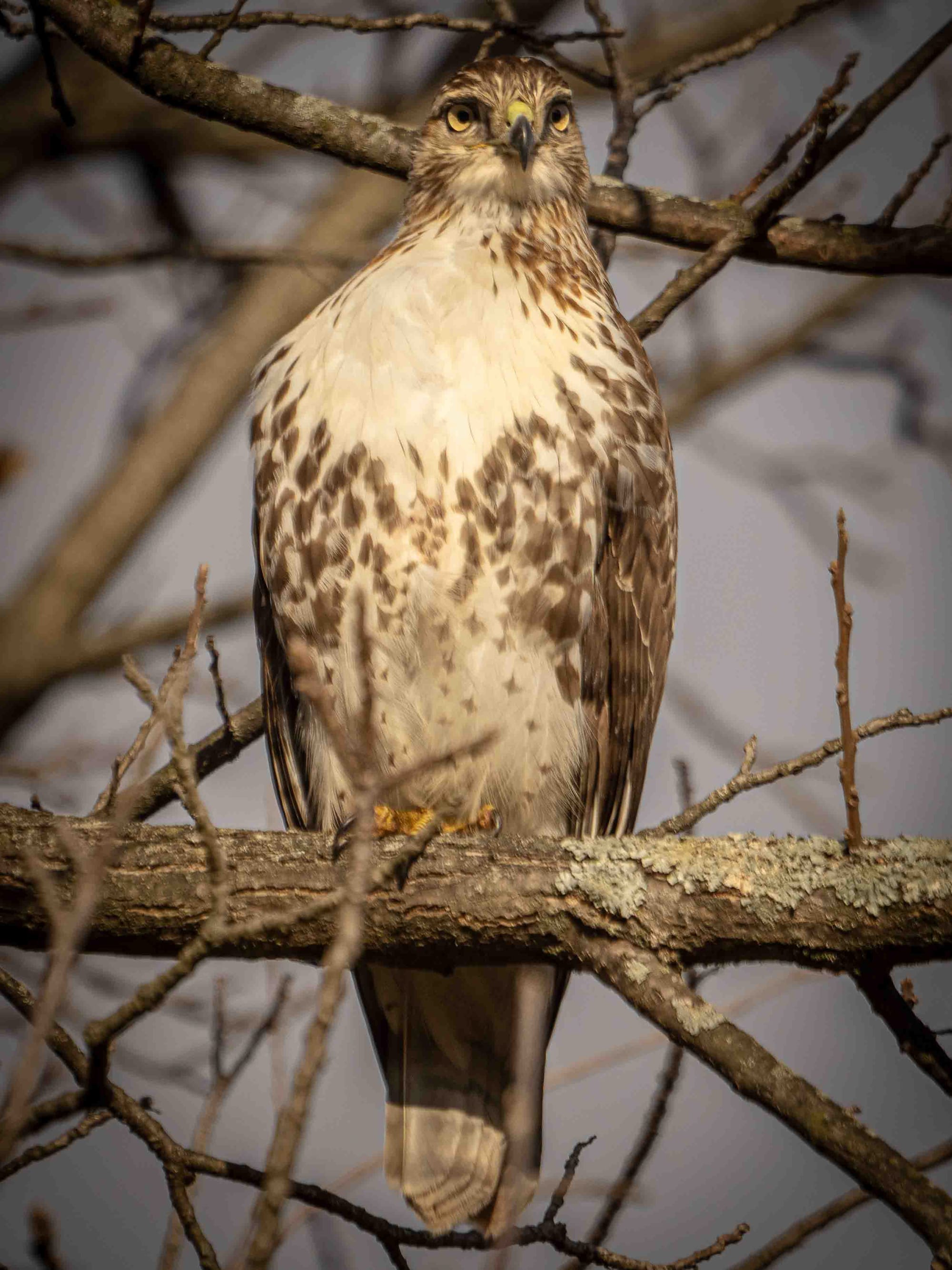
Belly band in Juvenile Red-tailed Hawks
Juveniles of both species look similar, making identifying them more complicated. Juvenile Red-tailed Hawks have a prominent dark band across the belly - Red-shouldered Hawks do not.