Interesting Birds, Bad Photos

The next nature walk at the park is Tuesday the 28th of April 9:30-10:30 AM Sign up here
Truth be told it's not all that difficult to get a good photo of a cooperative bird. The small, shy, frenetic ones are another thing entirely. If the bird is relatively rarely seen around here I settle for sharing bad photos. Here are three recent sightings of note -
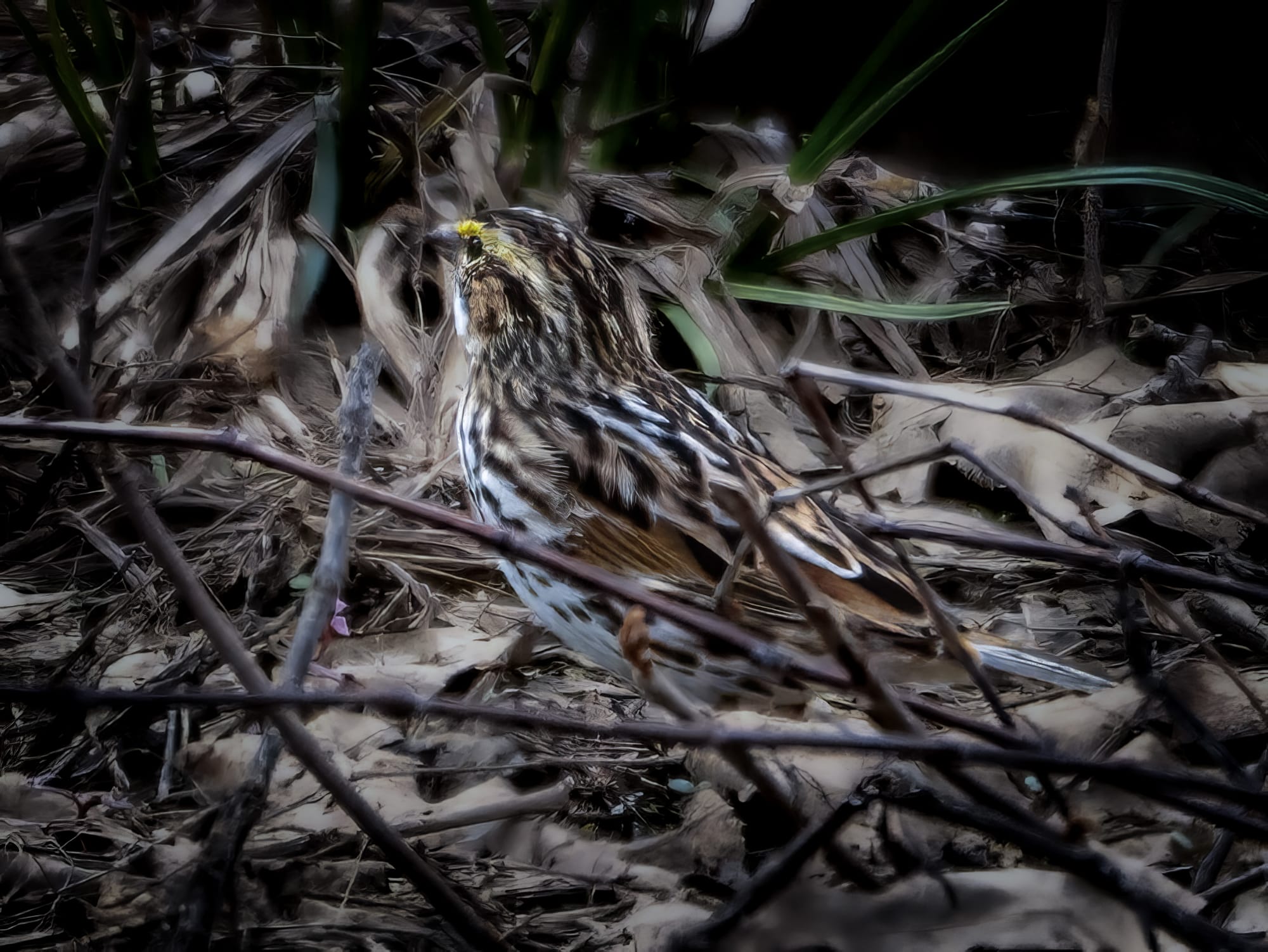
Savanna Sparrow (Passerculus sandwichensis)
A small sparrow of open fields. The yellow eyestripe just visible in this photo. Boldly perches on fence wires and weed stems, will tolerate a fair amount of movement from watchers when on the ground.
Another migrant from southern states that we may glimpse moving through fields and open ground in spring and fall.
It nests in hayfields, grassy roadsides, and pasture edges on the ground in a cup shaped covered nest with a tunnel-shaped entrance. Because our steady conversion of farmland to development since the 1980s has reduced open grassland it's listed as a Species of Greatest Conservation Need in Pennsylvania's Wildlife Action Plan.
The song opens with a few quick notes, moves into a high thin buzz, and drops into a short lower trill at the end.
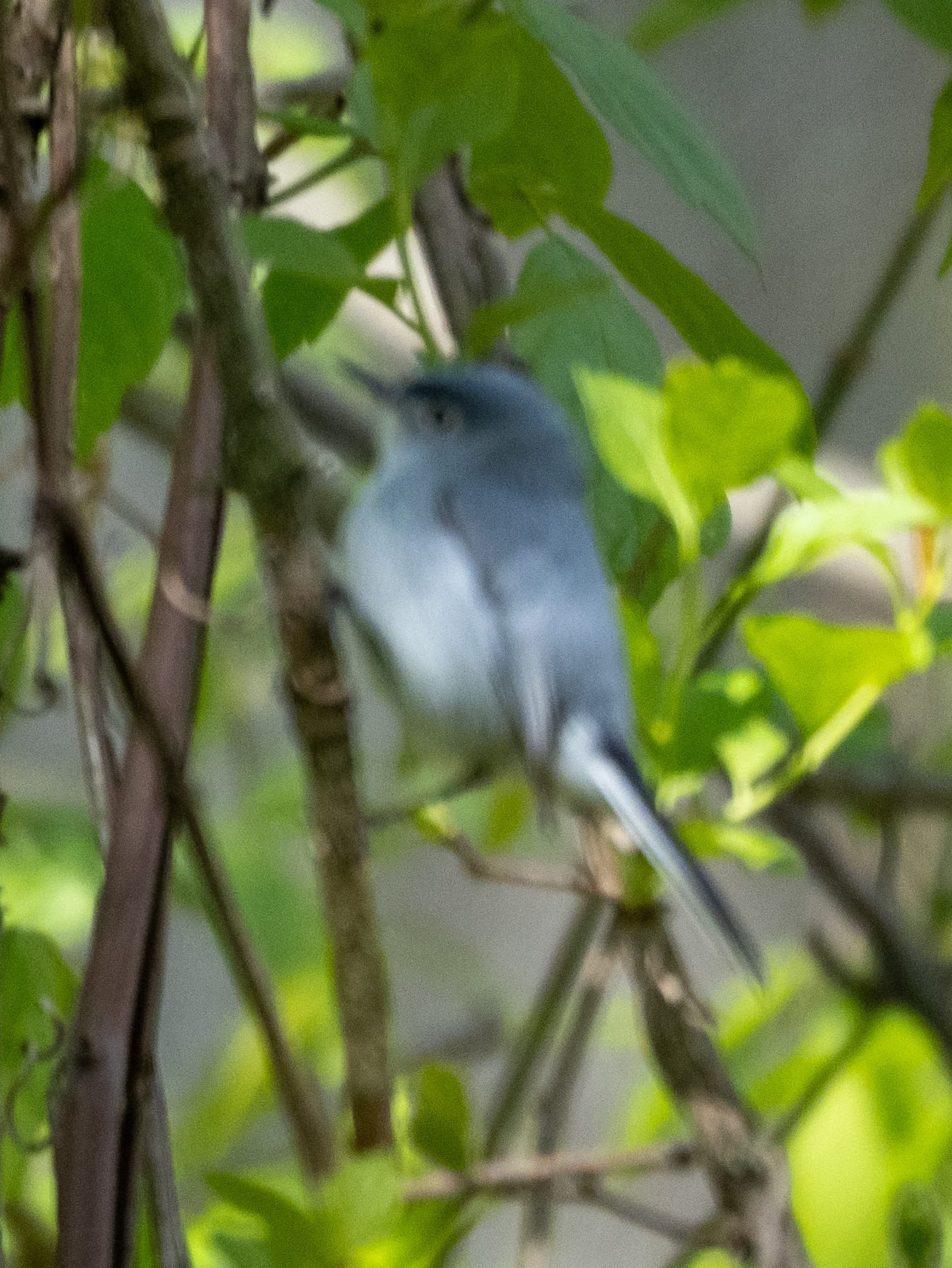
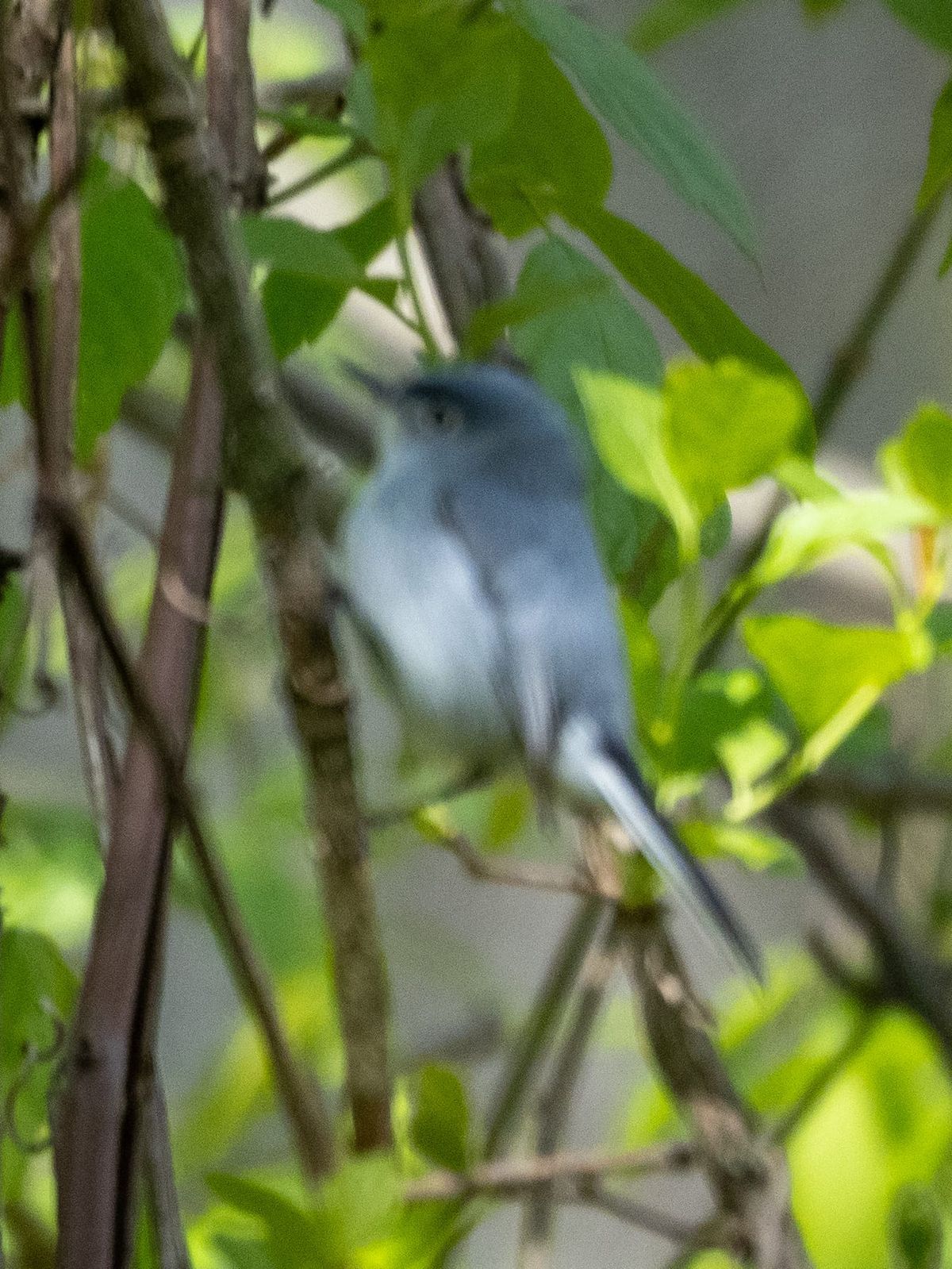
Blue-gray Gnatcatcher (Polioptila caerulea)
It's not easy to photograph this small, frenetic bird gleaning insects from leaves and twigs, flicking its white-edged tail from side to side as it moves. This is a male, you can just make out the black forehead and eyebrow that give him a permanently annoyed expression. The call is a thin, nasal pzzzz .
They arrive here in early spring from our southern states and stay for the breeding season. They prefer deciduous woodland, particularly oaks. They build small cup-shaped nests out on a limb camouflaged with spider web and lichen to resemble a knot. The breeding range has been expanding roughly 200 miles northward in the last 40 years.
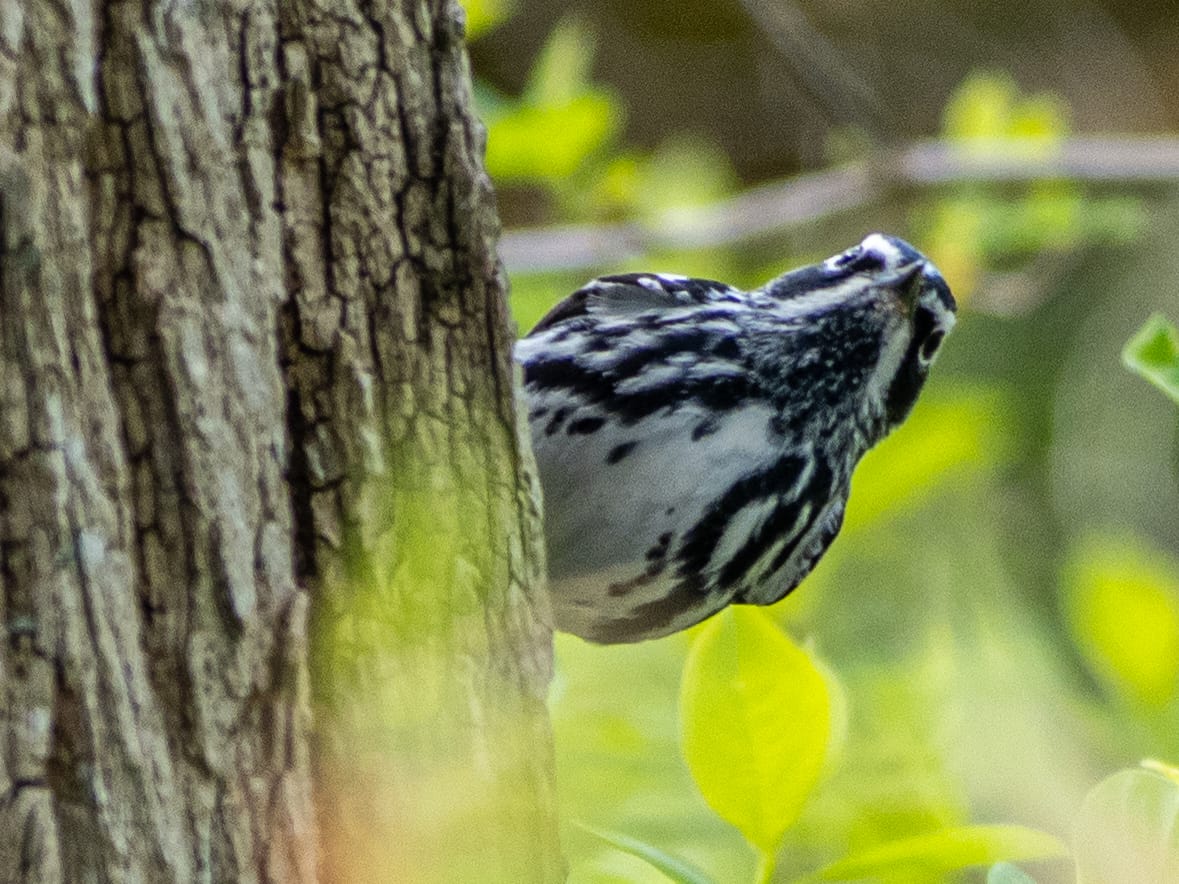
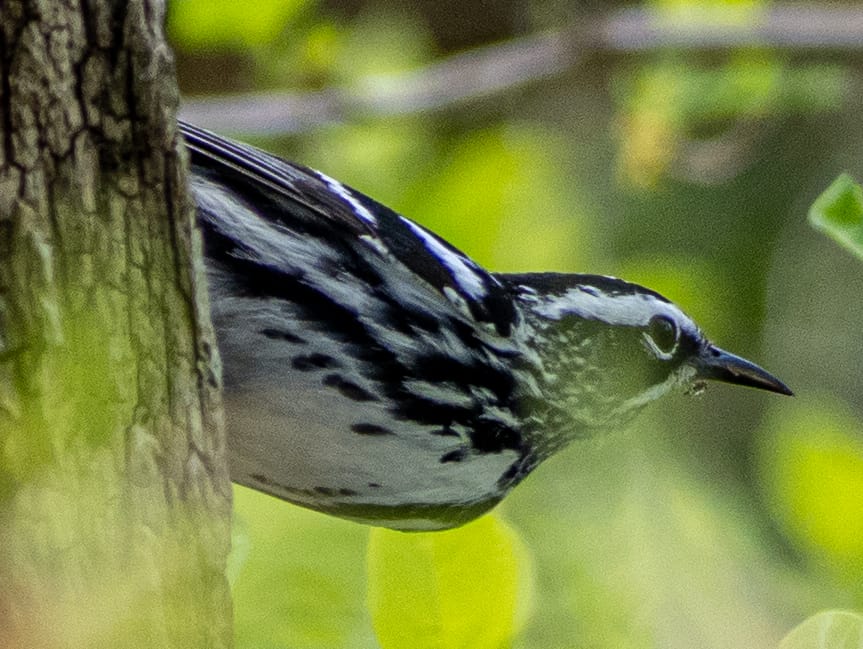
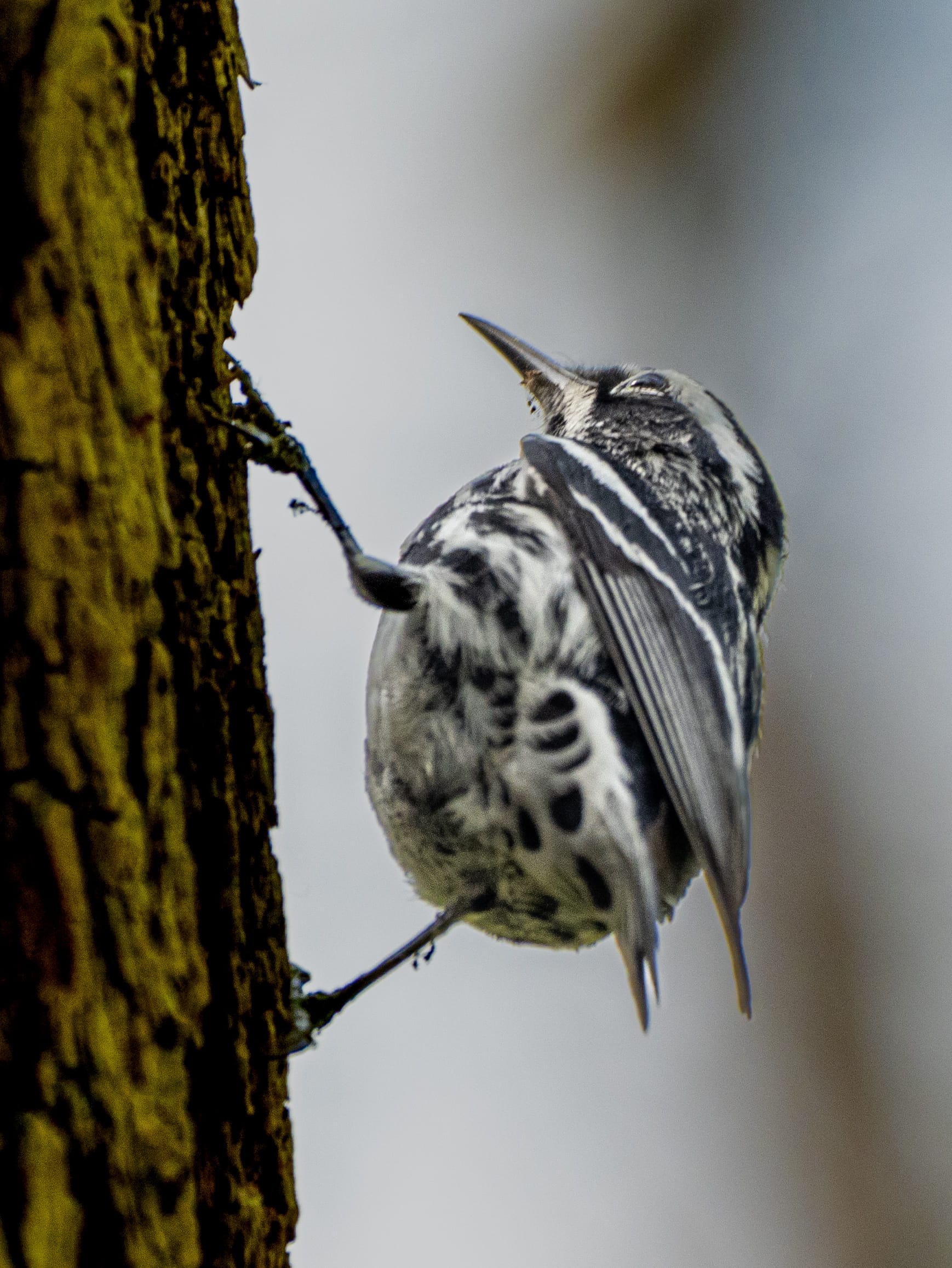
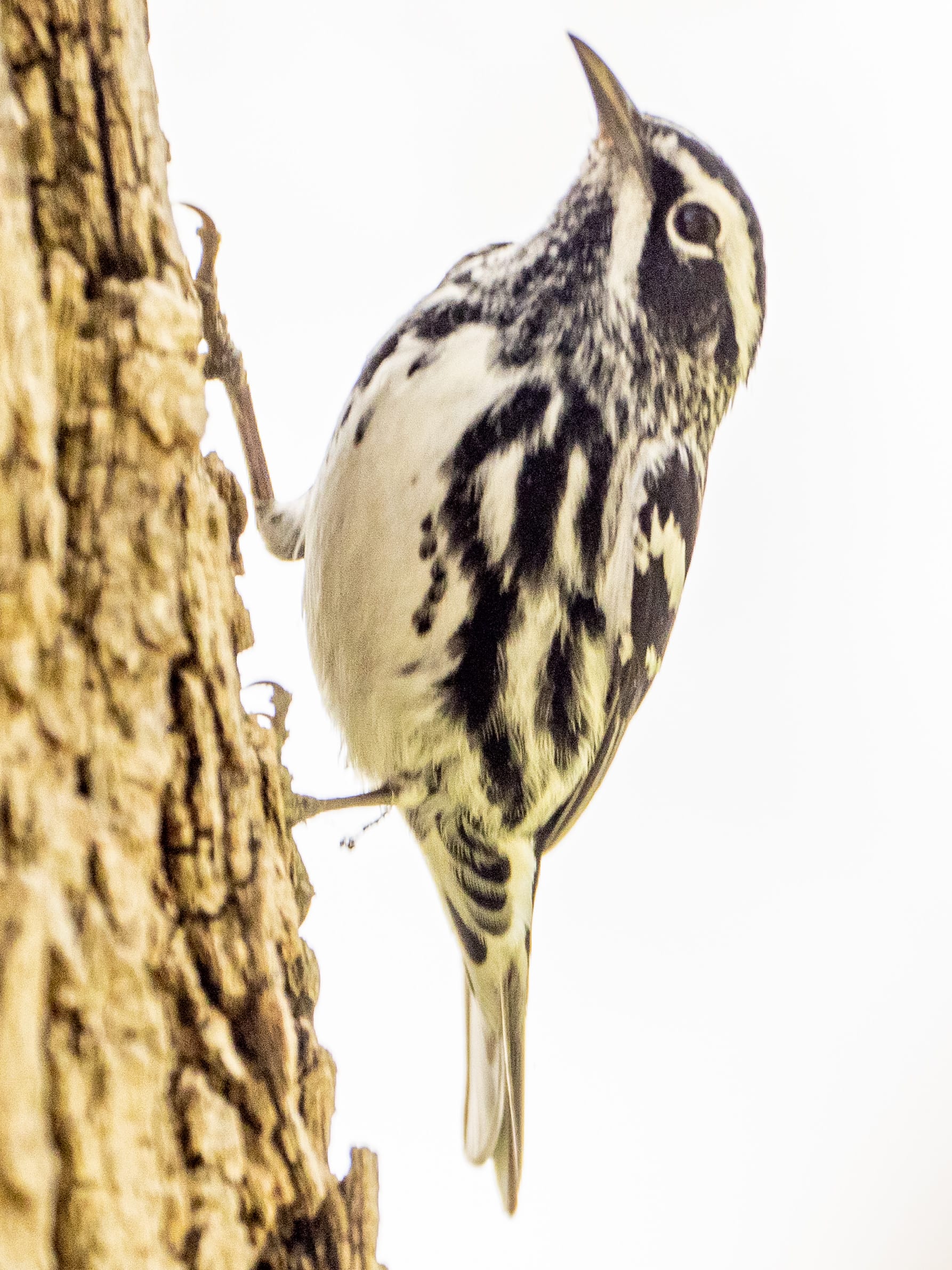
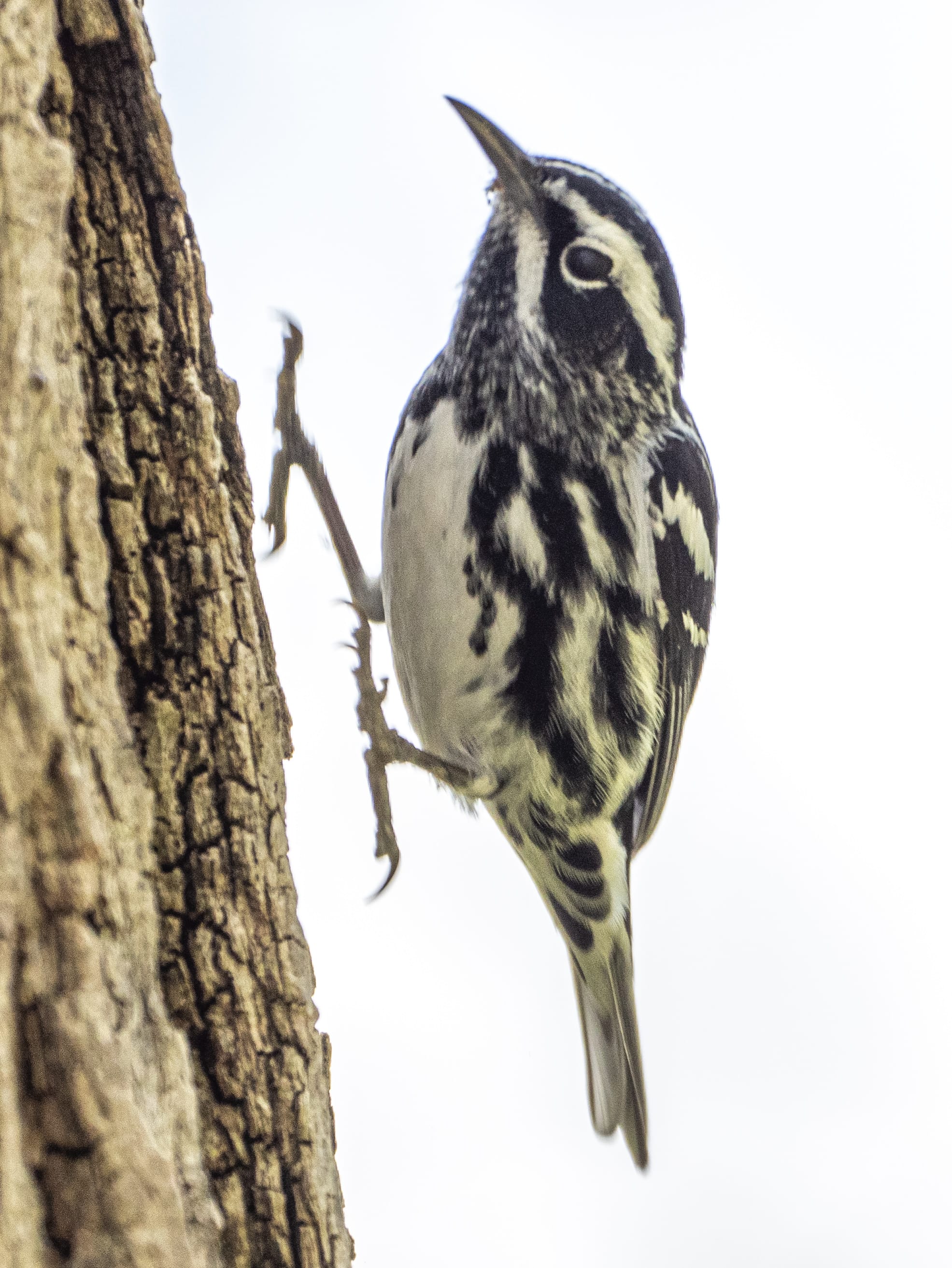
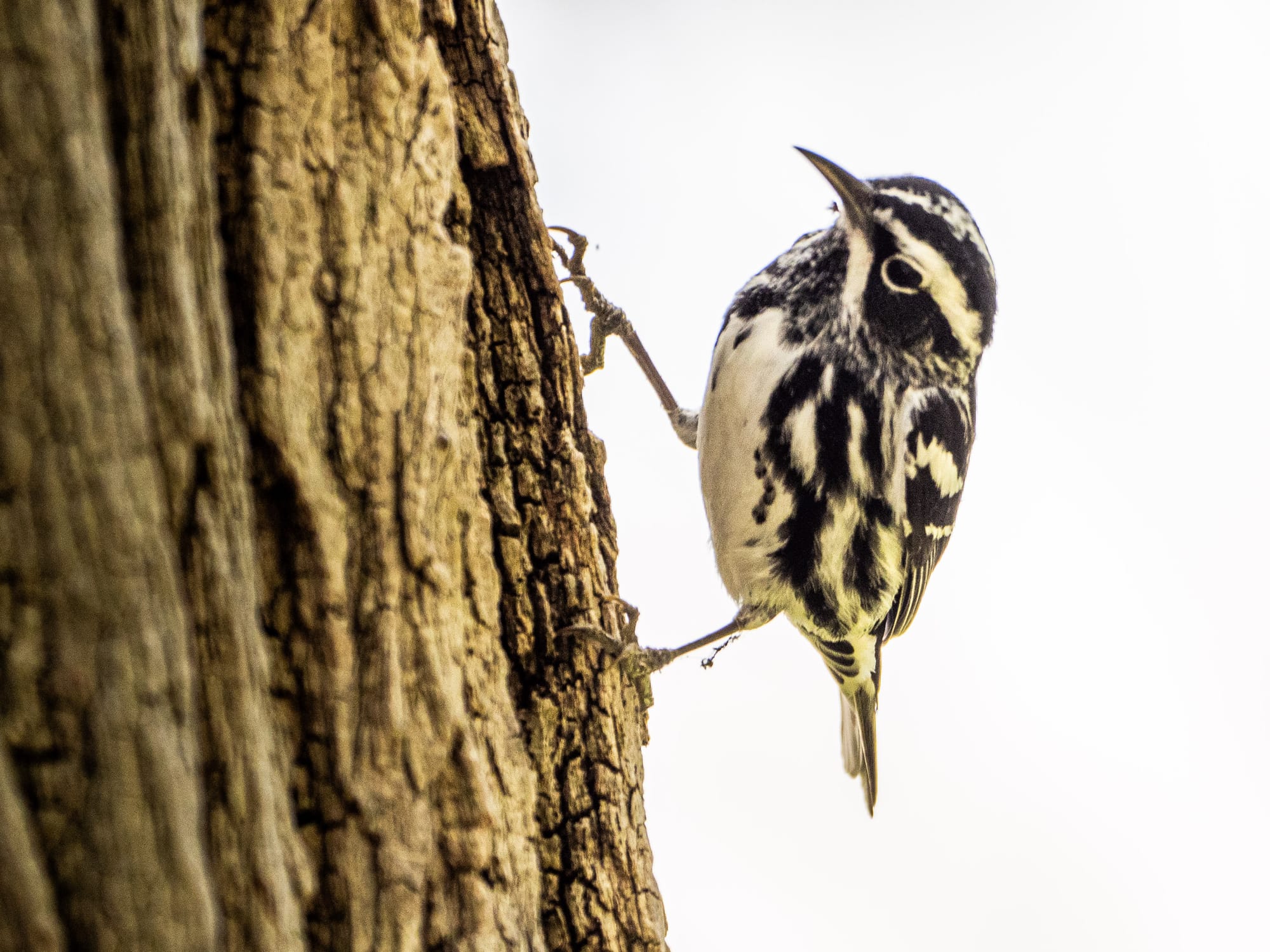
These photos are not so bad, but not all that great either.
Black-and-White Warbler (Mniotilta varia)
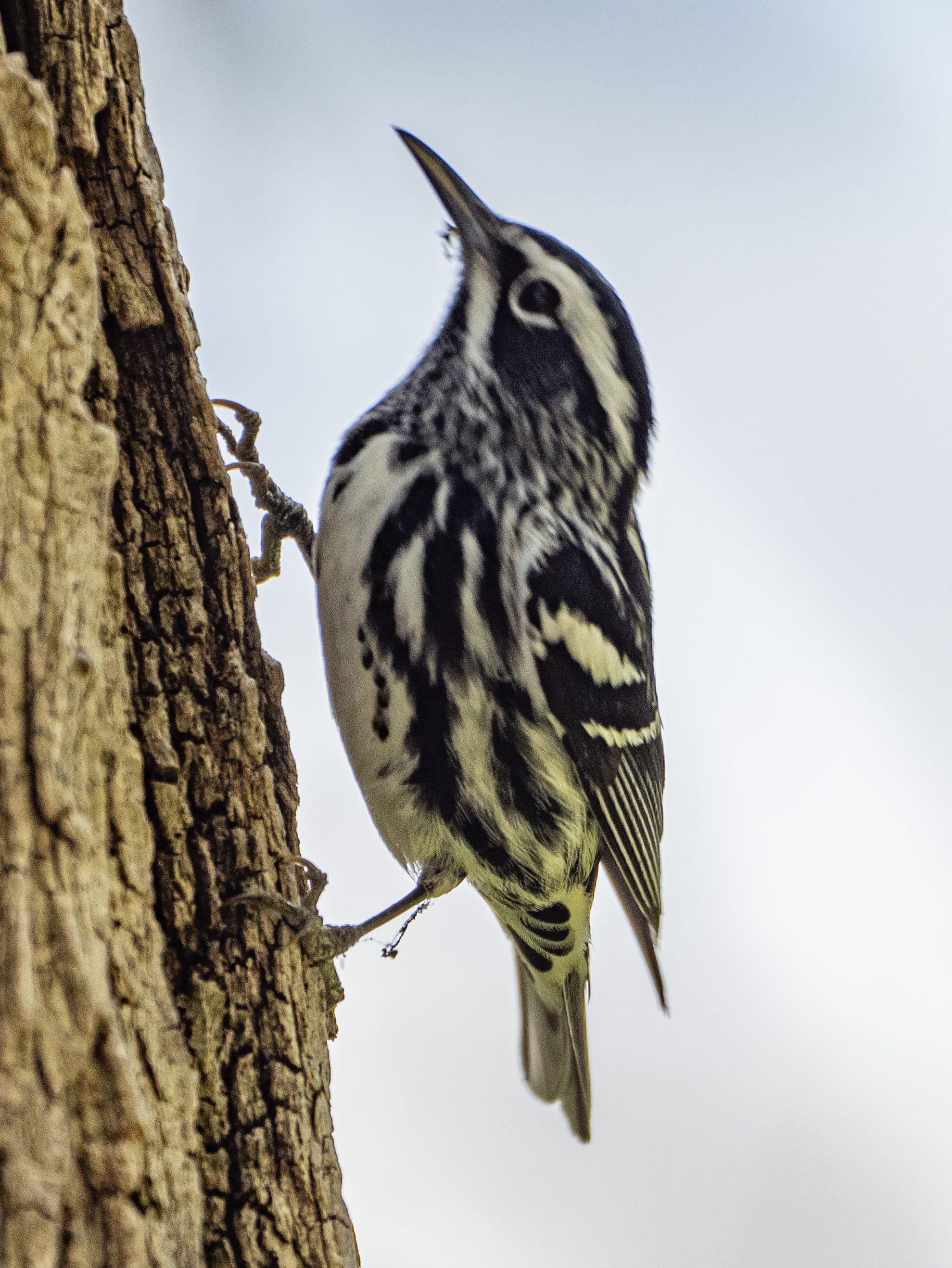
I felt very fortunate to be in the right spot at the right time, and this Black and White Warbler was the most cooperative of the tree birds in this post. I watched as it spiraled along a tree, probing crevices for insects like a nuthatch. Its crisp longitudinal streaks of black and white serve as excellent camouflage against tree bark.
It's reasonable to assume this individual is stopping over here during its migration from Southern Florida (although it could have wintered as far south as Ecuador) to the big forests farther north up into Canada. Black and White Warblers breed in large unbroken forests and build their nests on the ground in dense leaf litter. Our fragmented small local woodlots are crisscrossed by dog walkers, browsing deer so there is little suitable local habitat.
The song is easy to miss — thin, wiry, high, slightly mechanical. Like a small wheel that needs oil.