Mourning Doves

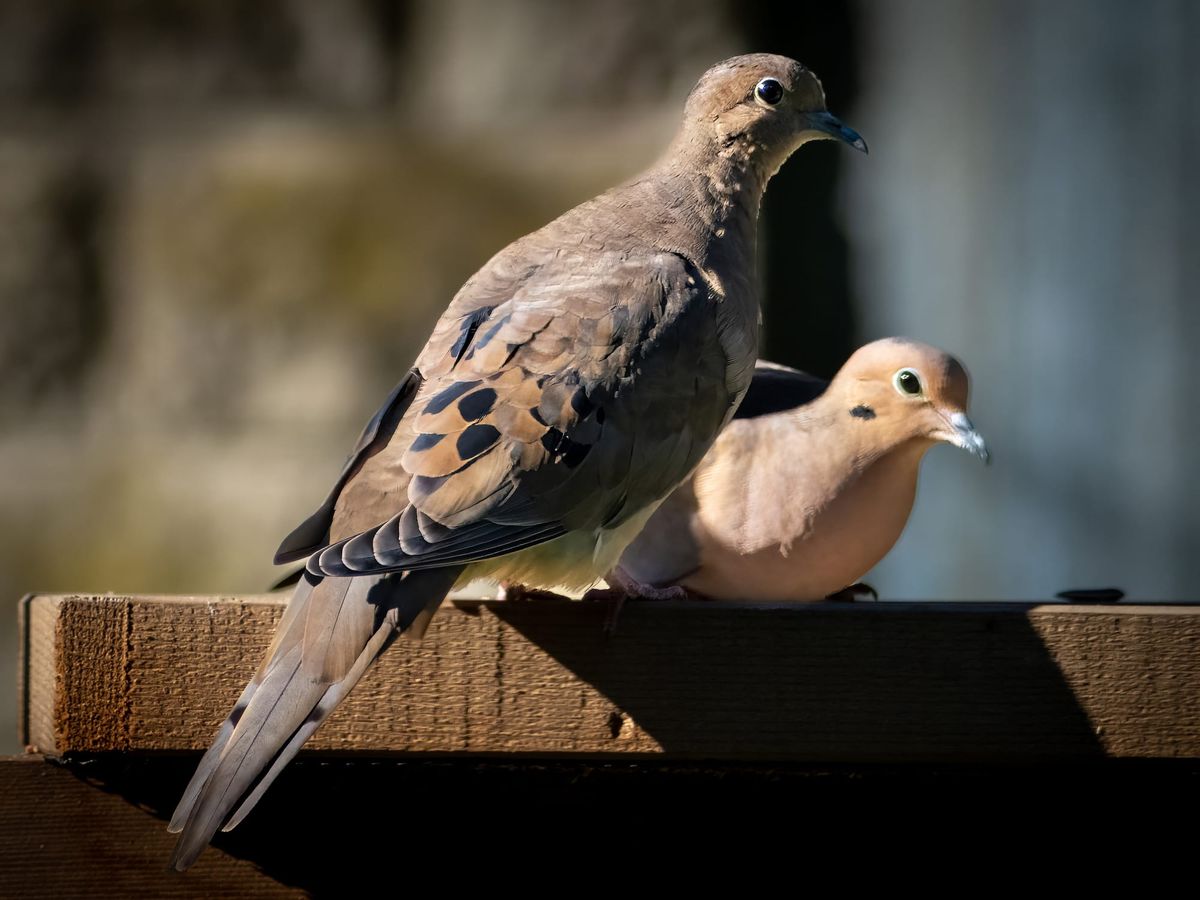
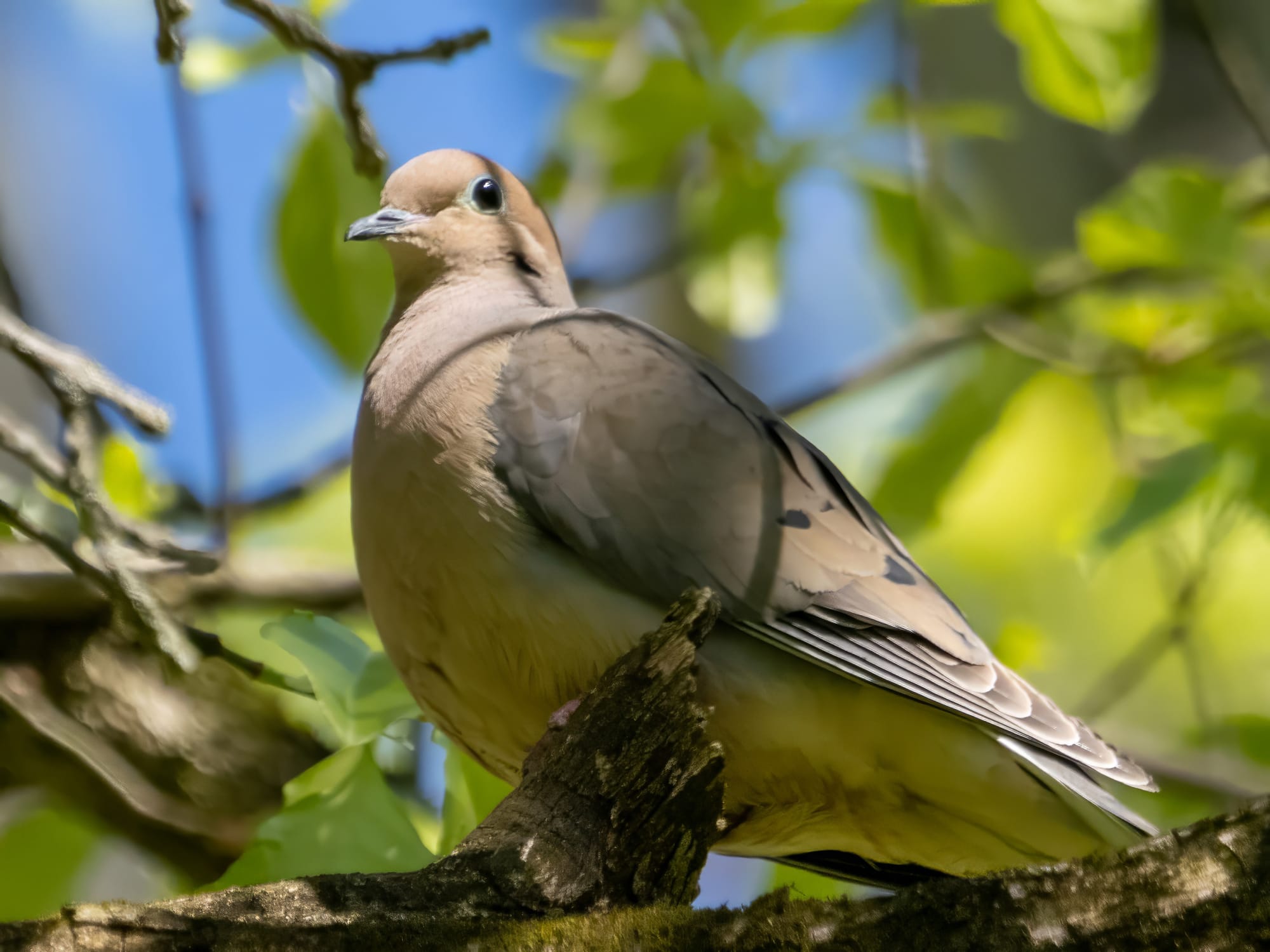
The bittersweet call and whistling flight of the Mourning Dove (Zenaida macroura) make it one of our most recognizable local birds.
Females are slightly duller brownish-tan; males show a bluish-gray crown and somewhat stronger pink tones on the breast.
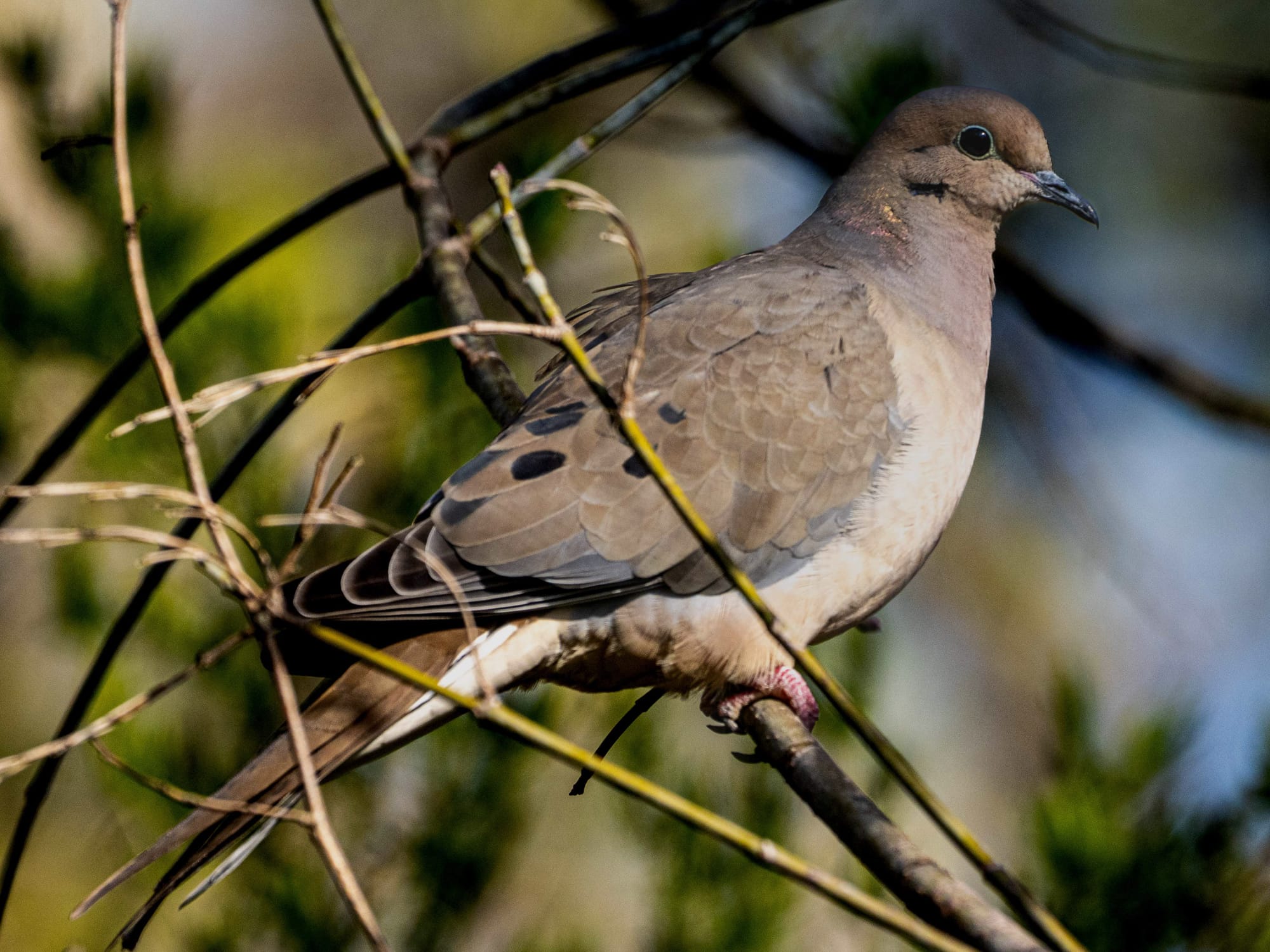
There's a patch of iridescent feathers along the side of the neck that appears to sparkle with green, violet, or pink, as the bird moves because microscopic layers in the feather bend the light. During courtship bowing and turning and calling this patch changes with each movement.
Because mourning doves are better adapted to hedgerows, roadsides, and backyards I see them more frequently in town than at the park.
When our region was covered by forest there were fewer mourning doves. We constructed a mourning dove paradise when we made those forests into a patchwork of farm fields that eventually yielded to housing developments or second growth forest. The small seeds that make the mainstay of the mourning dove's diet (ragweed, grasses, and other plants that appear wherever soil is disturbed) are abundant year-round in this landscape.
Open ground for feeding, scattered trees for nesting, and ready access to water contribute to their status as one of the most numerous birds on the continent.
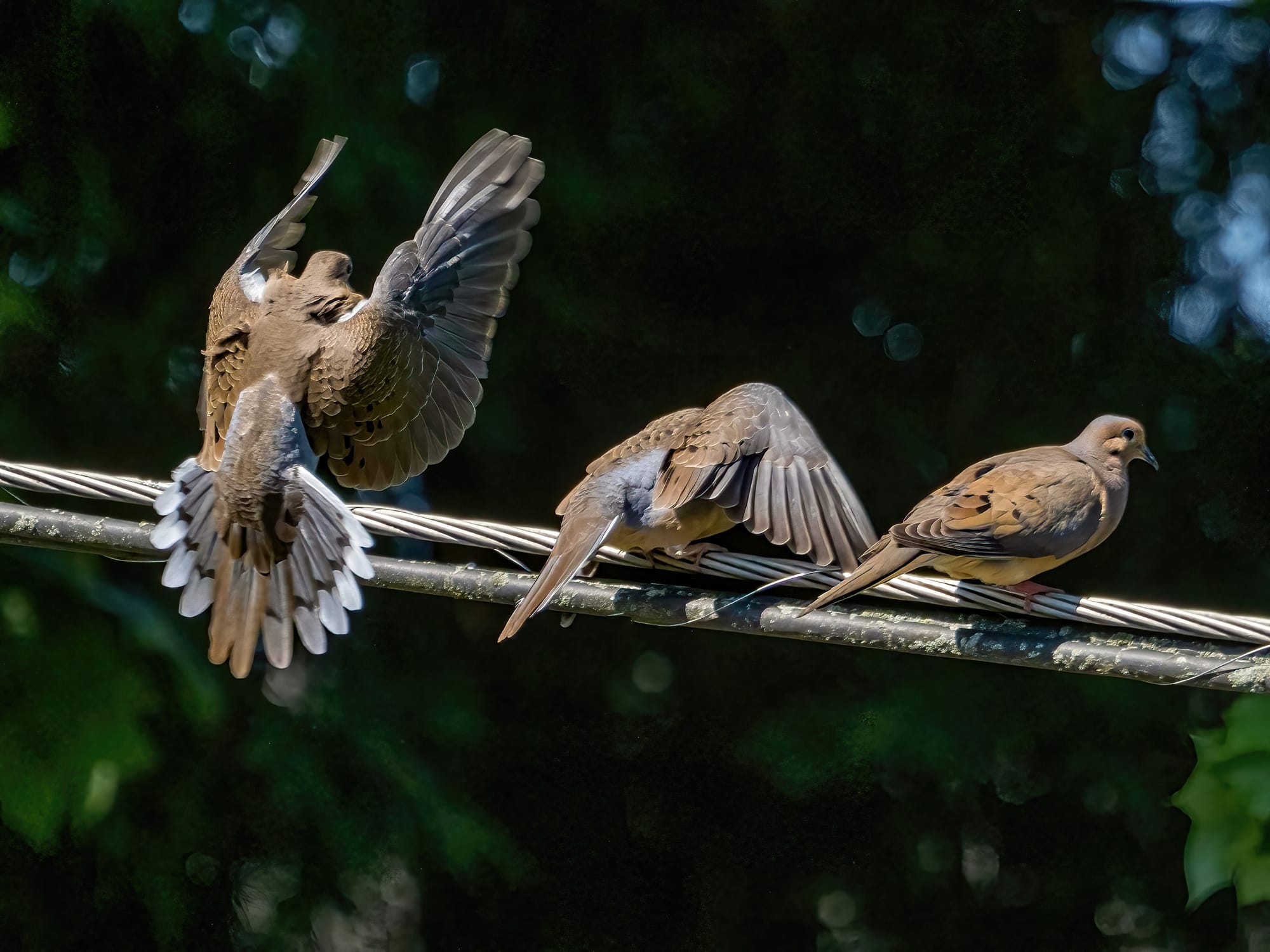
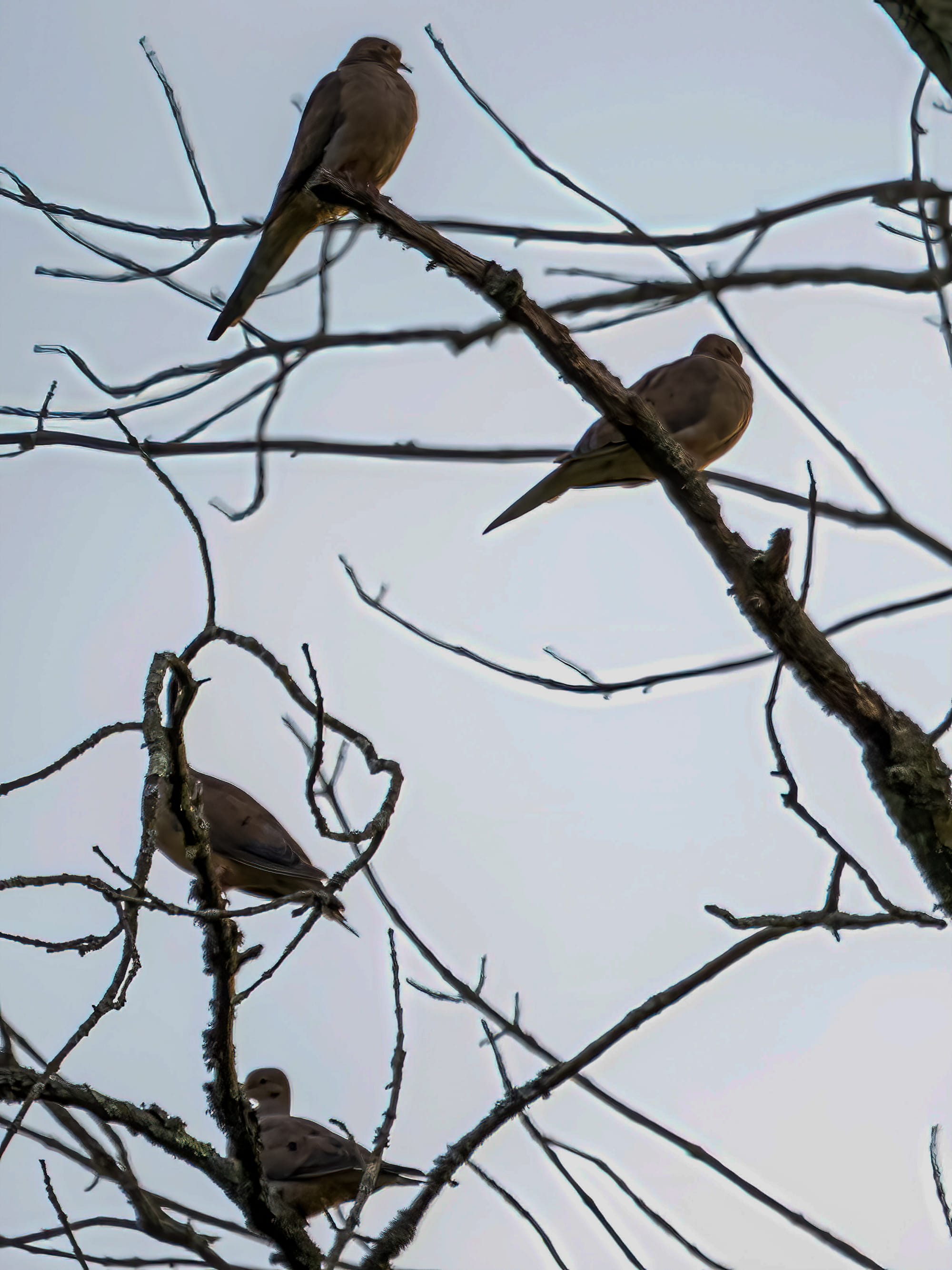
Outside of breeding season mourning doves are often seen in flocks.
Their nest is a loose platform of twigs, sometimes so thin that eggs can be seen through it from below. Any spot that offers minimal support will do-a small tree, a shrub, a vine, a ledge or beam of a building.
Both parents incubate the eggs, the male by day and the female by night. In about two weeks the young hatch, and within another two weeks they are gone from the nest - a very fast turnaround in the world of birds.
This rapid cycle is possible because both parents produce “crop milk” a survival adaptation of a small number of bird species like pigeons, flamingos, and emperor penguins.
Unlike mammalian milk crop milk is made of nutrient-rich cells that shed from the lining of the parent's crop (part of a bird's esophagus that softens and regulates the flow of food before it enters the stomach). Prolactin, the same hormone that controls milk production in mammals, triggers the production of crop milk.
This strategy is not about a lack of food. Seeds may be plentiful but they are also difficult for a tiny hatchling to digest. They also lack protein required for rapid development. Crop milk is a highly concentrated food that allows chicks to double in size in just a day or two and leave the nest in less than two weeks.
A pair of Mourning Doves may raise multiple broods of chicks in a single year—often preparing a new nest while the previous young are still dependent.
This rapid pace offsets equally rapid losses. Eggs and nestlings are taken by snakes, squirrels, and crows. Adults are hunted by hawks and owls. Mourning Doves survive and thrive by overwhelming the losses. They produce young quickly so the population remains stable or even increases. This is an evolutionary adaptation is known as r-selection. Here "R" represents how greatly a species prioritizes reproductive volume over individual survival. R-selection species flood an area with offspring, ensuring the species survives even if most individuals die.