The Bees at Nixon Park

The next nature walk at the park is Tuesday the 28th of April 9:30-10:30 AM Sign up here
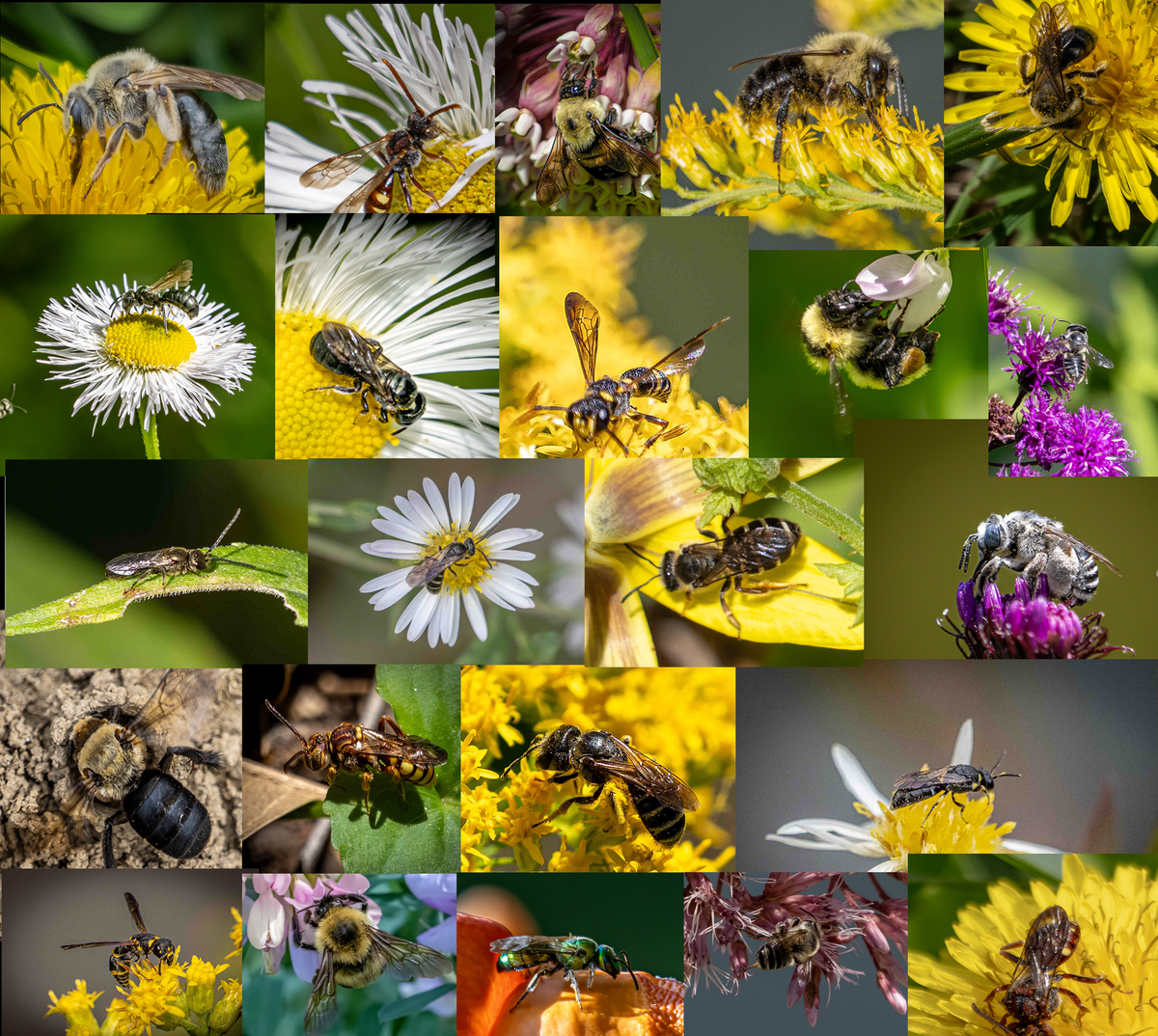
Over the past few years I have observed about 40 different species of bees at Nixon park, around half of those observations have been confirmed by other observers on iNaturalist. The other half have either been confirmed to the less specific genus level (the next taxonomic level above species) or remain an open question. Making exact species level identifications is often impossible without capturing and killing the bee. I am fine with getting to the genus level.
You can see observations of bees on the Biota of Anson B. Nixon Park Project.
Why So Many Species?
At present we've identified something like 25,000 species of bees world wide. What are the reasons for this diversity?
Three reasons:
1. Bees are smaller than elephants.
2. Bees are older than elephants.
3. Plants don't have feet.
New species develop in response to two factors- variation and separation.
Each generation passes traits to offspring, but not perfectly. Small variations appear. Those variations accumulate across thousands or millions of generations until descendants look and behave nothing like their ancestors. That is evolution.
Separation is what turns evolution into speciation. A new river, a rising mountain ridge, a shift in climate can divide a population. Isolated from each other each new population inherits different variations. Given enough time the two populations the two populations can no longer produce offspring together because they have become that different from one another.
Bees Are Smaller Than Elephants
Smaller creatures generally have shorter lifespans than larger ones. Bacteria produce a new generation in minutes, bees in weeks, and elephants take 25 years. More generations mean more species evolve.
There are millions (perhaps billions) of species of bacteria today, 25,000 species of bees, and only two or three species of elephants.
Populations of small creatures are also more easily divided than large ones — almost any barrier is enough.
Bees Are Older Than Elephants
Bees first appeared an estimated 125 million years ago. Elephants appeared only 5 to 6 million years ago. Bees are more than 20 times older, which means 20 times more opportunity for separation and speciation.
Plants Don't Have Feet
Plants can't move to find pollinators; they have to attract them. They do this with different combinations of shape, color, scent, and growth season. Each combination tends to attract different bee species, creating a vast range of niches to occupy. Species sharing a niche compete until one prevails. Species in different niches coexist.
The enormous variety of flowering plants (around 300,000) create an enormous variety of niches - More plant variety, more niches, more bee species.
What you may see at the park -
Bees are divided into seven taxonomic familes worldwide, five of which are represented at the park. Here are profiles of the most commonly observed representative of each of the five families you are likely to see at the park
Apidae (from Apis, the Latin word for bee)
The largest bee family with 5,700+ species worldwide. Includes bumble bees and honey bees, like the eastern carpenter bee that drills round holes in fence posts and deck railings, small carpenter bees that nest in hollow plant stems, long-horned bees (named for the males' unusually long antennae), and the nomad or cuckoo bees — small, wasp-like, nearly hairless bees that lay their eggs in other bees' nests.
Hibiscus Turret Bees are members of the Apidae family, see this post for more information.
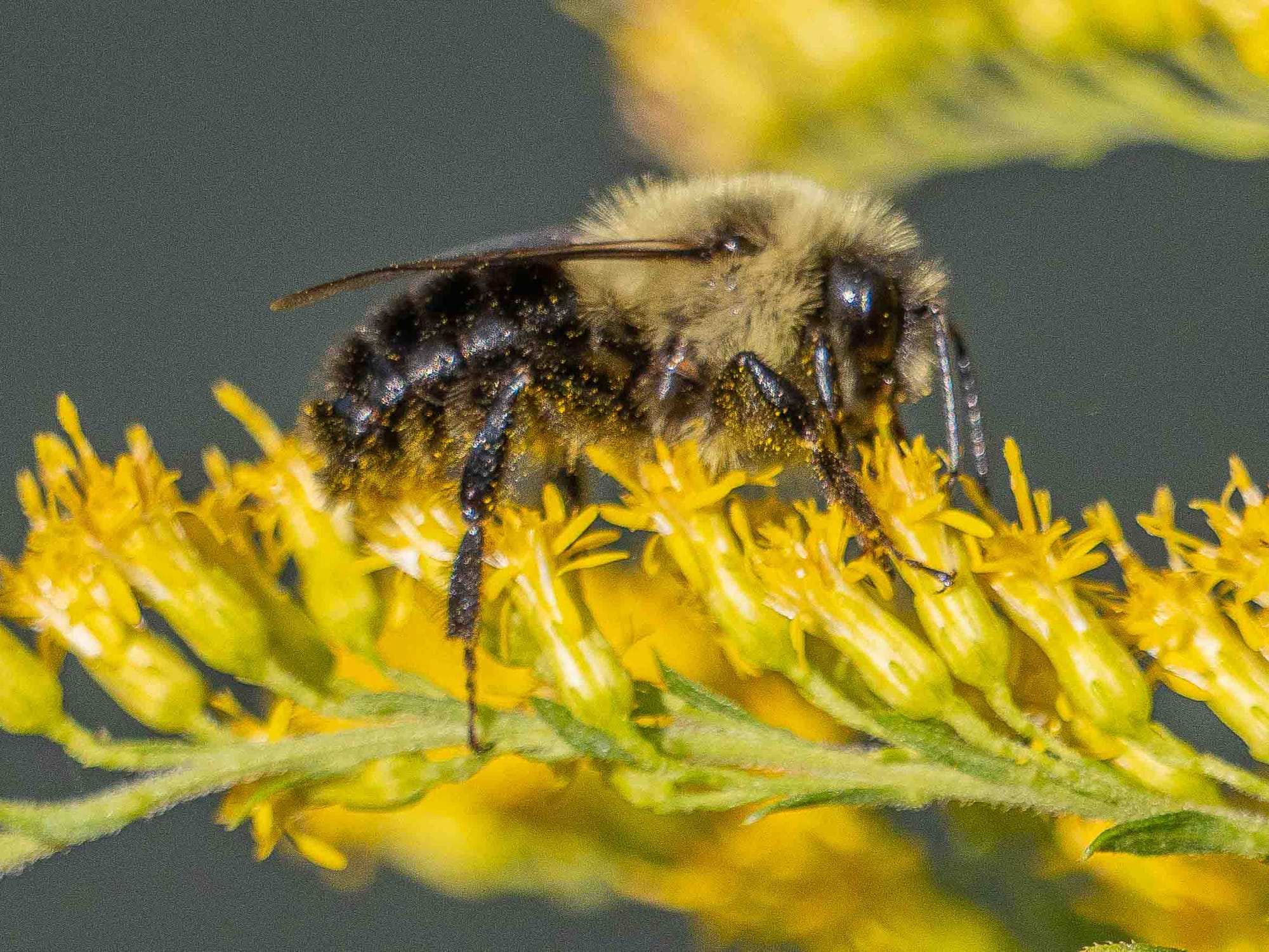
Common Eastern Bumble Bee (Bombus impatiens) The familiar. most frequently seen, big, fuzzy, yellow and black bumble bee, seen from early April through the first hard frost.
A queen emerges from her underground winter shelter in early spring and builds a new colony from scratch — often in an abandoned rodent burrow or brush pile. By late summer a successful colony may number several hundred. Come fall only newly mated queens survive, sheltering in the soil through winter, each one carrying next year's colony inside her.
They can sting, but rarely bother — a bumble bee foraging on a flower will leave you alone, but disturb a nest and the response is immediate.
Mining Bees (Andrenidae)
Females excavate nest burrows in bare or sparsely vegetated ground. With nearly 3,000 species they are one of the larger bee families, but unlike Apidae there are no social species — every female builds and provisions her own nest. Many are active only in early spring, timed precisely to specific flowers. Most species look nearly identical to the naked eye; confirming a species typically requires examining fine anatomical details — the texture of facial hair, tiny plates and grooves on the abdomen — that don't show up in a photograph. This is why so many park observations remain at genus level rather than species.
They have a stinger but it's weak and they almost never use it. You can handle most Andrena without incident.
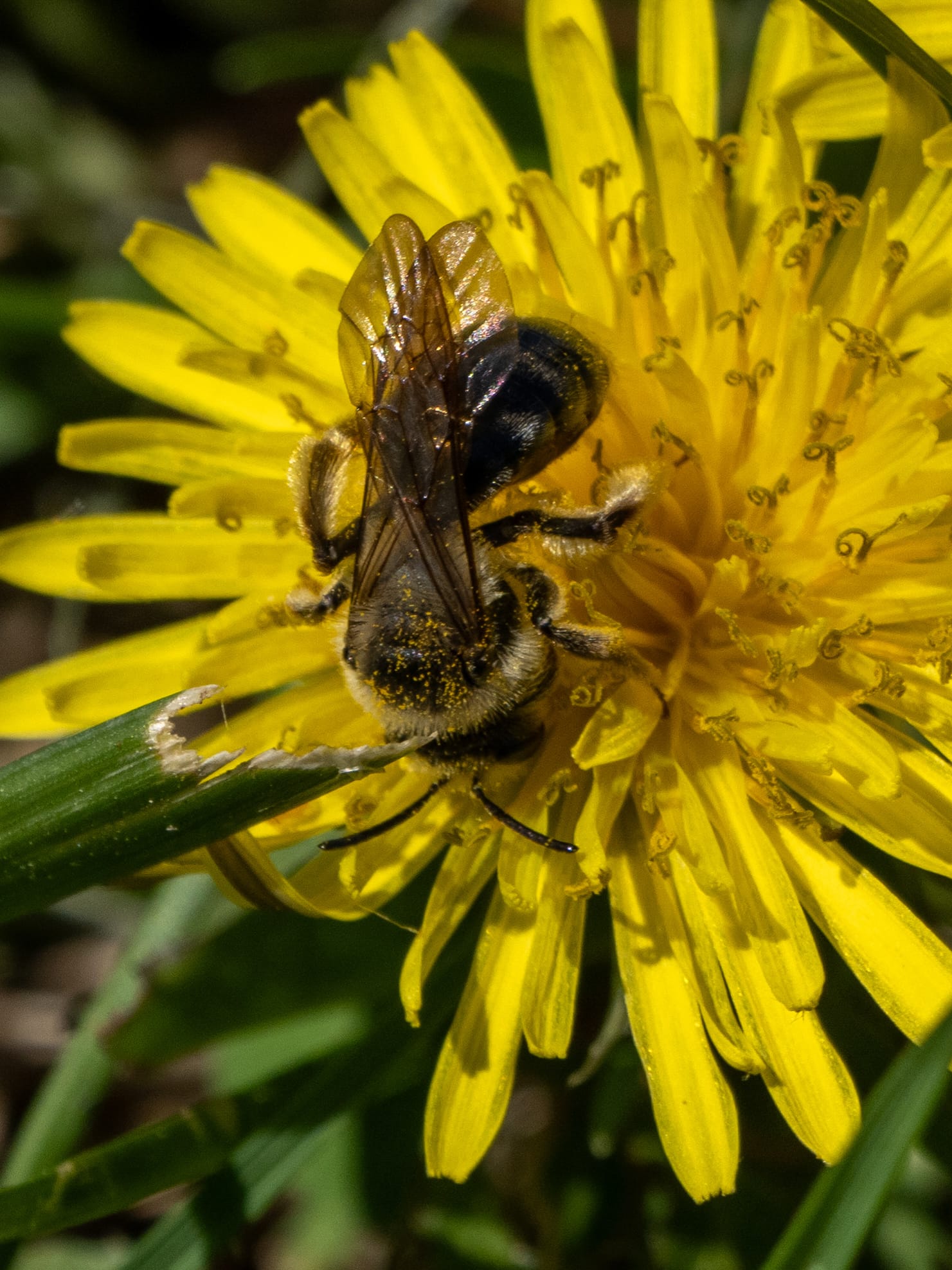
Carlin's Mining Bee (Andrena carlini) A medium-sized, dark, densely fuzzy mining bee, active in early spring. Like all mining bees, females dig individual burrows in the soil — often in the same patch of bare ground as many others, creating loose aggregations that can look almost social but aren't. Each bee is working entirely alone. Males emerge before females and can be seen patrolling low over the ground searching for mates. Cuckoo bees watch these aggregations for a chance to slip into an unattended nest and lay their eggs.
Sweat Bees (Halictidae)
Not all the bees look the same, some are the size of a grain of rice colored sparkling metallic green. If a tiny bee lands on your arm it's looking for a drink, thus "sweat bees". Sweat bees can stng, but it's a rare occurrence. There's a lot of variation among them; some are solitary, some share a nest entrance but each female tends her own cells, some run small colonies with a queen and workers, and some shift between arrangements by season. Most nest in the ground. Most species can't be confirmed from a photograph, which is why so many park observations stop at genus level.
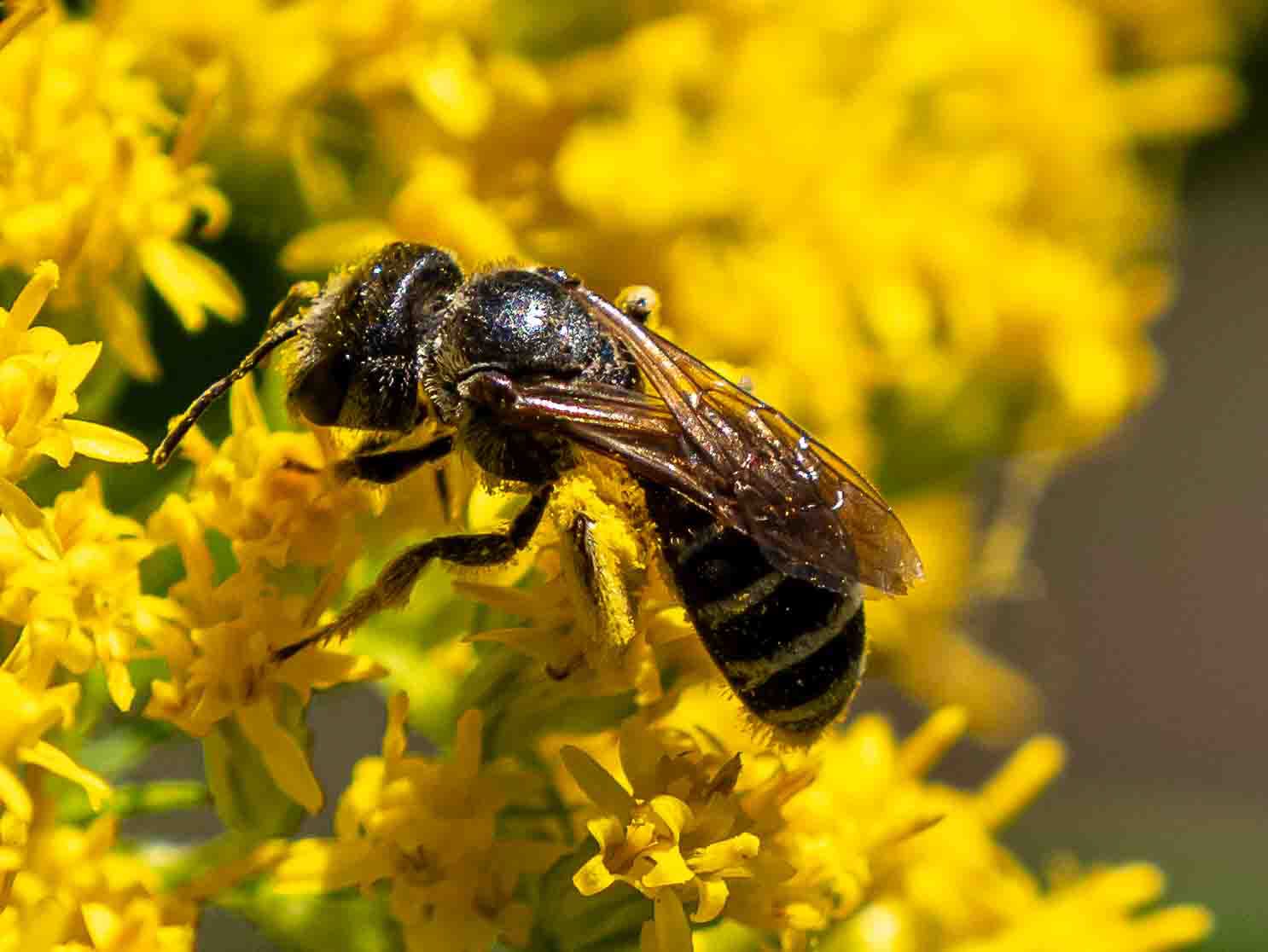
Ligated Furrow Bee (Halictus ligatus) Small and dark, with a furrow of pale hair bands across the abdomen. One of the few native bees that live in small social groups. A lone queen starts the nest in spring and raises the first round of workers, who build the colony through the summer. New queens appear in fall. Active across a long season on a wide range of flowers.
Mason, Leafcutter, and Resin Bees (Megachilidae)
Members of this family carry pollen on hairs under the abdomen rather than on their hind legs - a female may appear to be wearing a ruffle around her middle. Leafcutter bees, mason bees, and resin bees are all solitary. Most nest in hollow stems, gaps in dead wood, or holes in the ground sealing them with cut leaf pieces, mud, plant resin, or chewed vegetation.
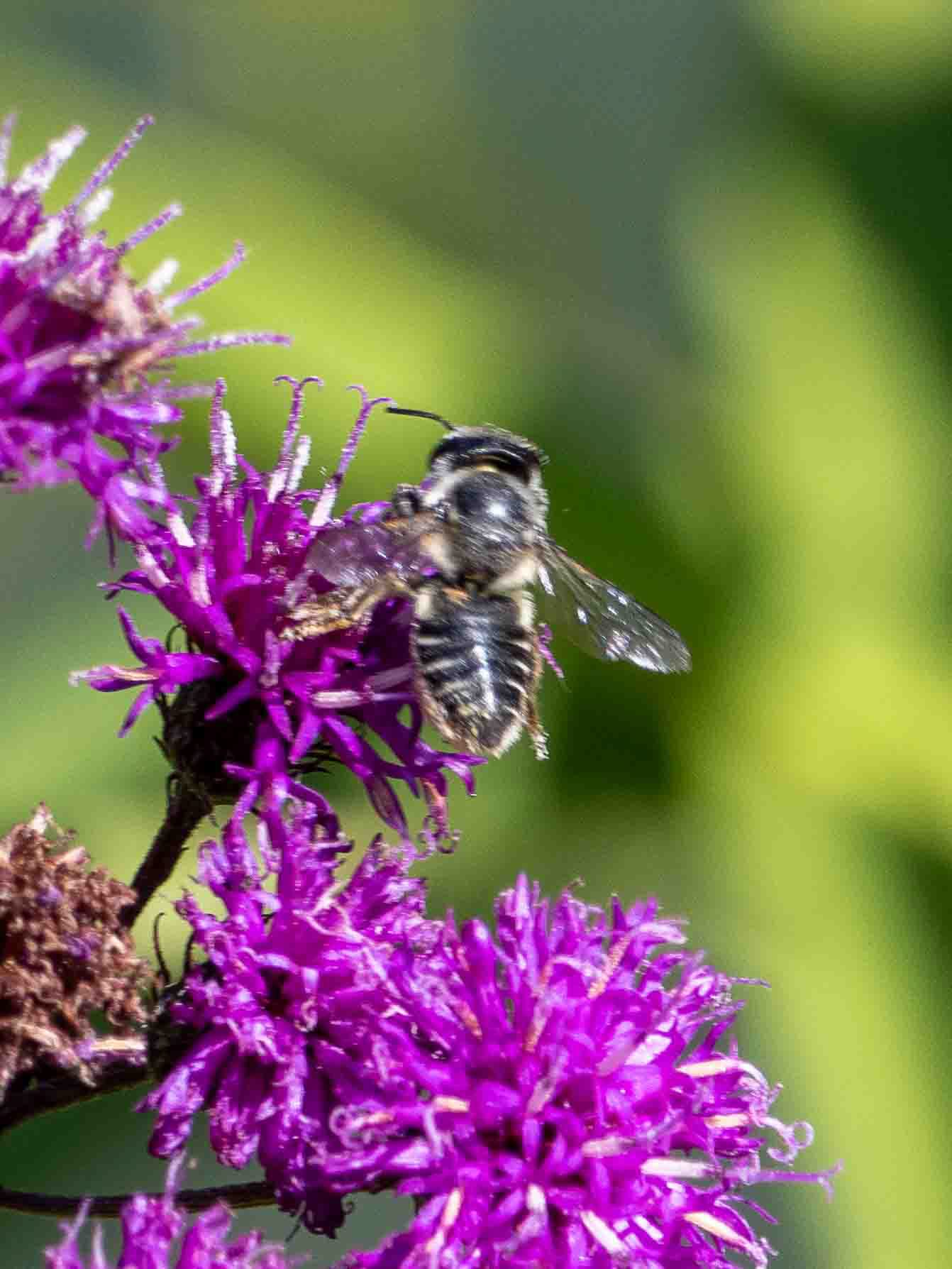
Flat-tailed Leafcutter Bee (Megachile mendica) Females cut precise oval pieces from leaves to line the cells of their nest. They then lay an egg on a pollen mass in each cell then seal it with another cut piece of leaf.
Cellophane and Masked Bees (Colletidae)
Among the oldest bee families they line their nest cells with a transparent, waterproof secretion produced by a gland in the abdomen — giving them the name cellophane bees or plasterer bees. The masked bees (Hylaeus) take a different approach entirely: instead of carrying pollen on their bodies, they swallow it and carry it internally, which makes them look nothing like a typical bee — small, nearly hairless, with yellow or white facial markings. Most colletids nest in the ground. All are solitary.
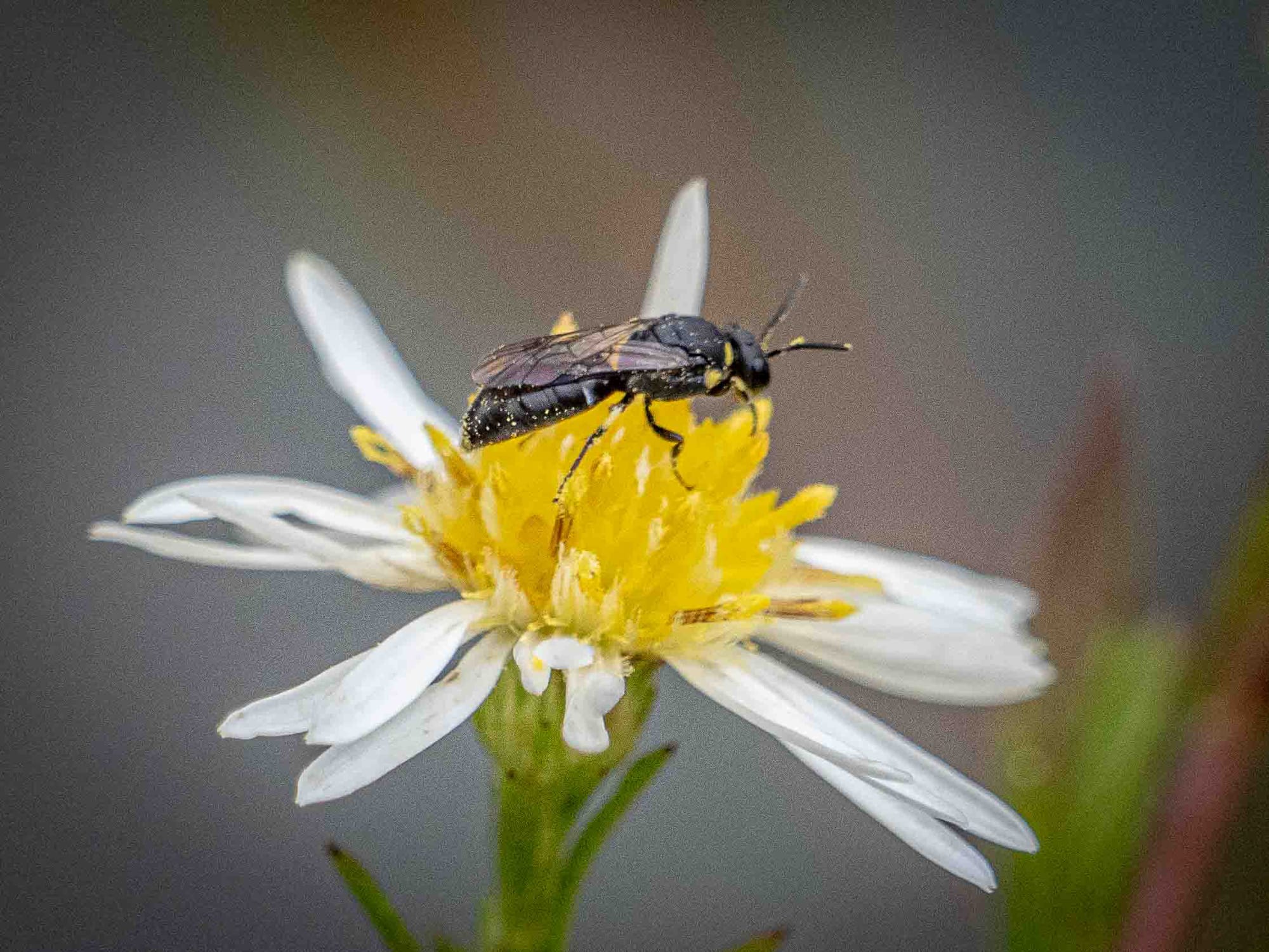
Modest Masked Bee (Hylaeus modestus) Small and slim, with yellow facial markings and almost no hair — easy to mistake for a small wasp. Nests in hollow stems or small cavities. Carries pollen internally.