Mayapple

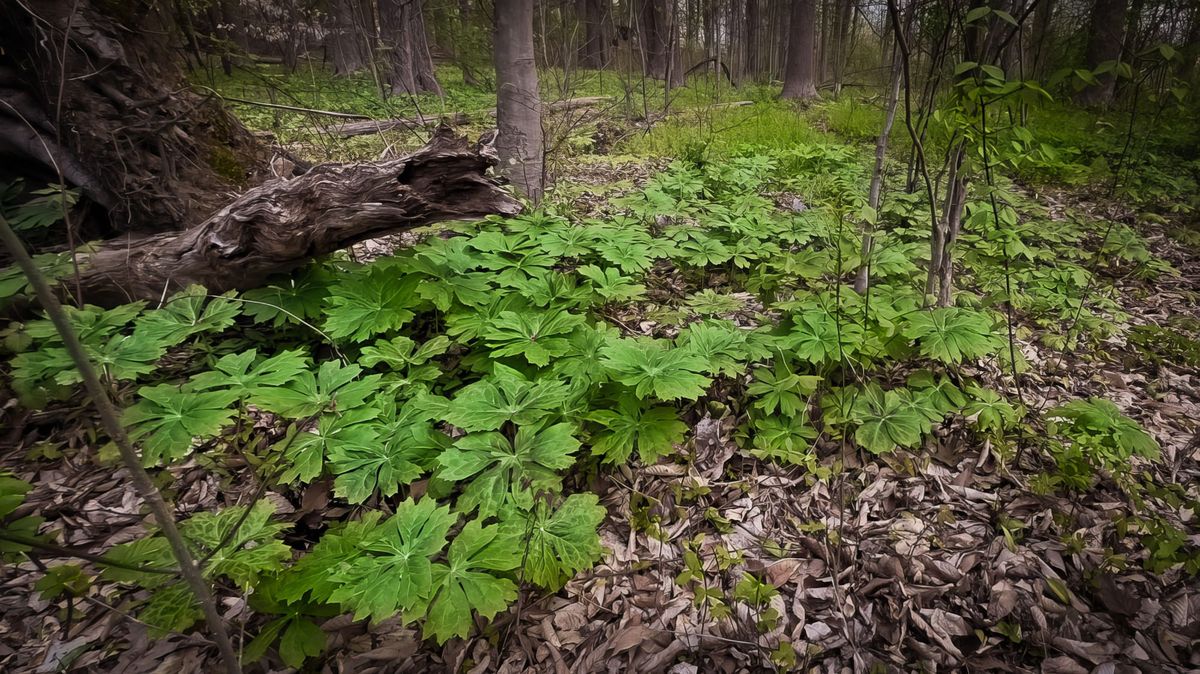
Each spring, Mayapple (Podophyllum peltatum) shoots, rolled up like umbrellas, push through leaf litter into the dappled sunlight of the forest floor. These plants belong to an ancient line spread across the Northern Hemisphere. Over millions of years, the line divided, resulting in related species in eastern North America and eastern Asia.
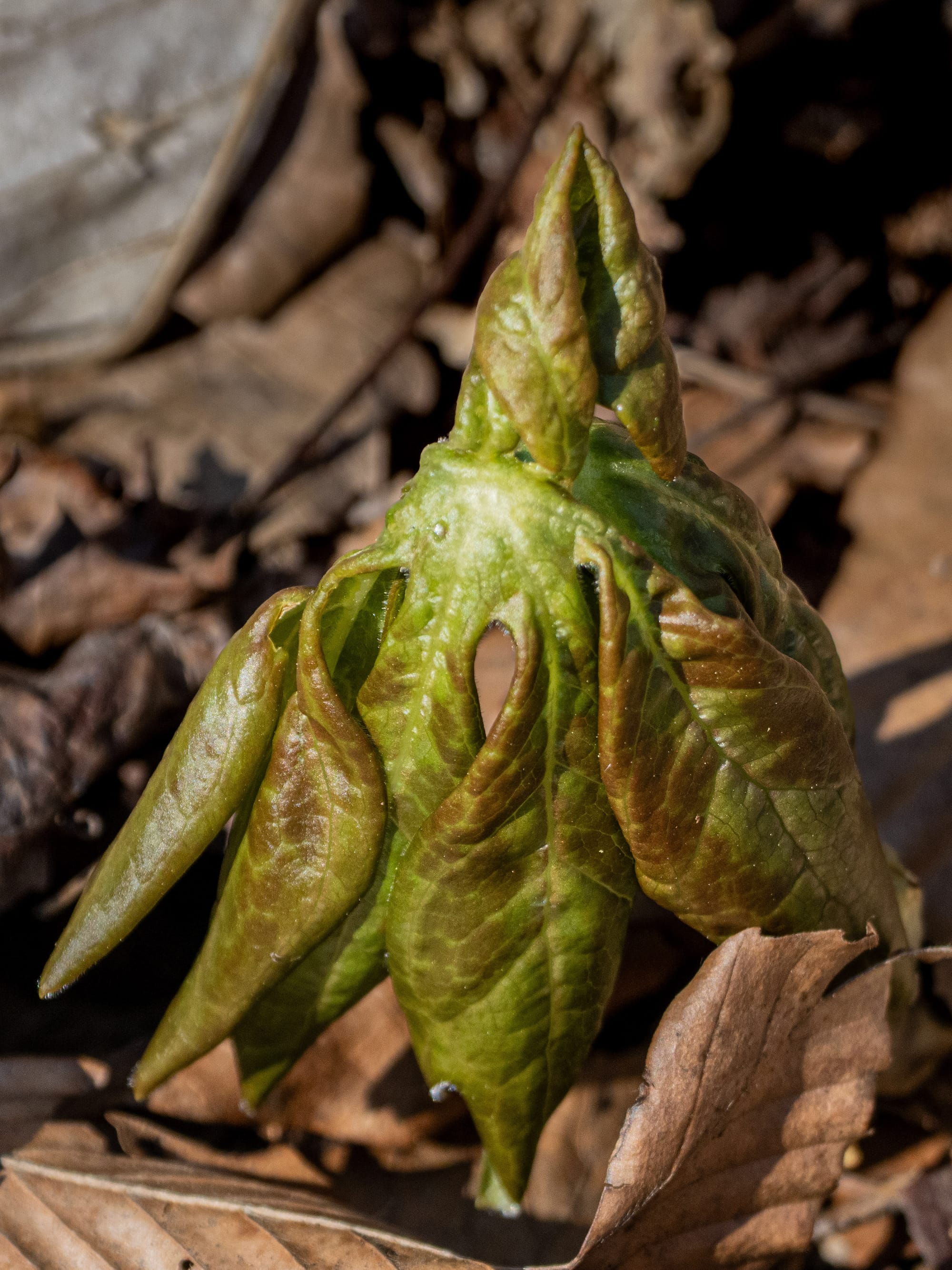
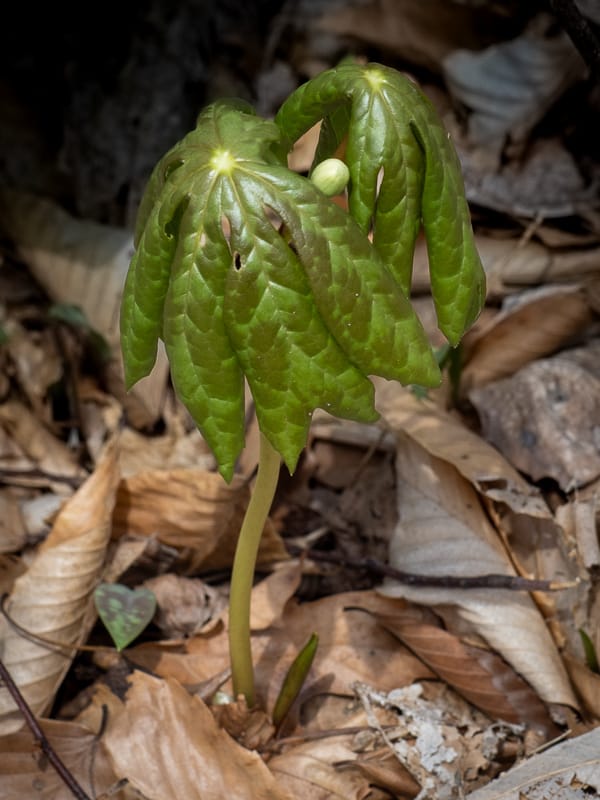
Early spring shoots
Mayapple populations in southeastern Pennsylvania belong to an eastern lineage that began diverging during the late Miocene (about 11.6 to 5.3 million years ago) from populations on the opposite side of major geographic barriers like the Appalachian mountains. They survived the ice ages (about 2.6 million to 11,700 years ago) in warmer refuges in the central Appalachians. When the climate warmed, these distinct genetic lineages spread, resulting in the high genetic diversity seen in eastern populations today.
Mayapples grow from underground stems called rhizomes that extend several inches per year. Large, dense colonies often persist for over a century. The plant grows up to a foot and a half tall with one or two deeply lobed leaves up to a foot wide. Younger, smaller specimens with a single leaf are typically non-flowering, while larger, mature two-leafed plants can flower.
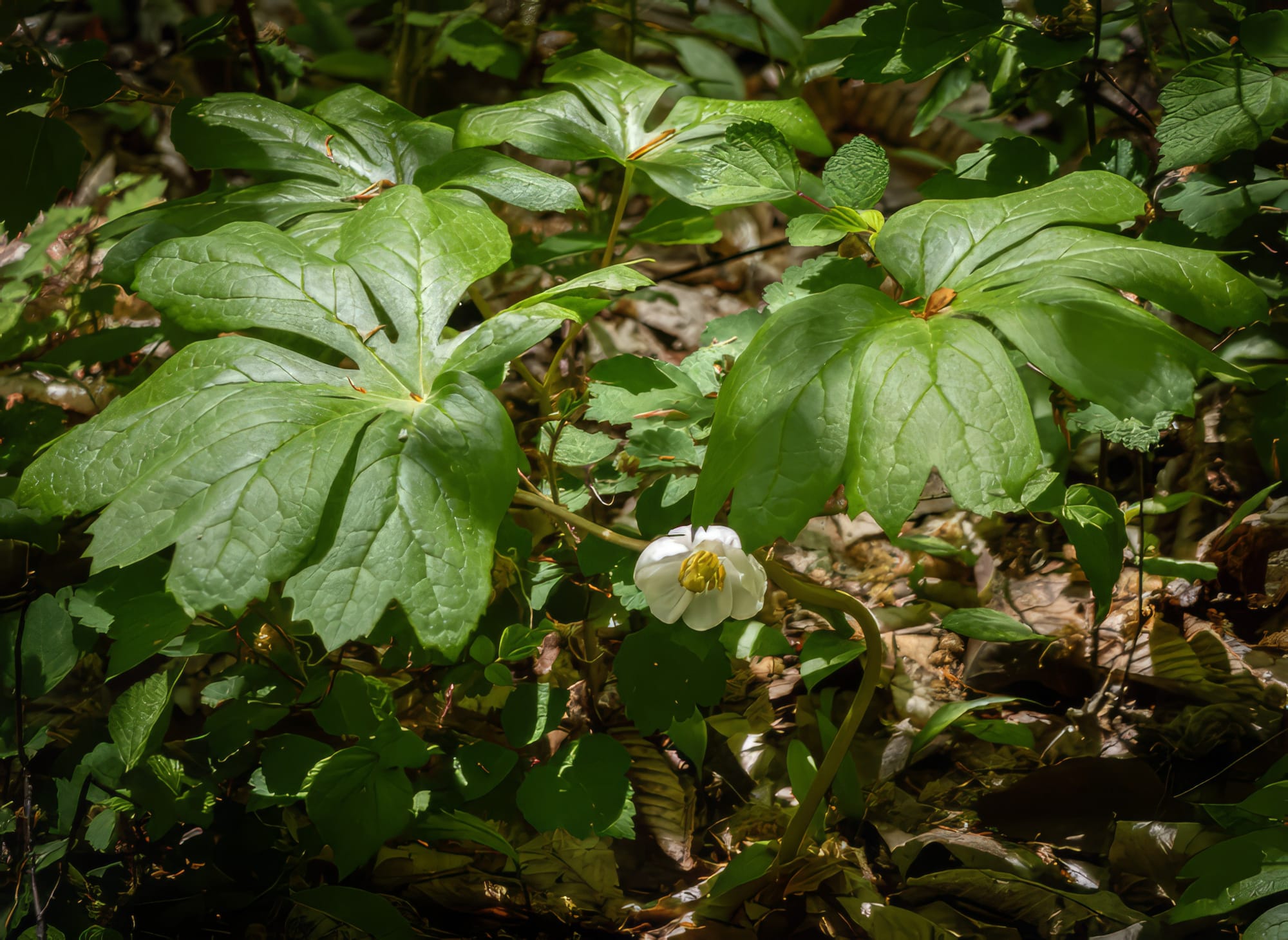
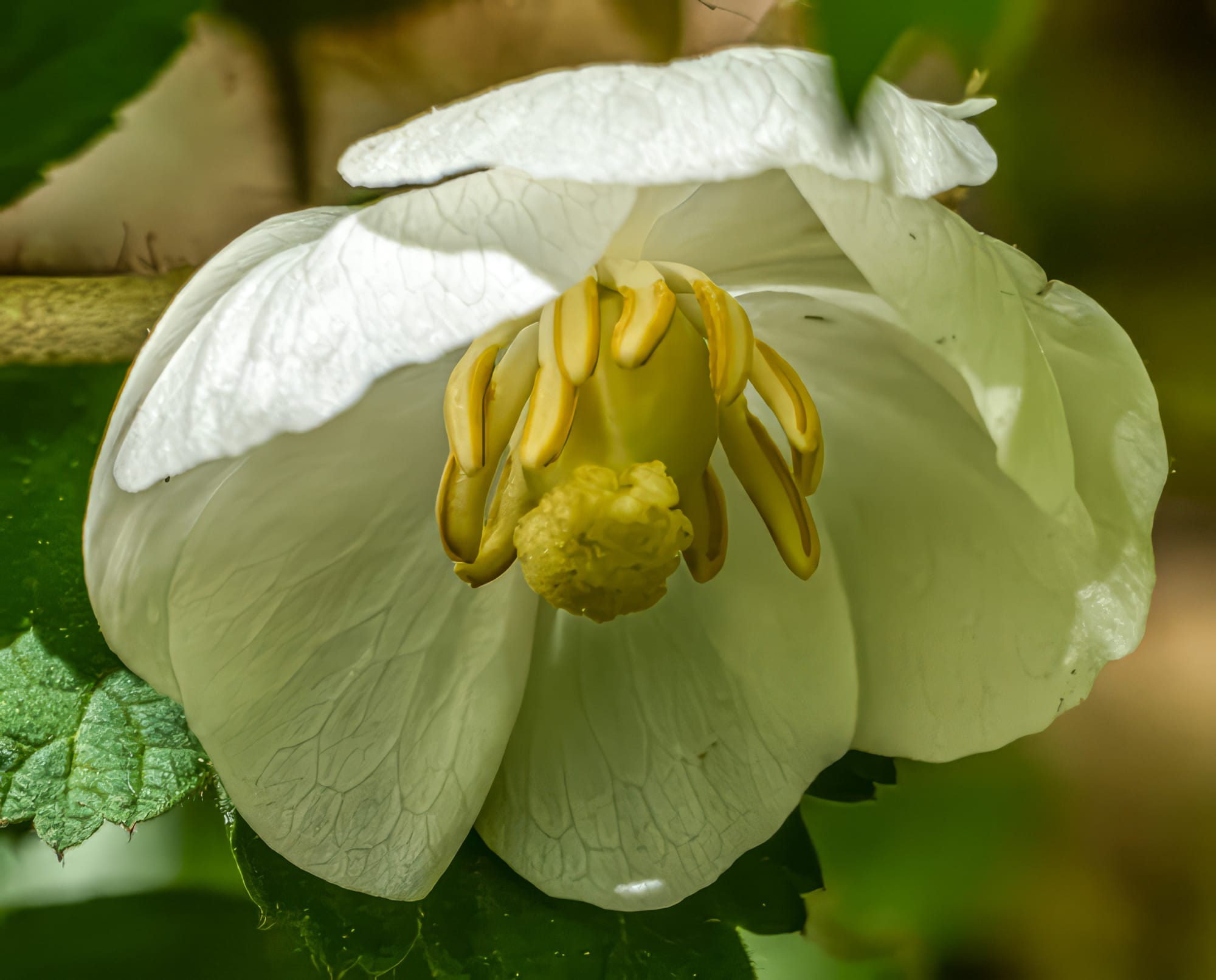
Mayapple Flowers
From the forked stem, a single white or pink-tinged flower emerges in late spring. If successfully pollinated, a single fleshy berry develops. This egg-shaped fruit ripens from green to yellow in late summer. Mayapples then wither and die back, storing resources in the rhizomes and overwintering underground.
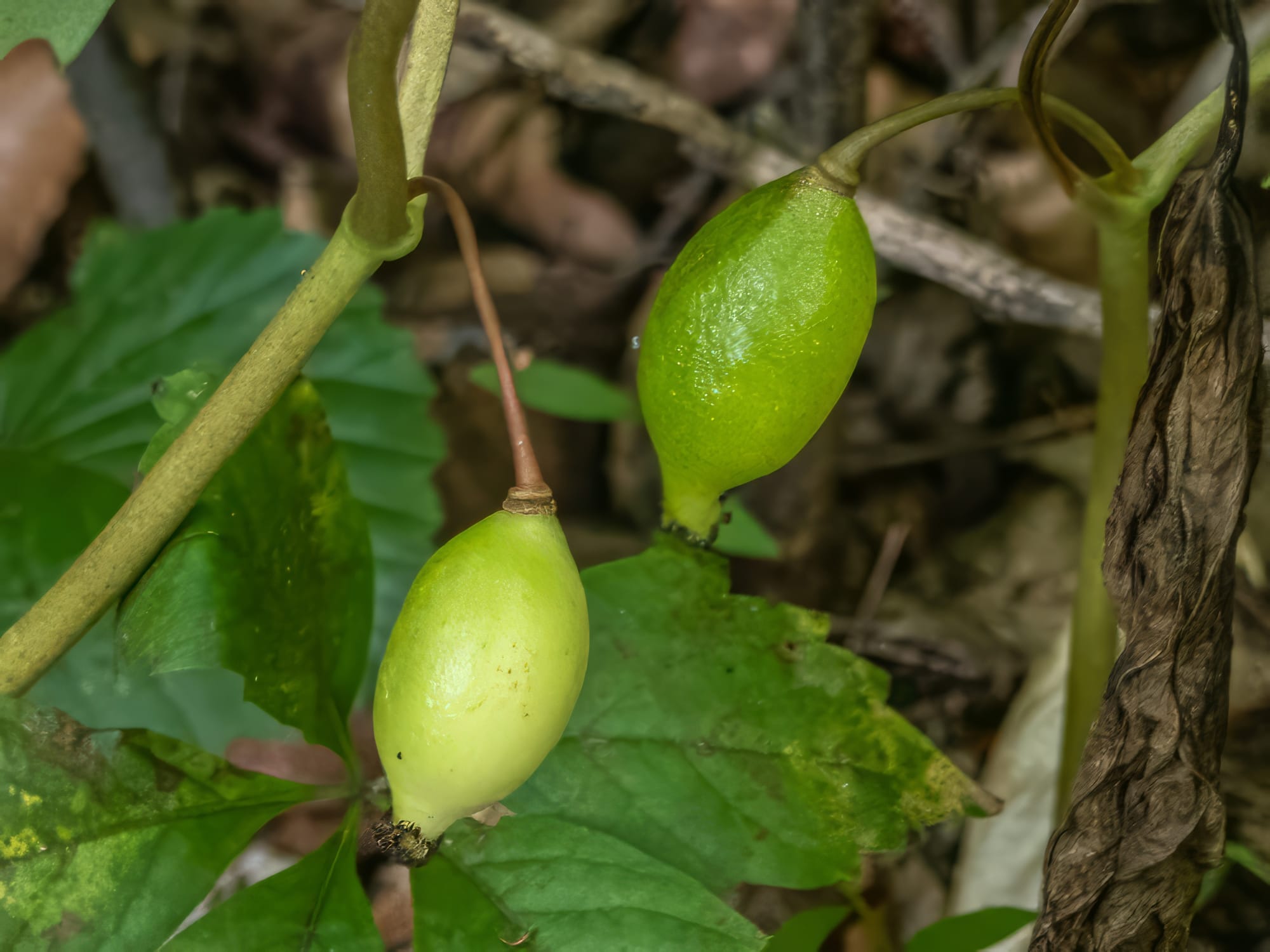
Mayapple Fruit
Raccoons, opossums, squirrels, deer, and eastern box turtles eat the ripe fruit and disperse seeds. While sexual reproduction from seeds introduces genetic diversity, rhizomes produce a clone of the parent plant. Plants produced from rhizomes generally reach maturity faster than those grown from seed, which may take several years to reach sexual maturity.
Long before European pharmacopoeias listed the plant, it was well known to the peoples of eastern North America. While oral traditions regarding names and uses are numerous, tracing these claims to primary sources remains difficult. The first European to describe it was Champlain, who observed the plant among Huron peoples during the winter of 1615–16. A century later, Mark Catesby gave it a formal name, Anapodophyllon Canadense, noting the root as an emetic. It is listed in Schoepf’s 1787 Materia Medica Americana, and William Bartram recorded Cherokee and Creek use of the root as an emetic, cathartic, and vermifuge in 1789.
Carl Linnaeus assigned the scientific name Podophyllum peltatum in 1753. The name translates to "foot-leaf" and "shield-like" to describe the leaf shape and stem attachment to the center of the leaf like a shield's handle. Colonial users called it American mandrake, after a European plant with similar properties.
All parts of the mayapple, including the leaves, stems, roots, and seeds, are highly poisonous, as are unripe fruit and seeds. The plant contains a cytotoxic compound called podophyllotoxin, first isolated in 1880; it now serves as a precursor for modern chemotherapy drugs. The plant was once an ingredient in commercial remedies like Carter’s Little Liver Pills, and purified extracts are still used for specialized topical treatments.