Fall Flowers at Nixon Park

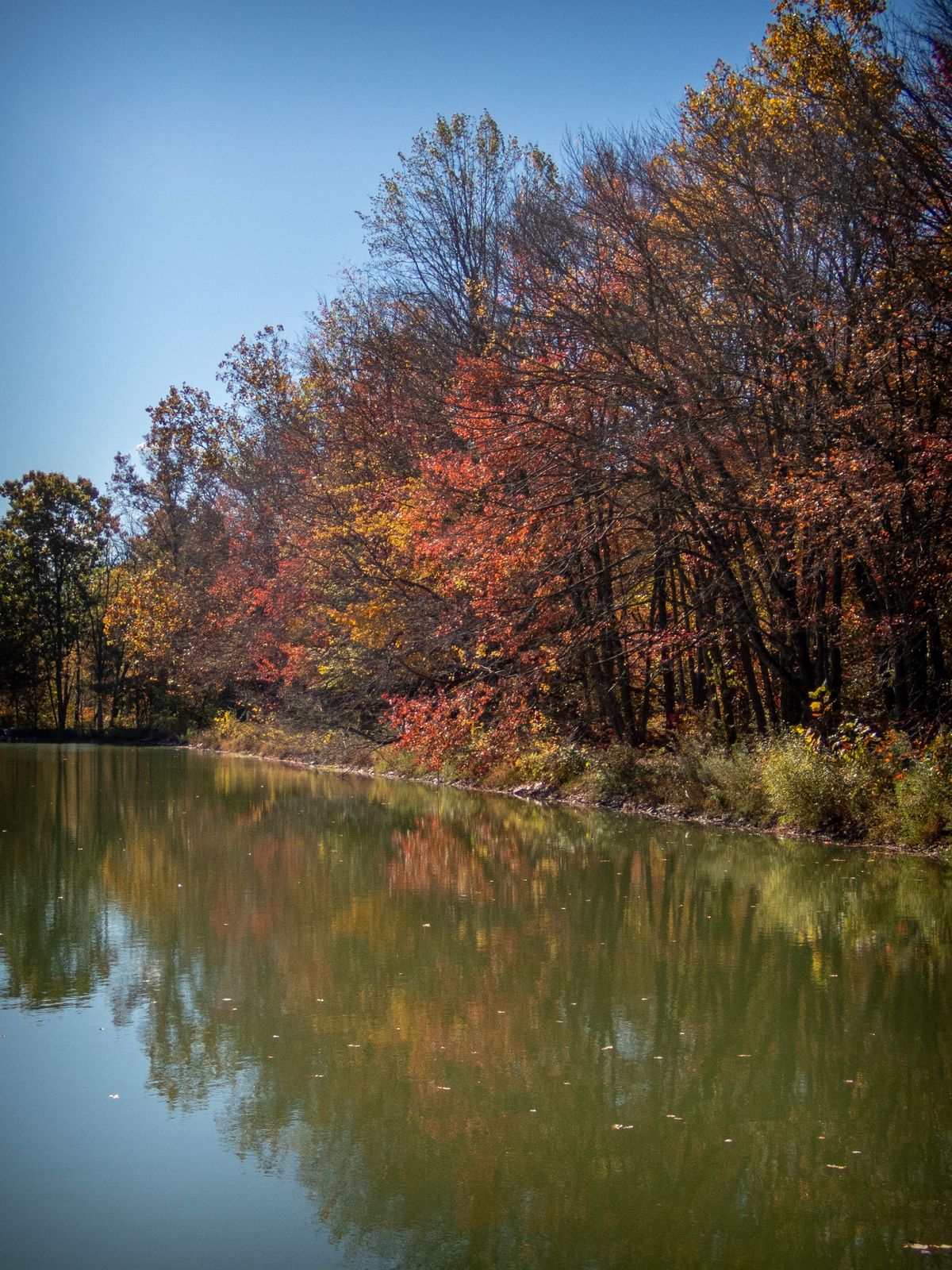
At the autumnal equinox earth reached the mid point in its slow annual tilt away from the sun. From this point the angle of the sun's rays grow steeper and the daylight hours shorter until we reach the shortest daylight at the winter solstice and begin the slow return to spring.
Fall flowers have their day before winter takes hold, and this long wet summer has made for a great show this year. Here are a few of my favorites.
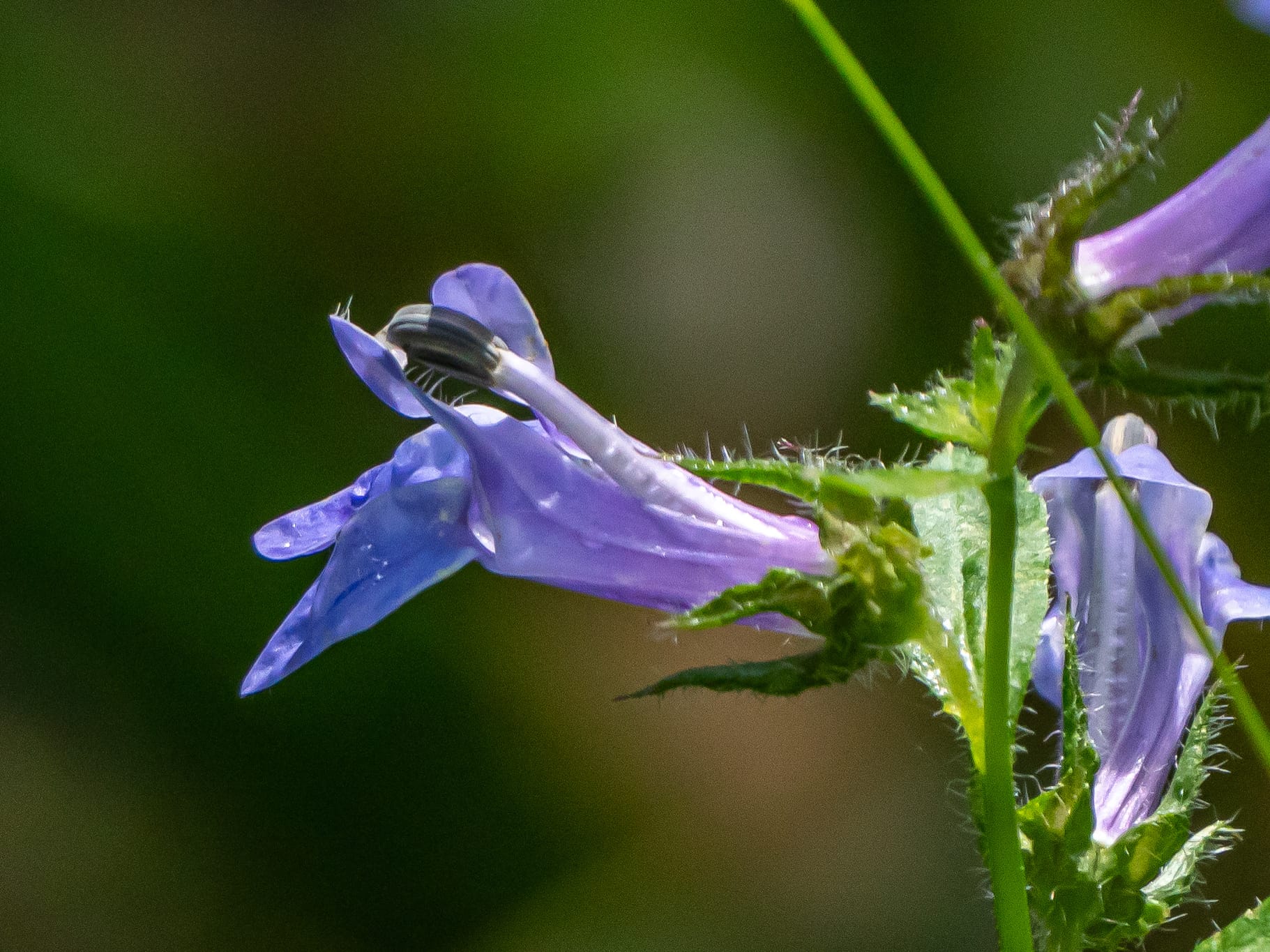
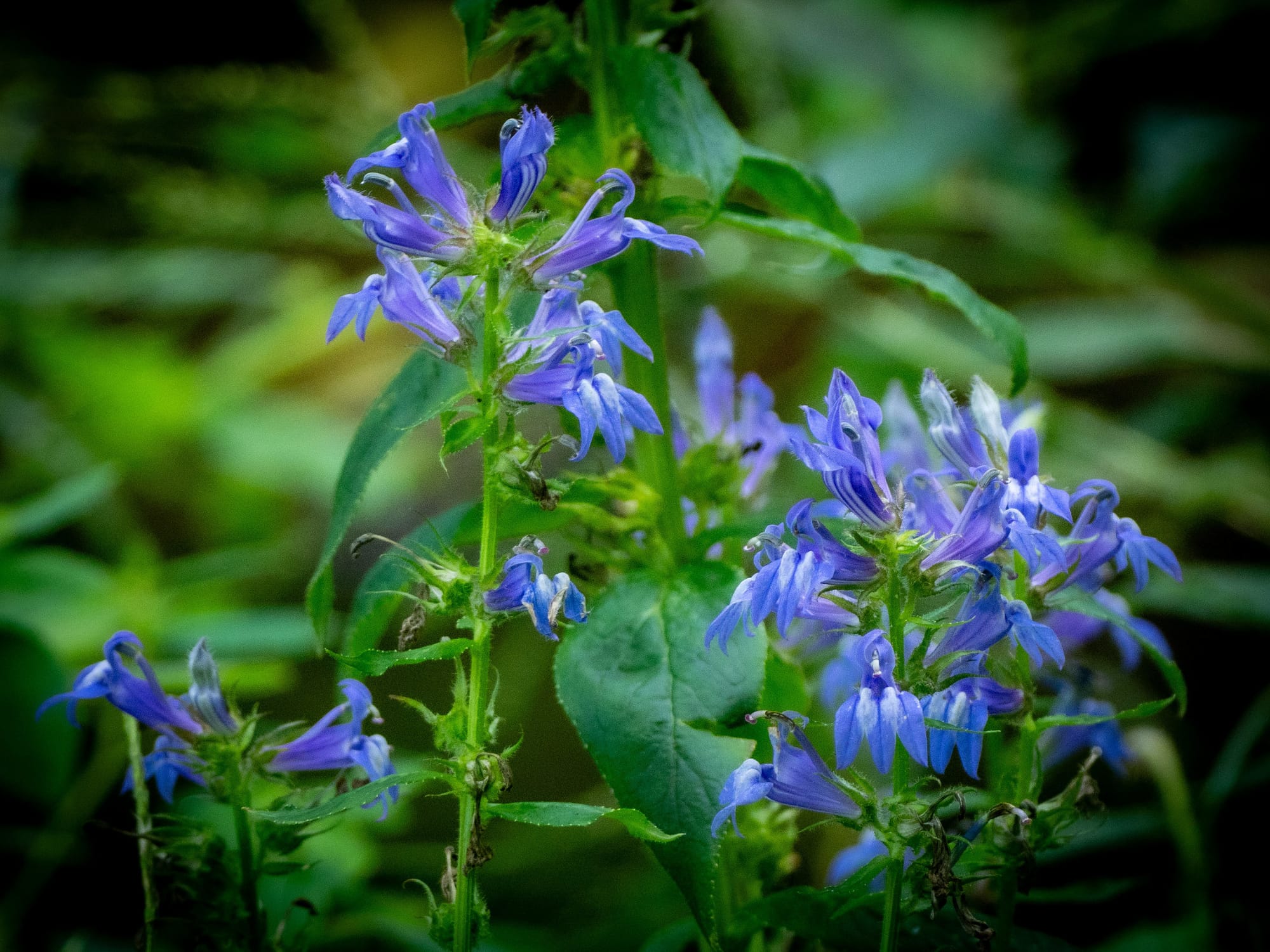
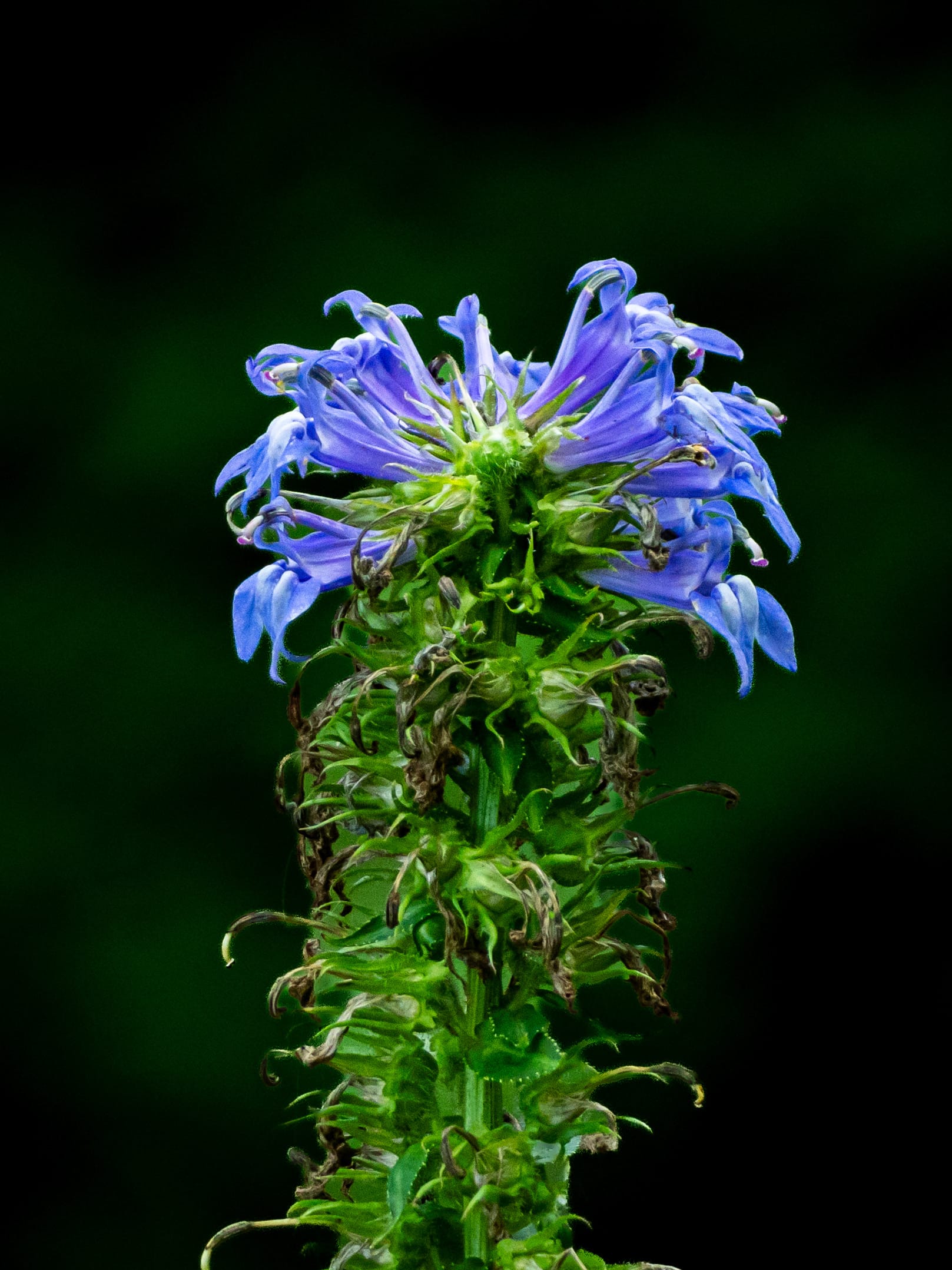
Great Blue Lobelia
Great Blue Lobelia (Lobelia siphilitica)
Growing here and there along wet woodland and creek edges .The flowers are two-lipped — two narrow lobes on top, three wider ones below, each with a small white patch at the base. Leaves are toothed, unstalked, and clasp the stem directly.
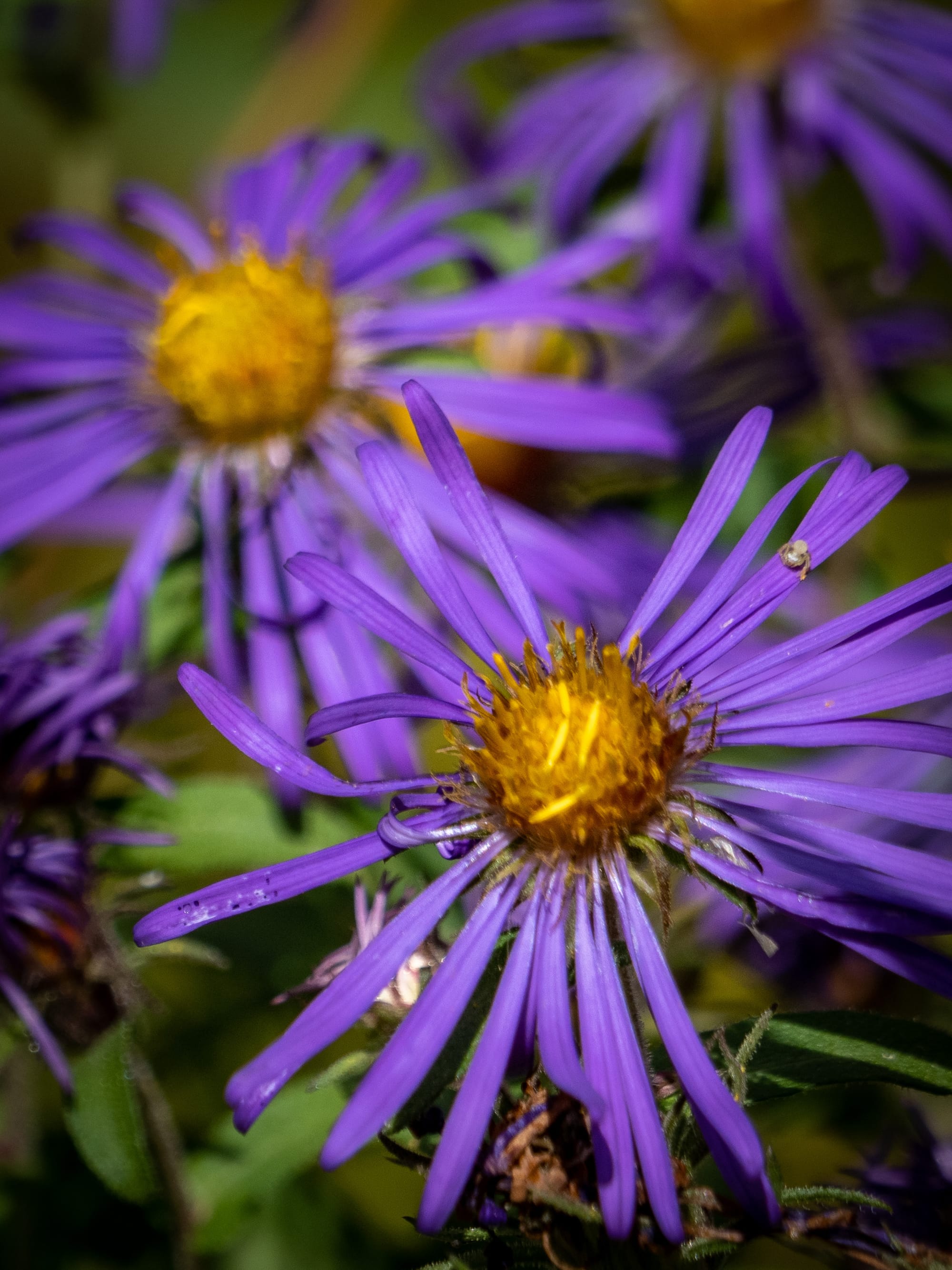
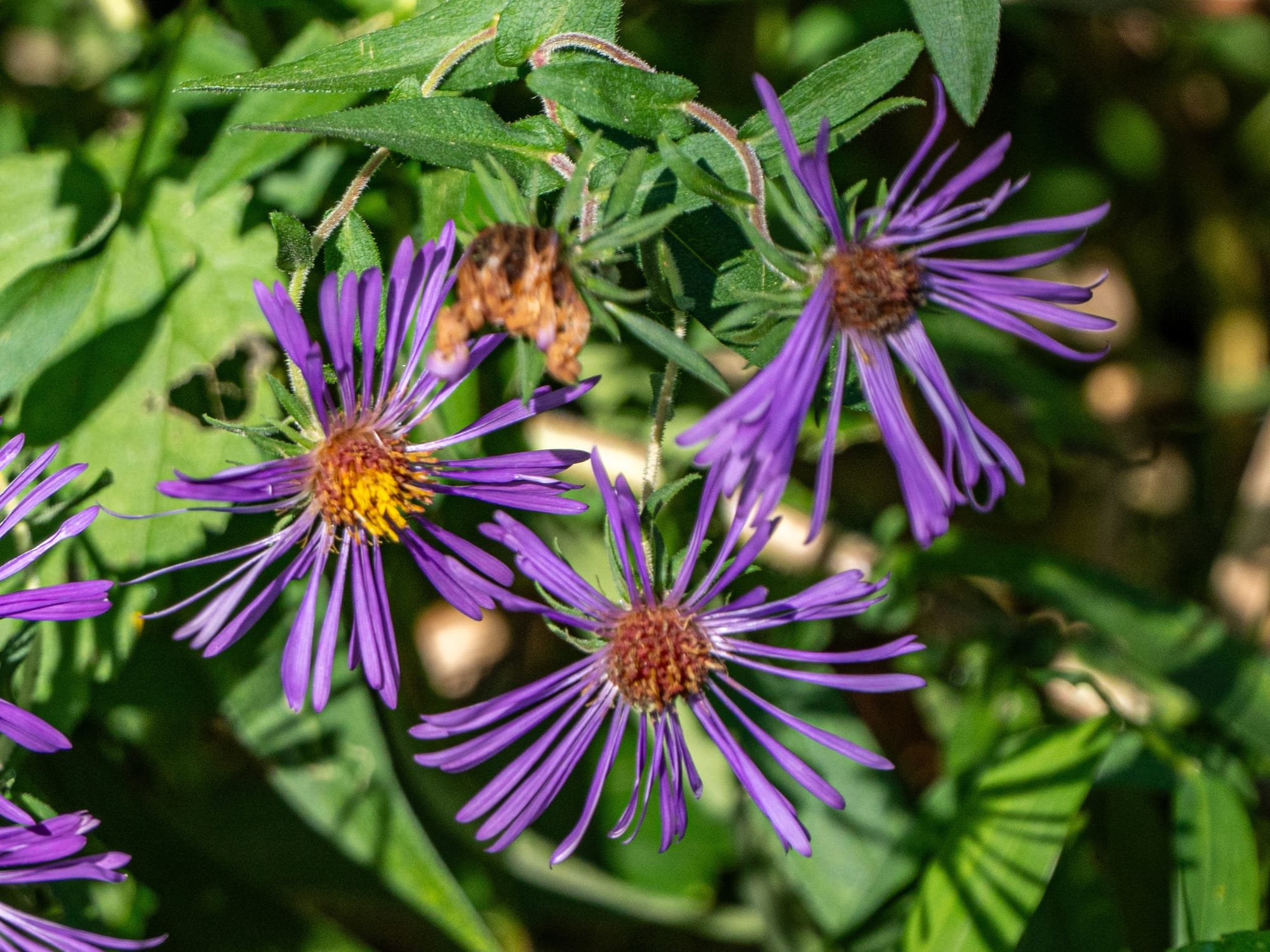
New England Aster
New England Aster (Symphyotrichum novi-belgii)
Look along the creek near the dog park. May be the showiest aster at the park; flowers close to an inch and a half across, rays running anywhere from white through pink to deep blue-purple. Leaves are smooth and narrow. It spreads by rhizome and often shows up in colonies rather than as single plants.
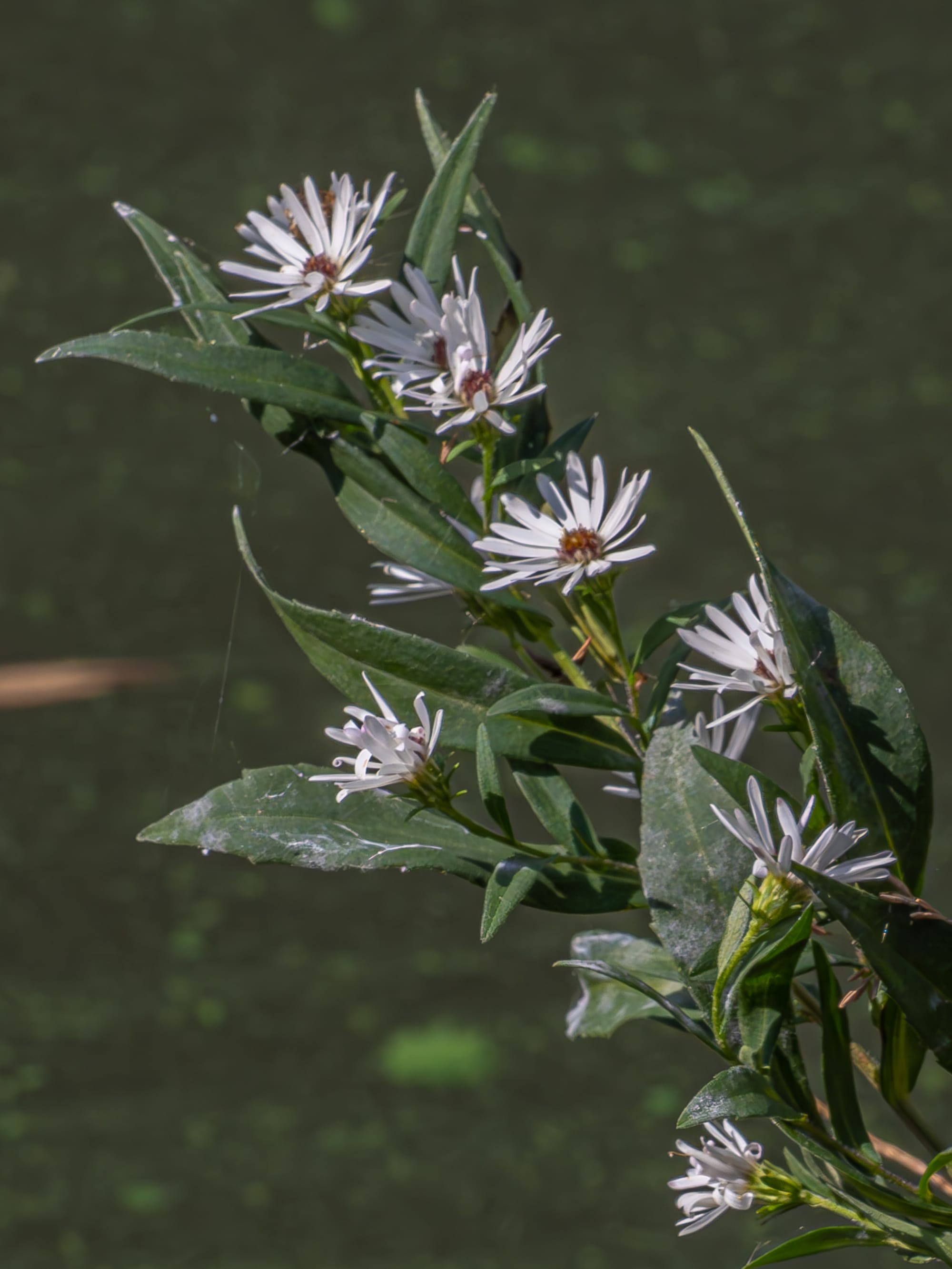
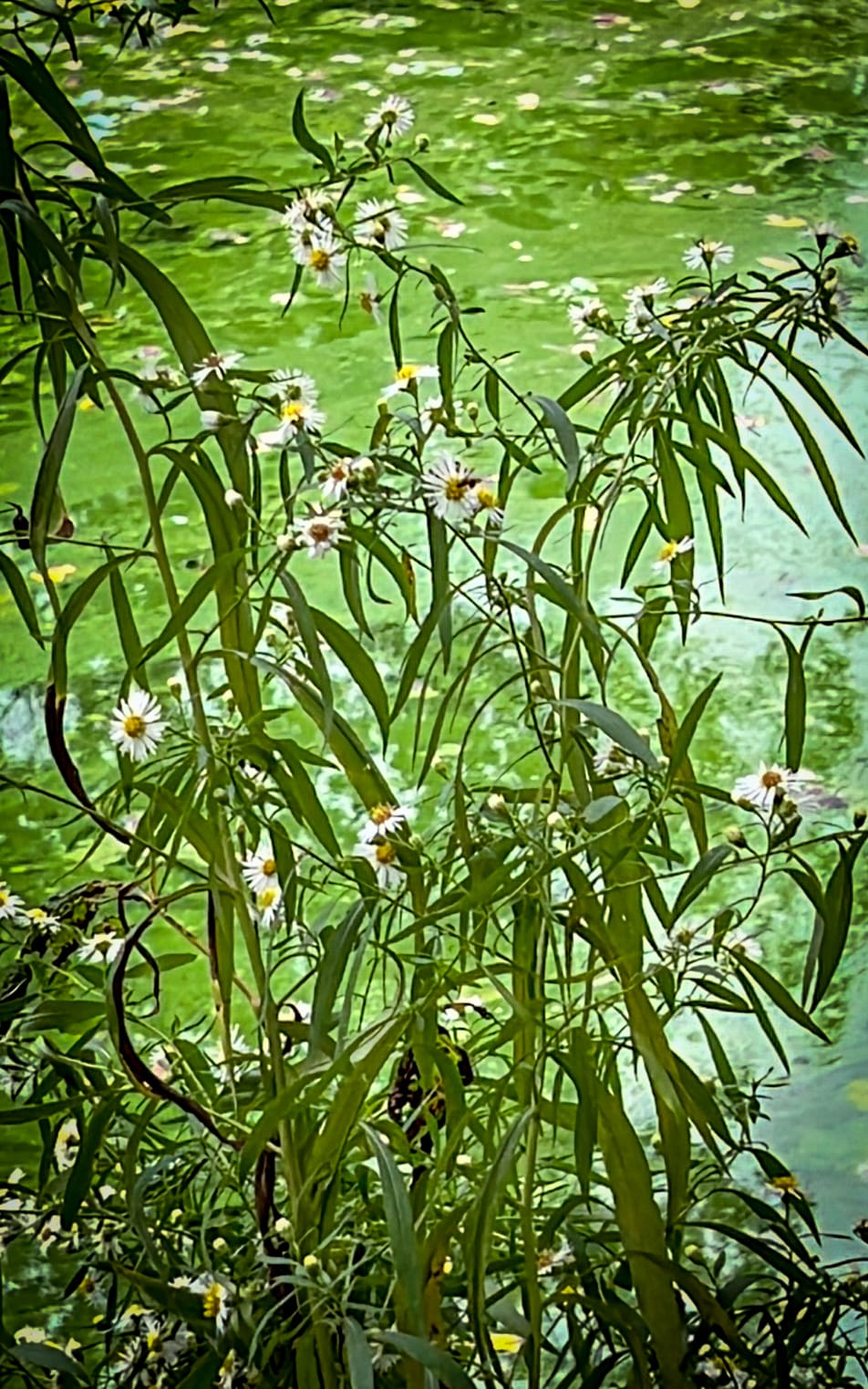
Panicled Aster
Panicled Aster (Symphyotrichum lanceolatum)
Found in abundance around the ponds. Lance-shaped leaves, mostly hairless. White to pale blue-violet rays, yellow disc centers that age to purple.
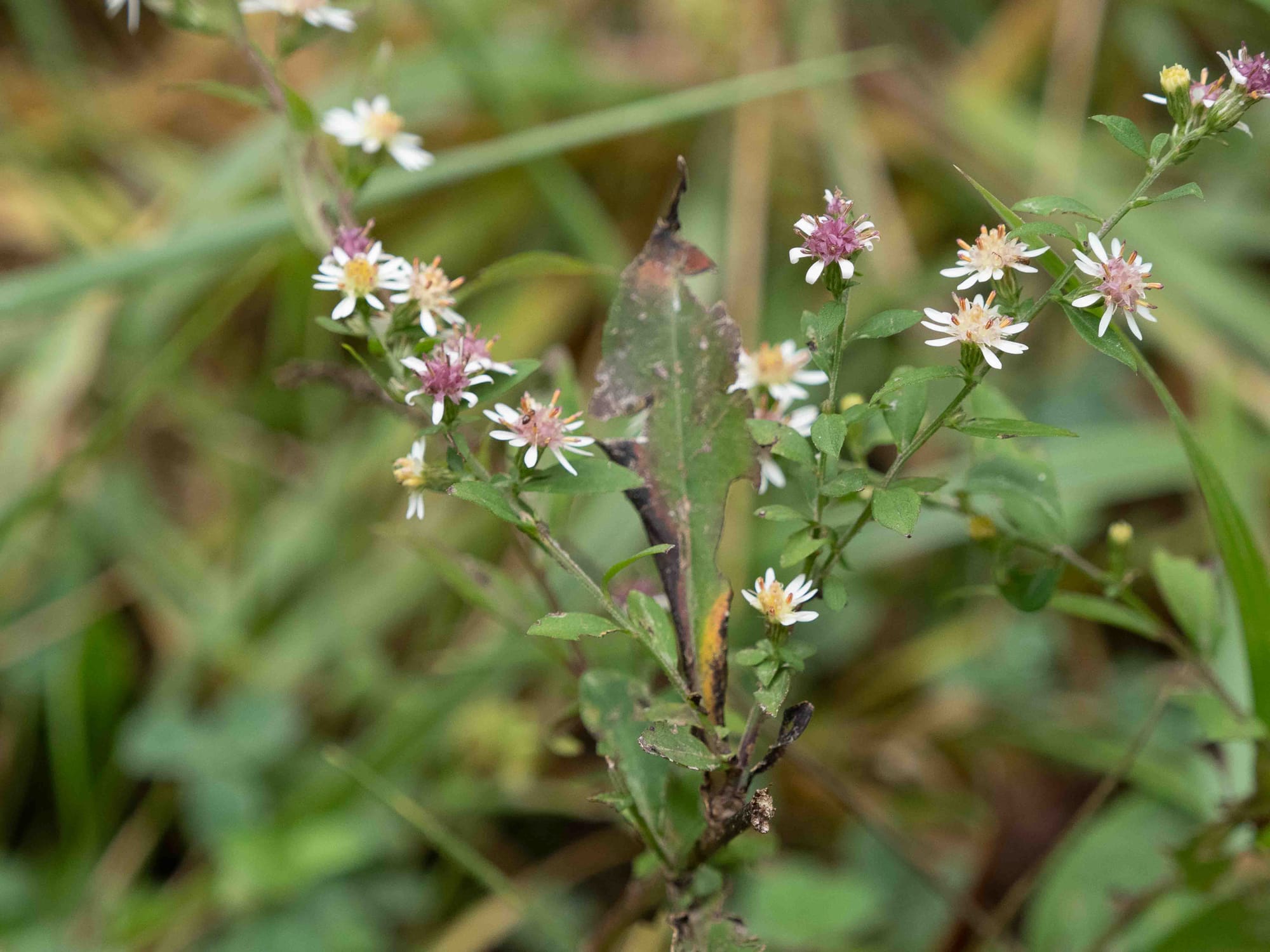
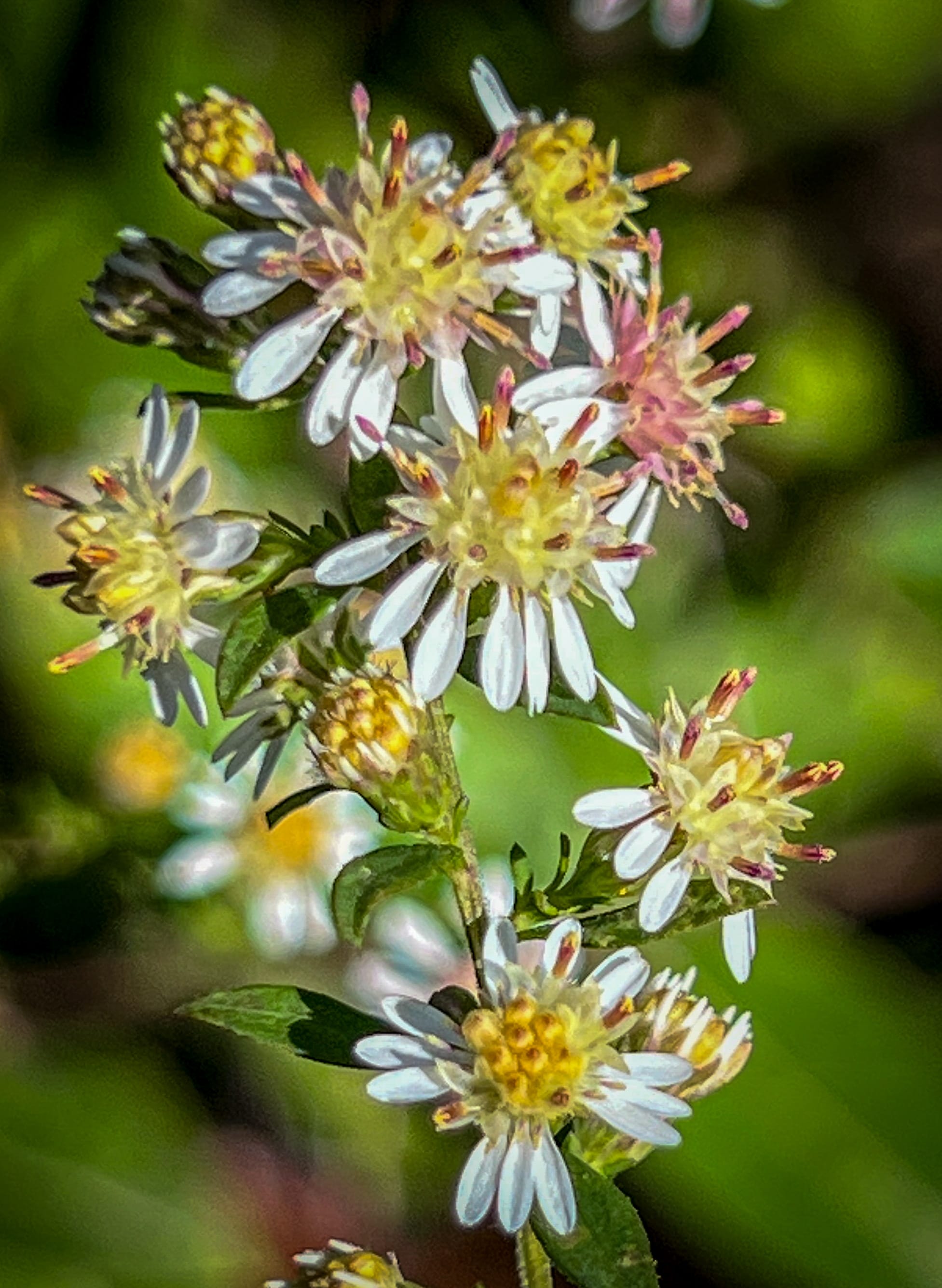
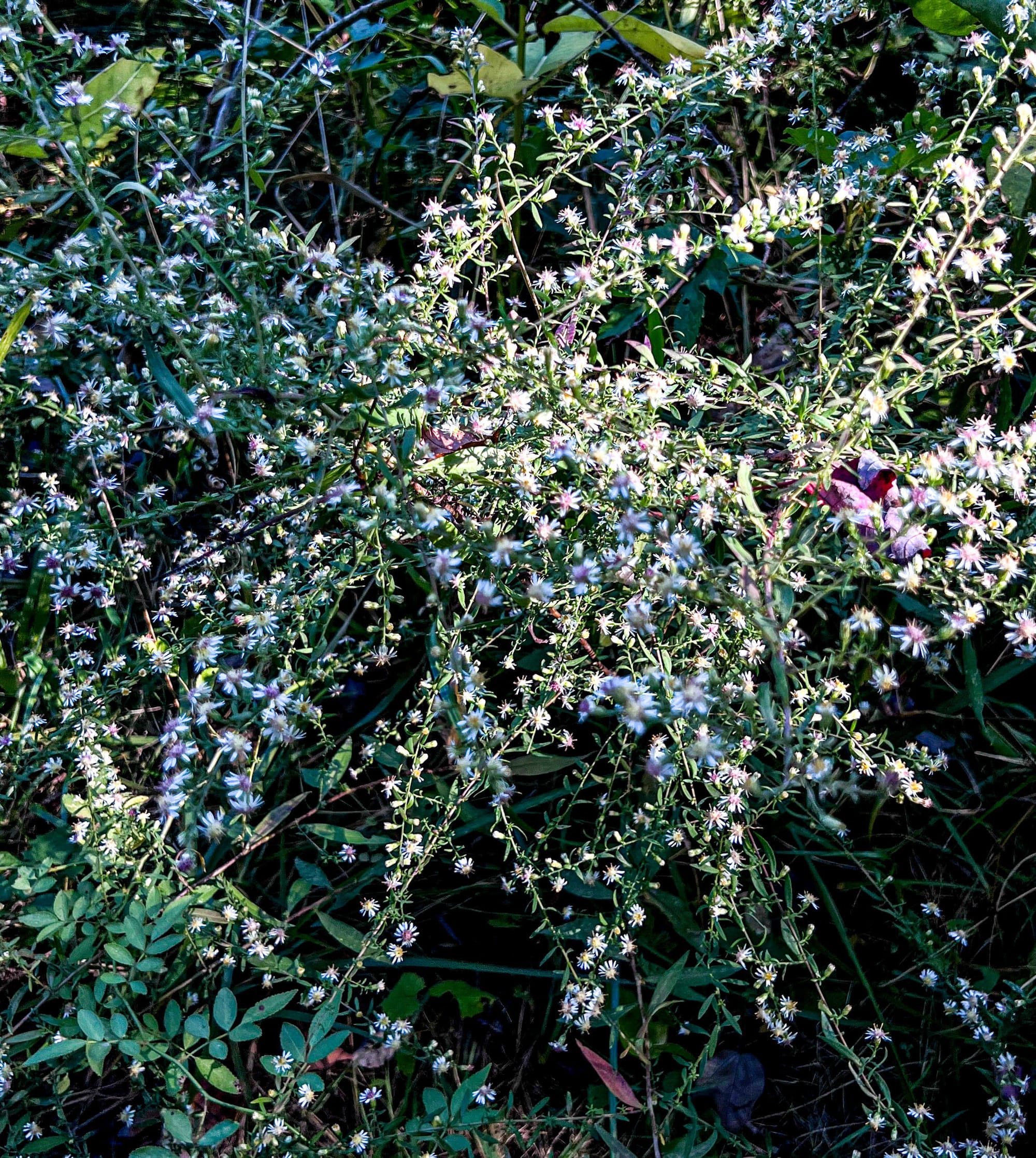
Calico Aster
Calico Aster (Symphyotrichum lateriflorum)
Along the shady woodland-edge around the ponds. Its flowers are small compared to the others, named for the color change - yellow disc centers turning purplish-red as the flower ages, so a single head can show both colors at once.
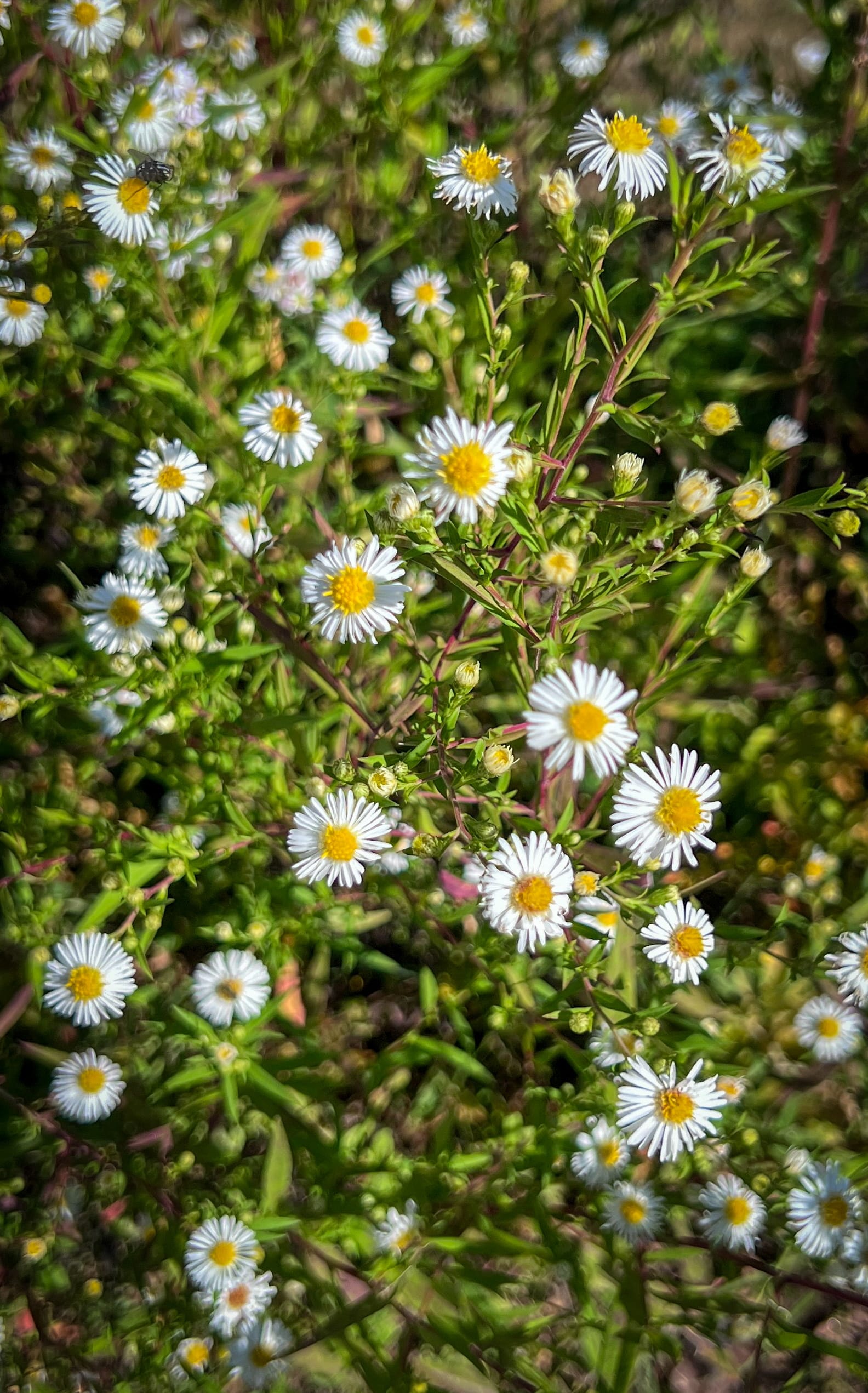
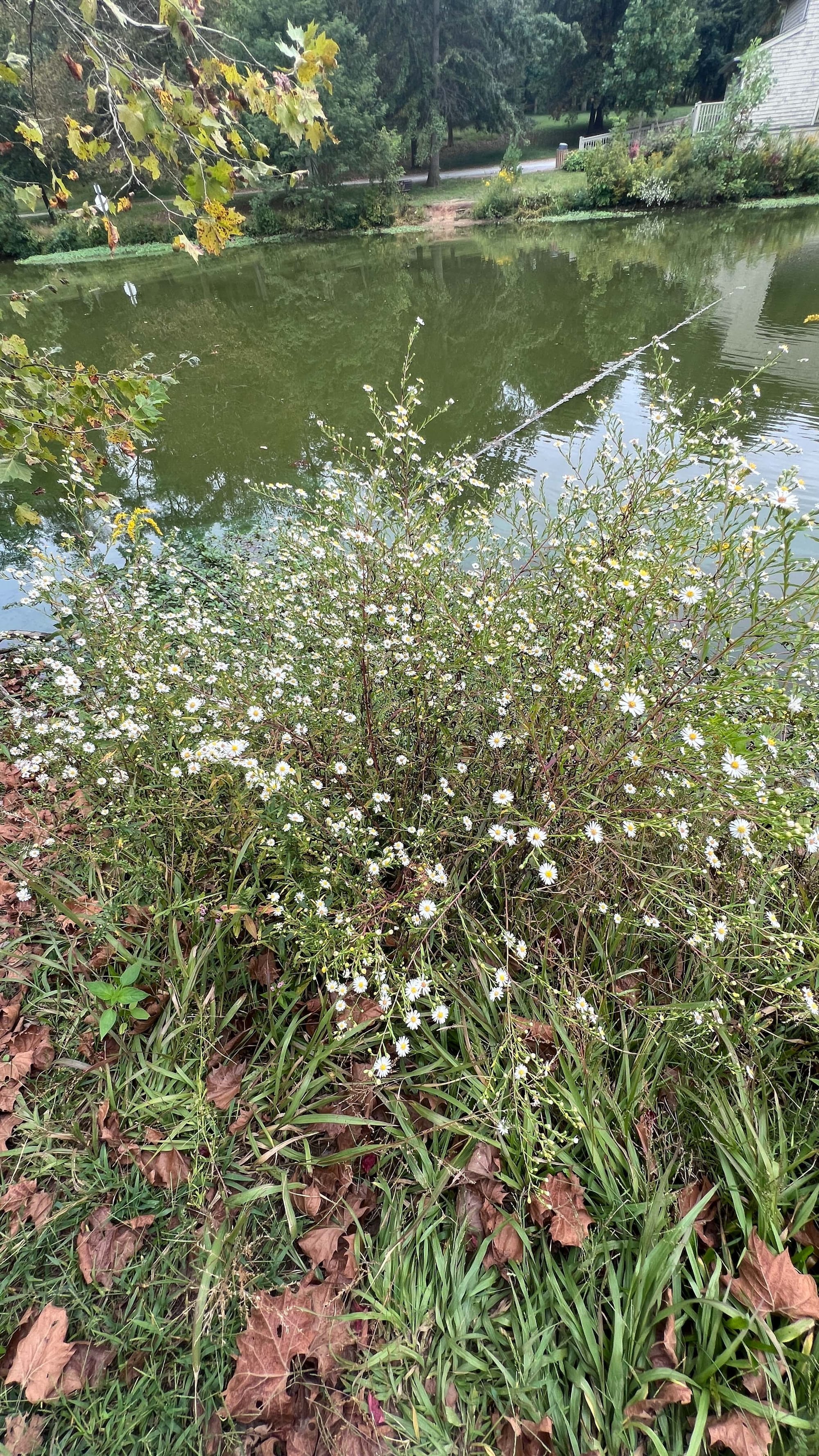
Hairy Oldfield or Frost Aster
Hairy Oldfield or Frost Aster (Symphyotrichum pilosum)
In abundance around the ponds, often near panicled asters. Stems and leaves are noticeably hairy, which is where the name comes from. White rays surround disc flowers that start pale yellow and shift to reddish-purple with age.
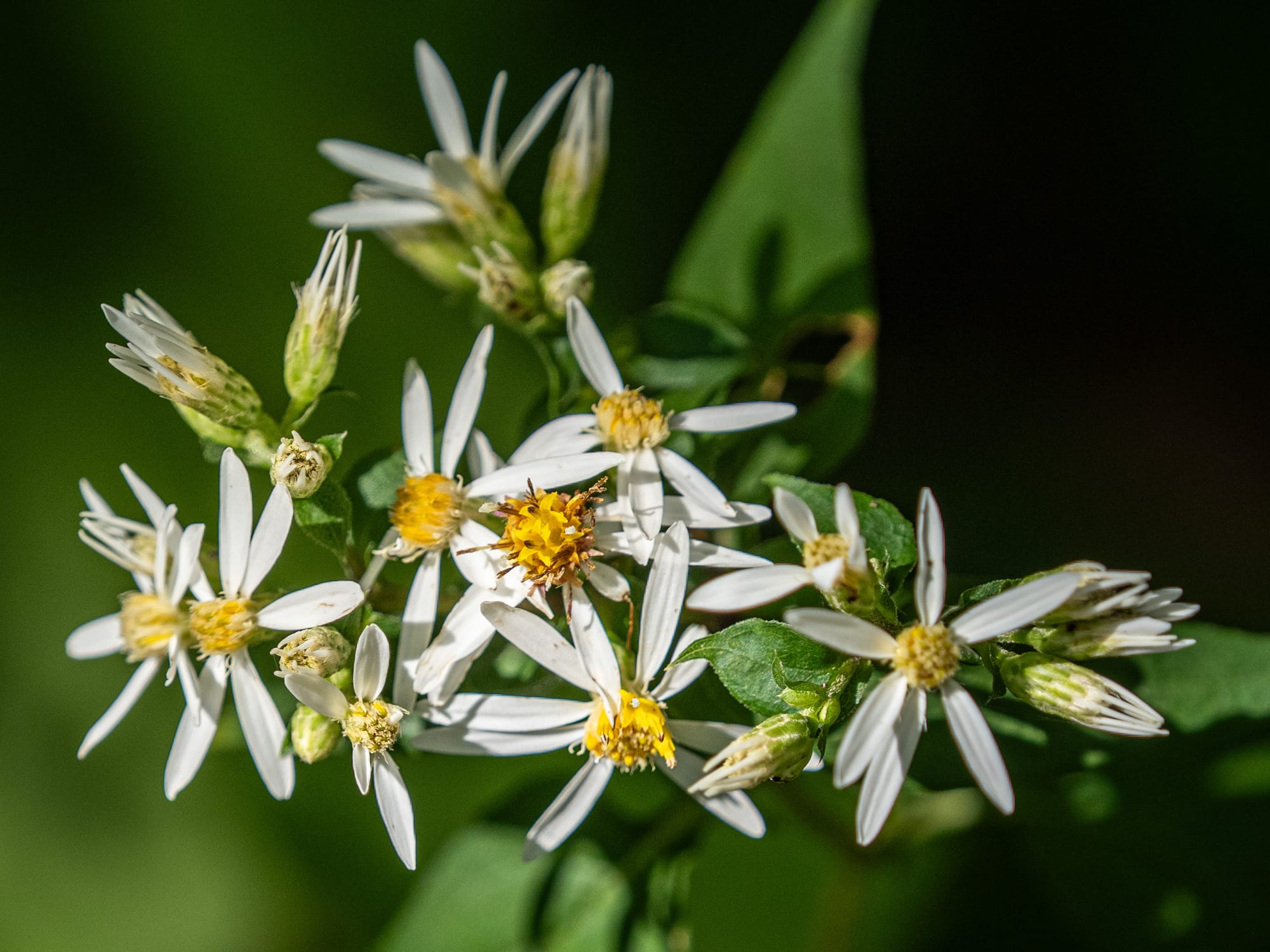
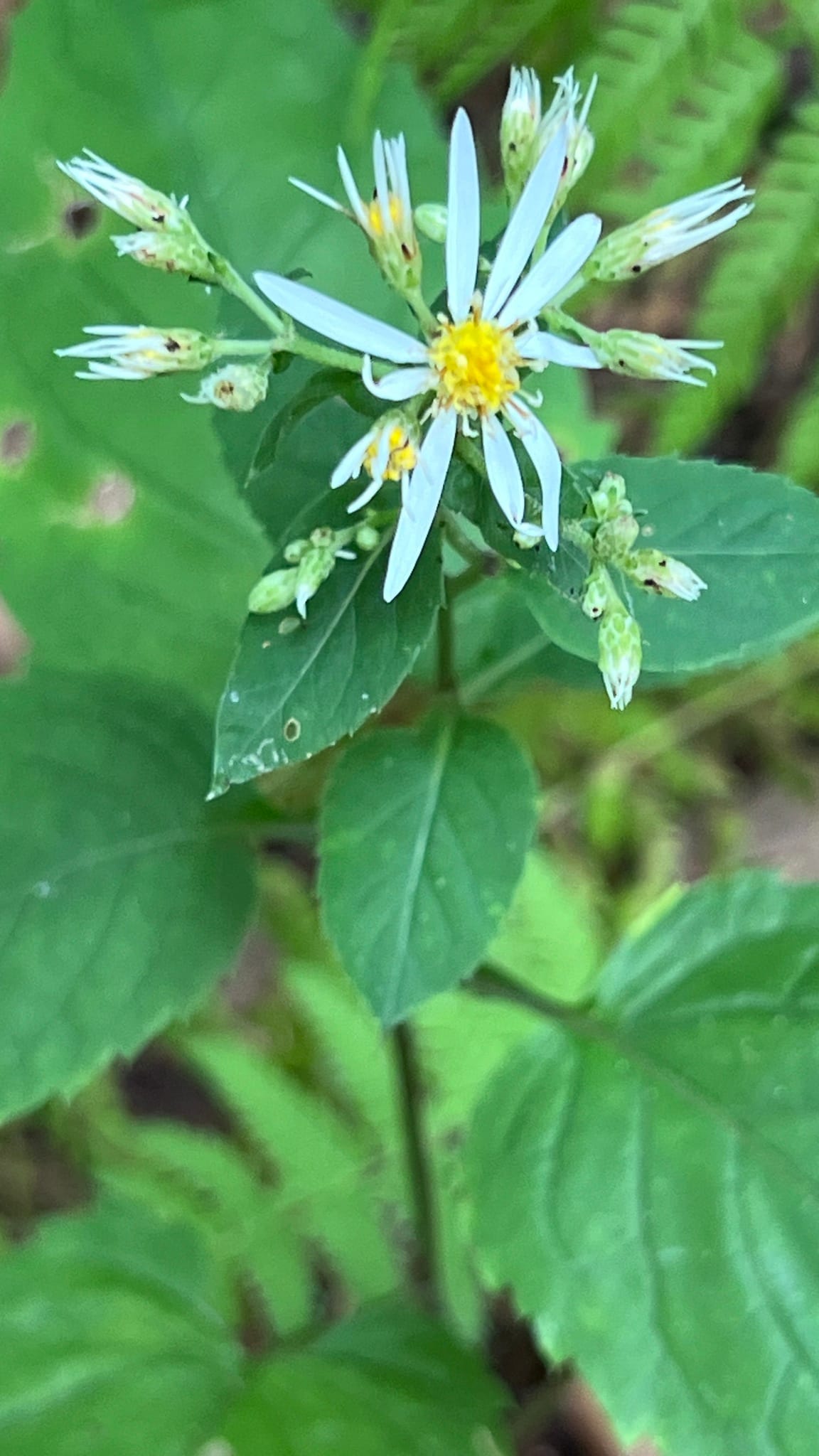
White Wood Aster
White Wood Aster (Eurybia divaricata)
A woodland species in the dry shade under trees.
Leaves near the base are heart-shaped with coarse, sharp teeth. Rays are white, disc centers yellow aging to reddish-purple. Flower heads sit in loose, flat-topped clusters, and the stems below them have a noticeable zigzag.
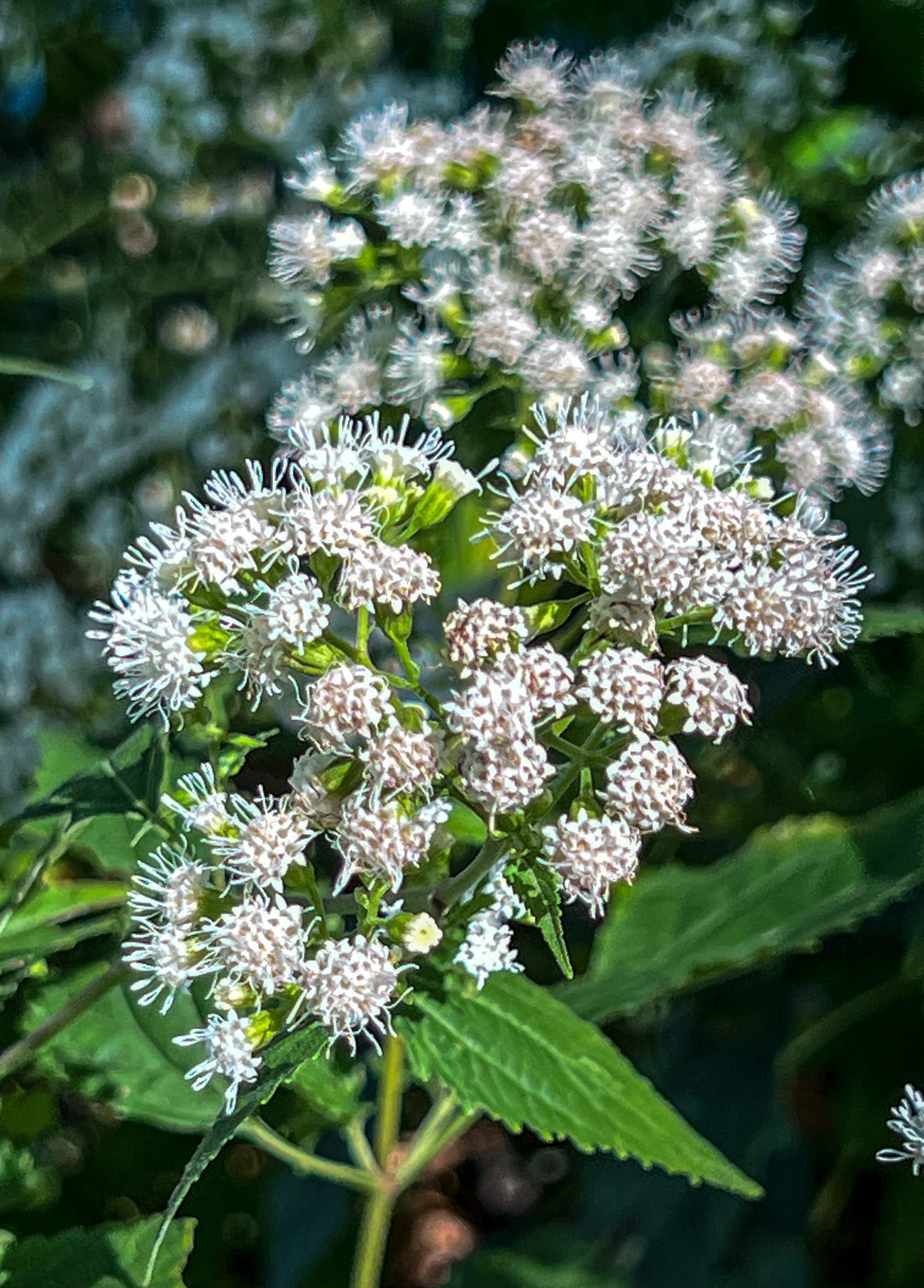
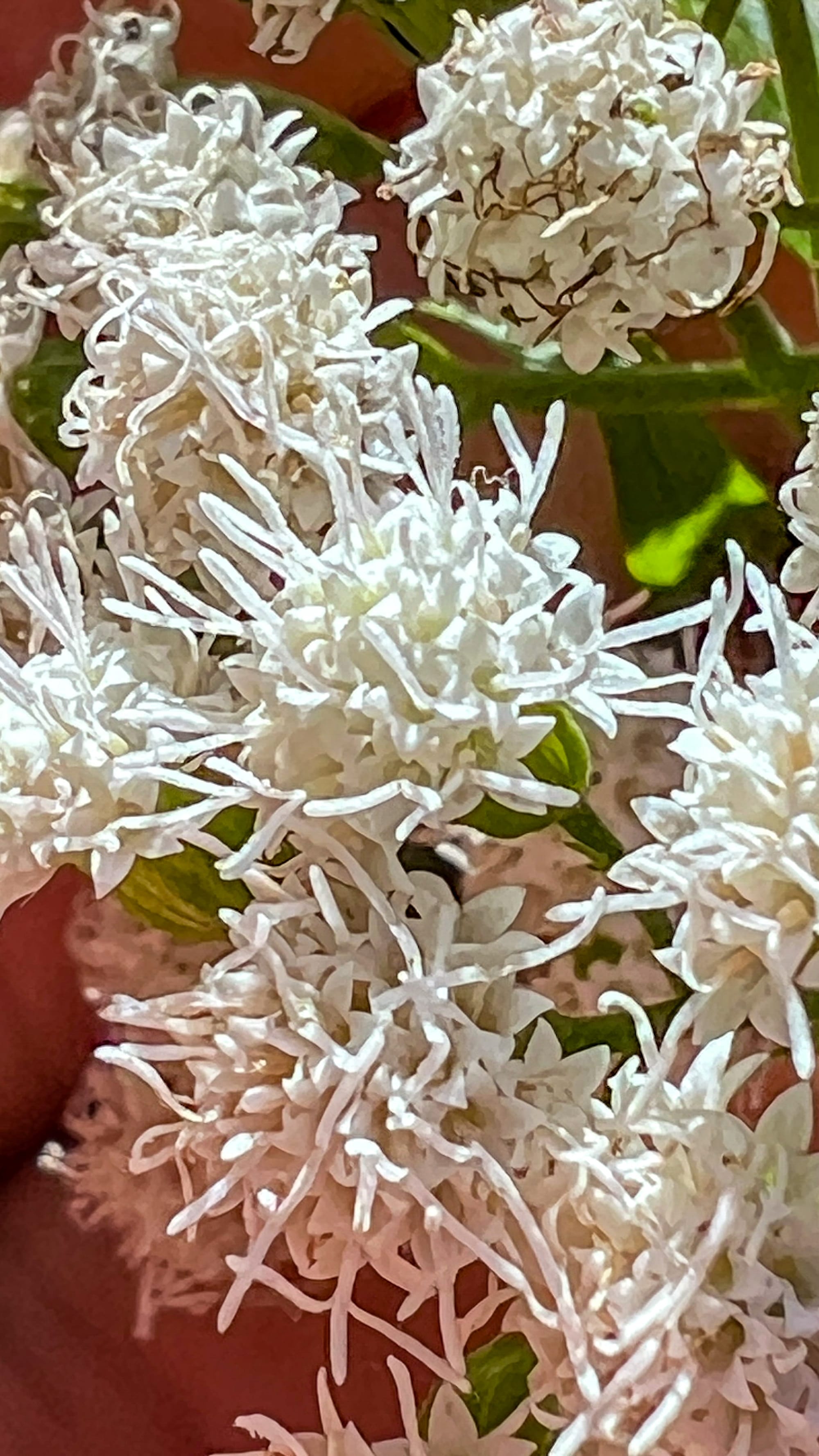
White Snakeroot
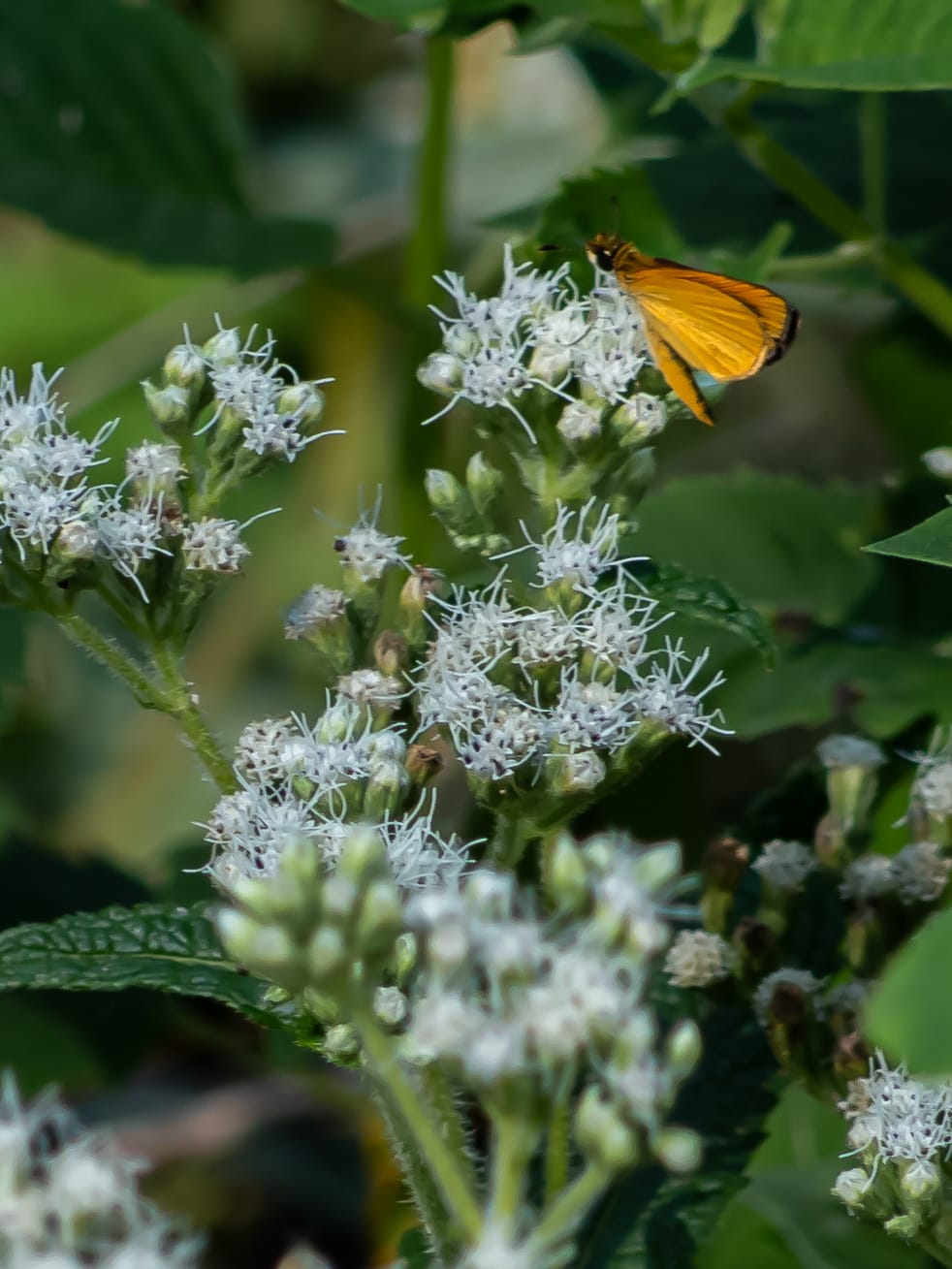
White Snakeroot (Ageratina altissima)
Hard to miss! Along the trails and around the ponds. The whole plant is poisonous; it's the reason "milk sickness" killed livestock and people in the 1800s, Abraham Lincoln's mother reportedly among them.
Low Smartweed
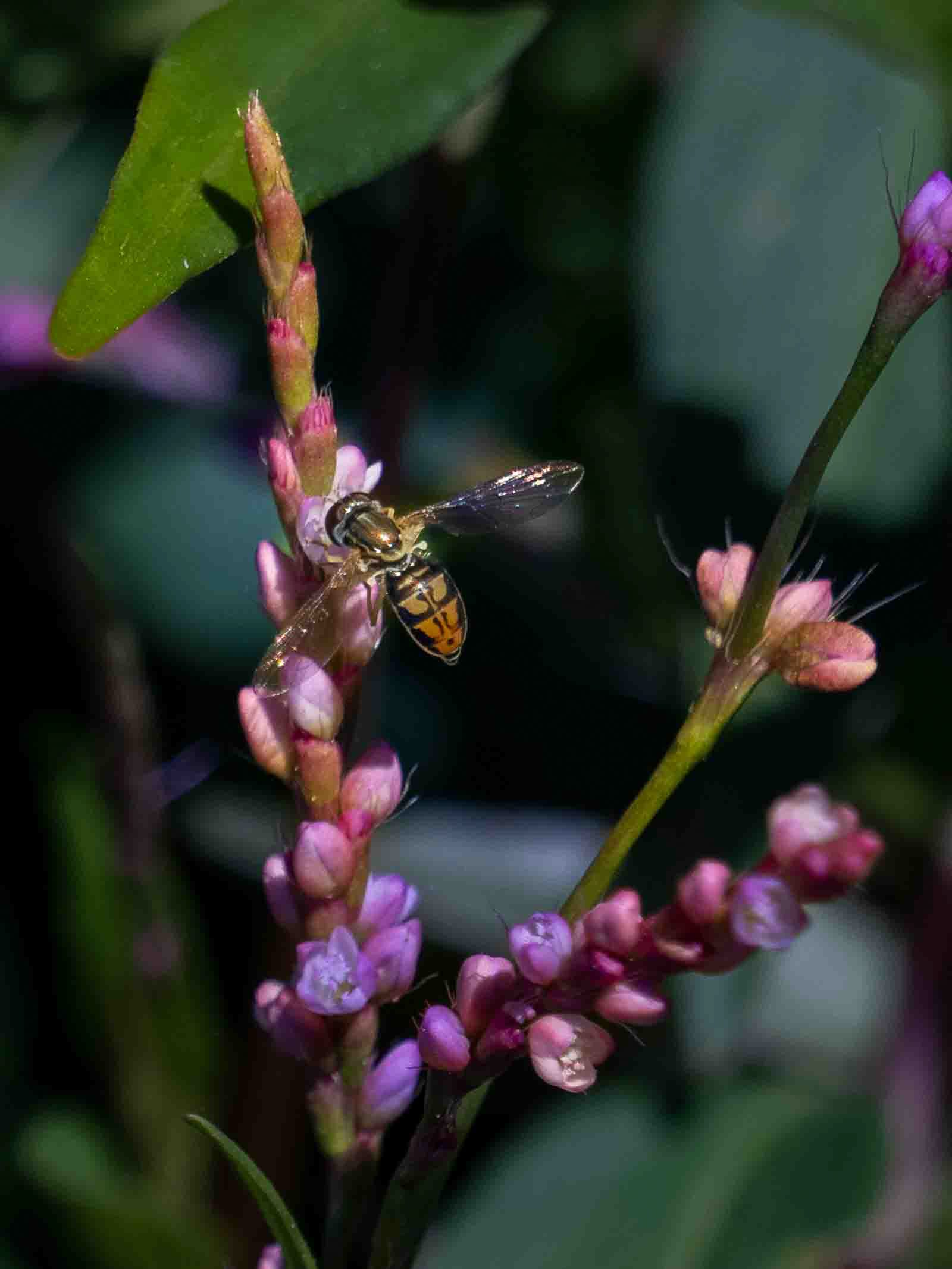
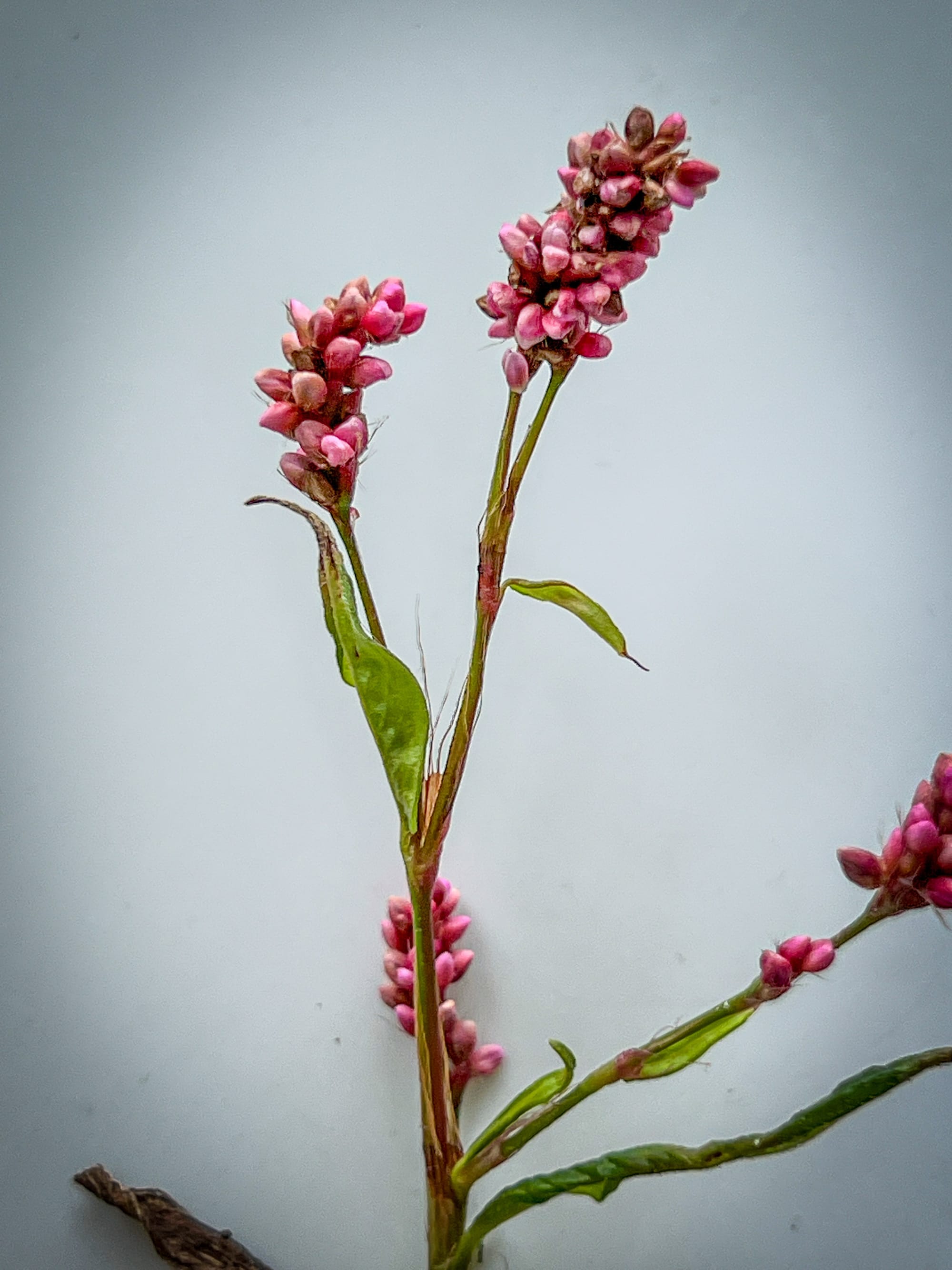
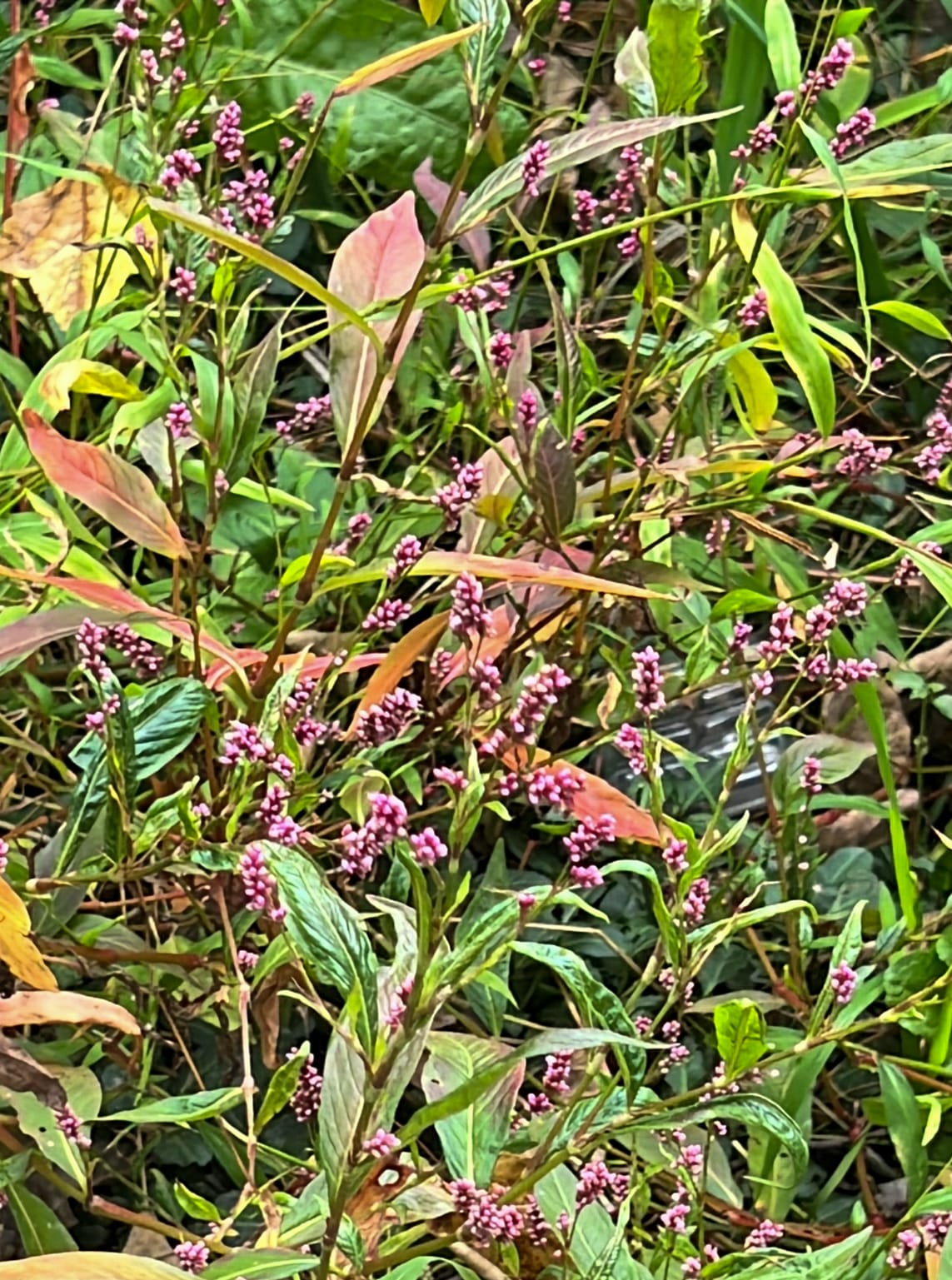
Low Smartweed (Persicaria longiseta)
Seen everywhere this time of year, its stems reclining and rooting again where they touch the ground. Small pink flowers crowd narrow spikes at the stem tips.
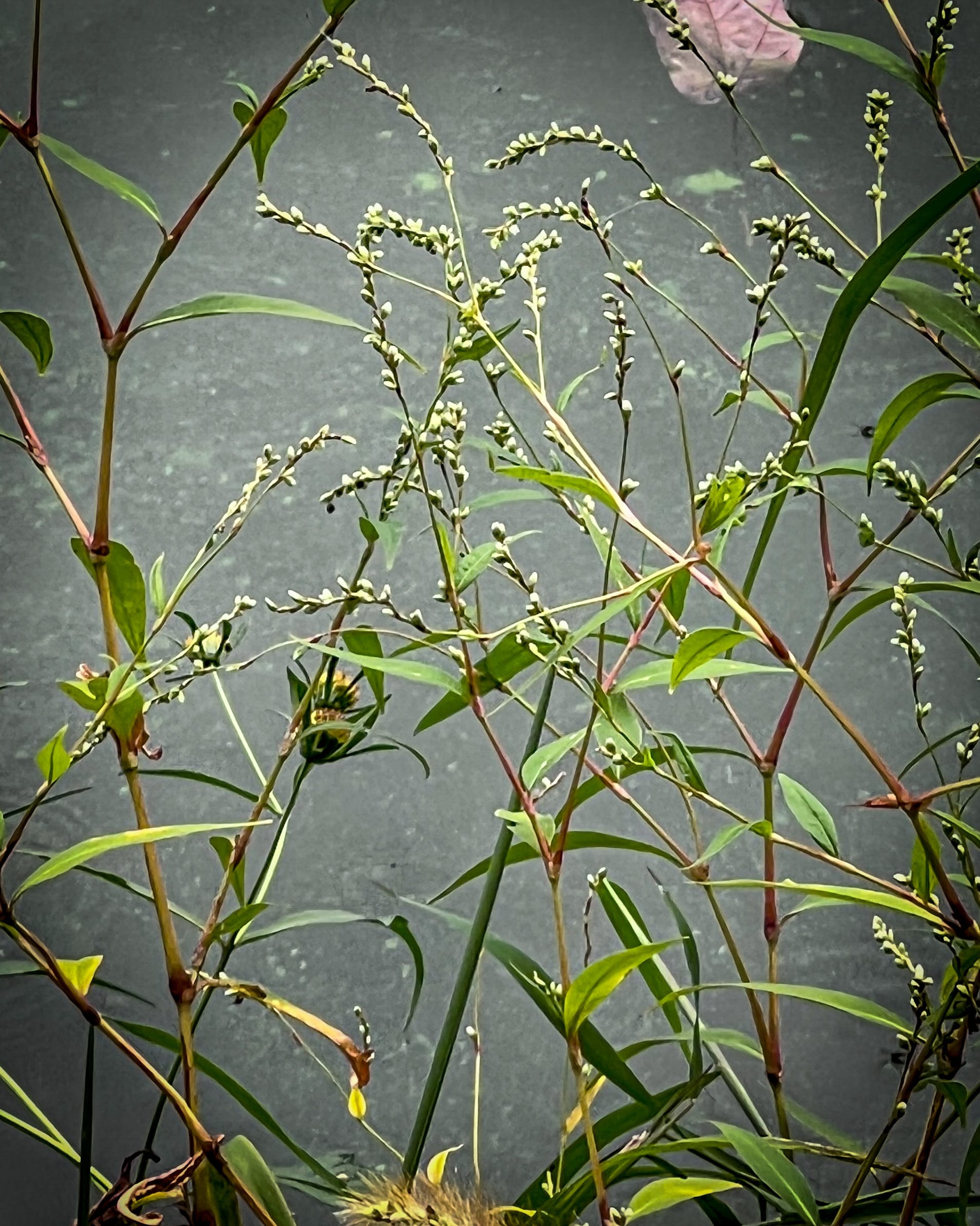
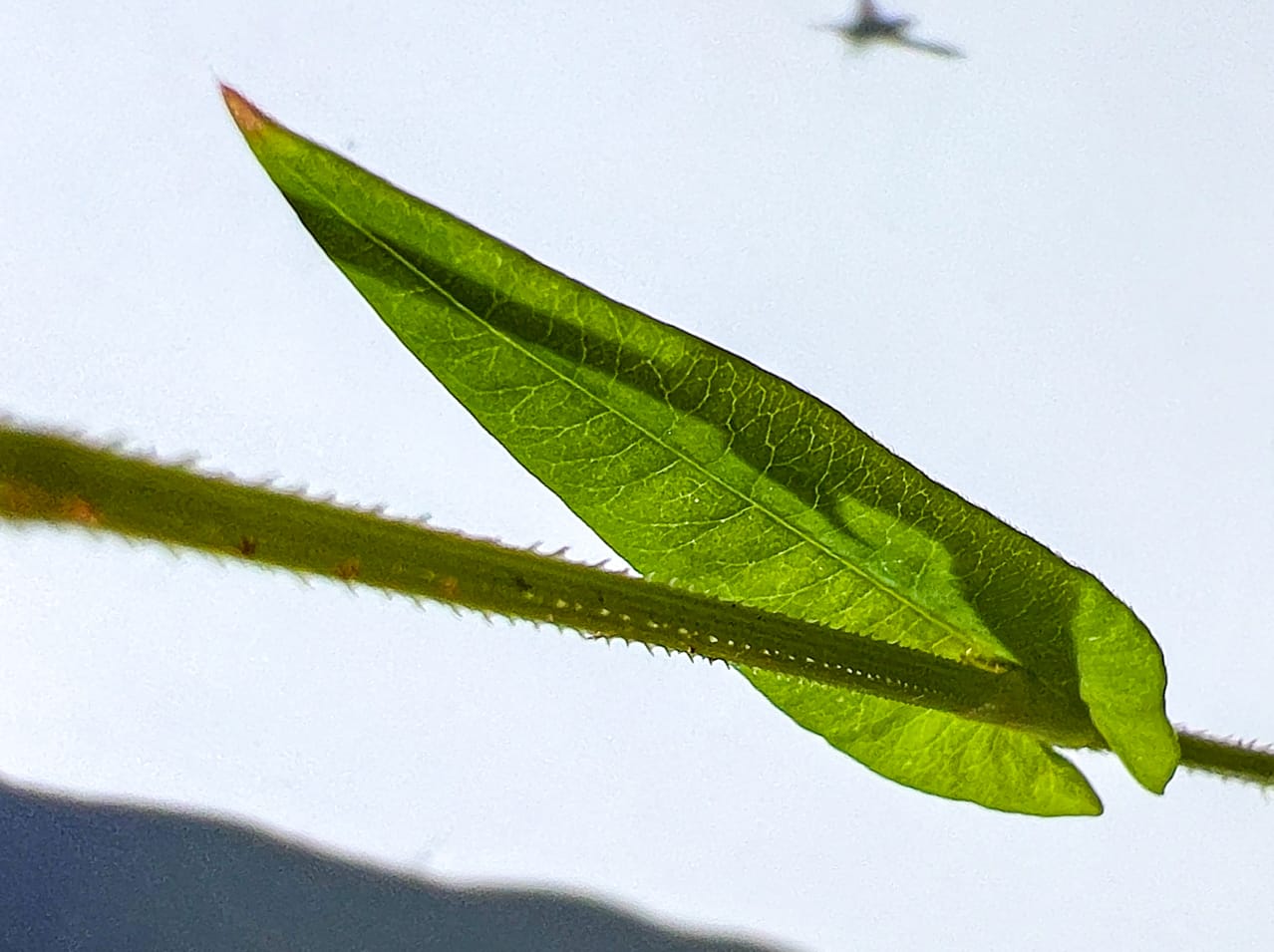
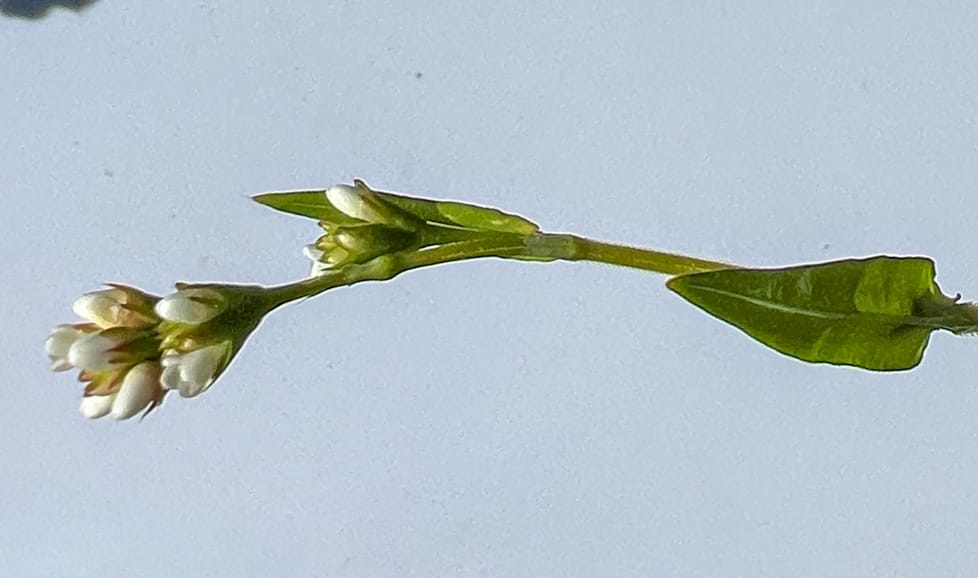
Arrow-leaved Tearthumb (Persicaria sagittata)
Another one thats hard to miss. Backward-pointing prickles on its four angled stem hook on nearby plants, and tear the skin if you are not careful. Leaves are arrowhead-shaped, with two backswept lobes at the base — unusual for a smartweed. Small white to pink flowers cluster in tight, rounded heads rather than elongated spikes.
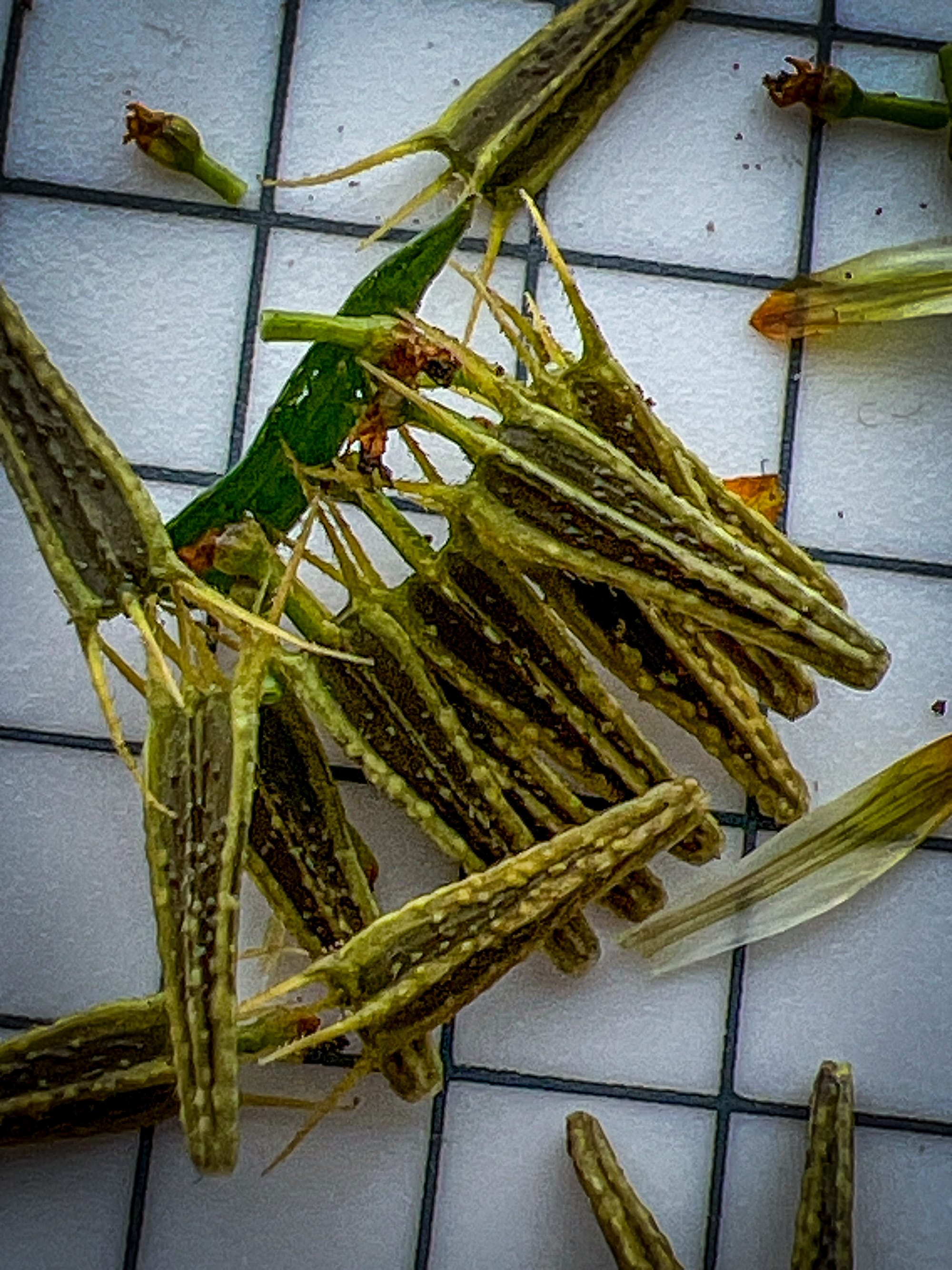
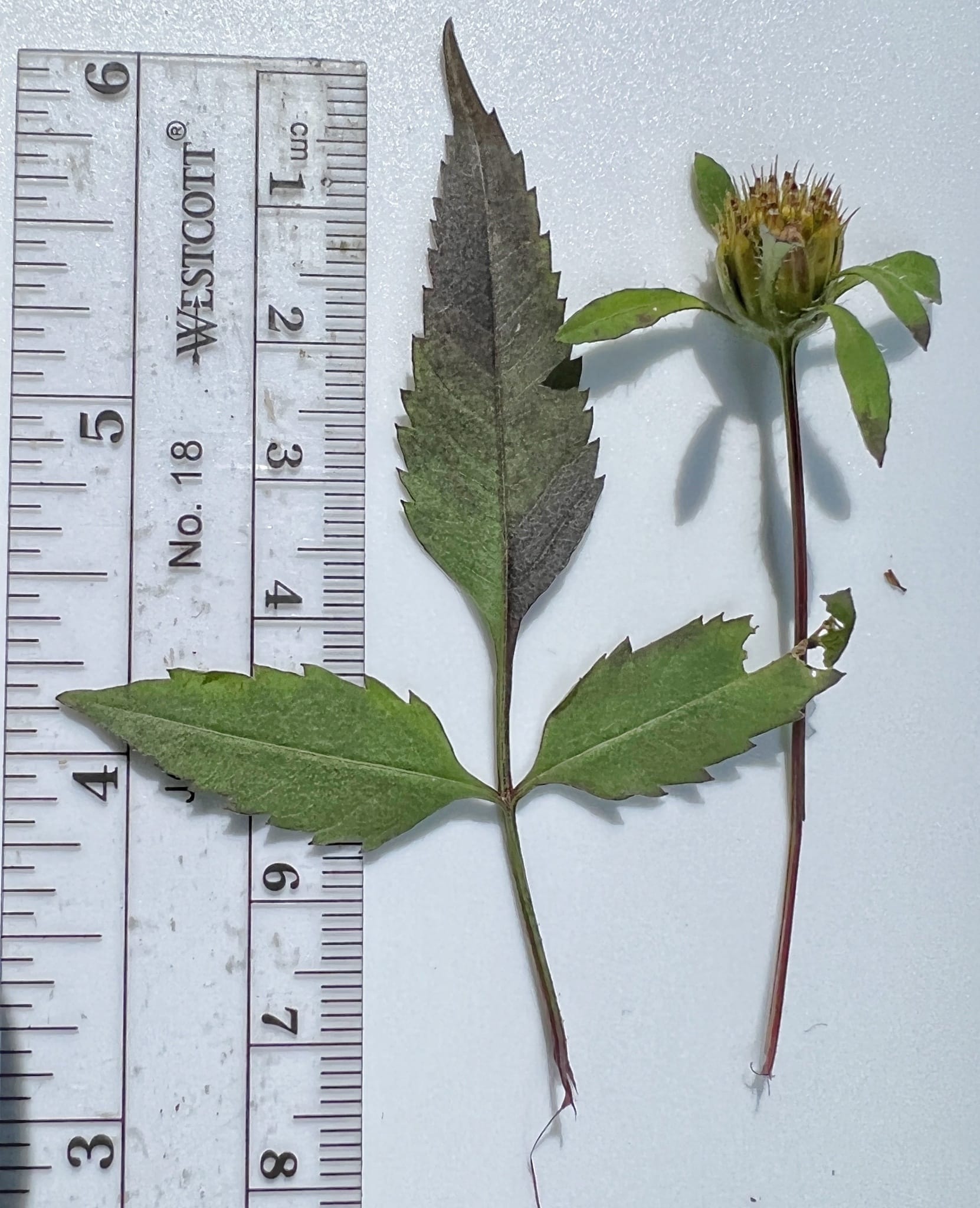
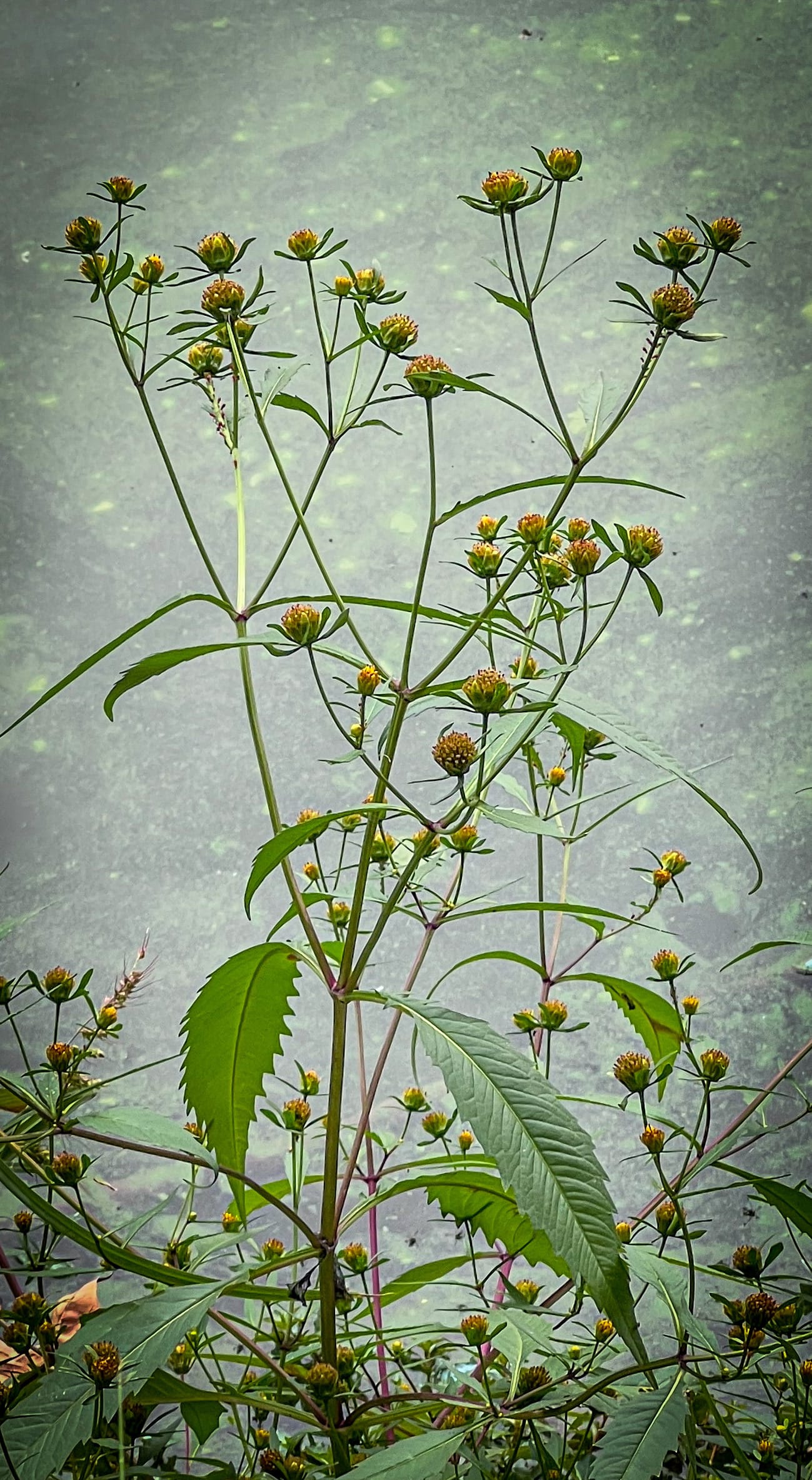
Devil's Beggarticks
Beggarticks (Bidens frondosa)
Found around the ponds. Flowers small, yellow, not very showy, easy to miss. Leaves are opposite and divided into three to five toothed, lance-shaped leaflets. Later the barbed seed catch on clothing and fur if you brush past, thus "beggartick".