Savannah Sparrows

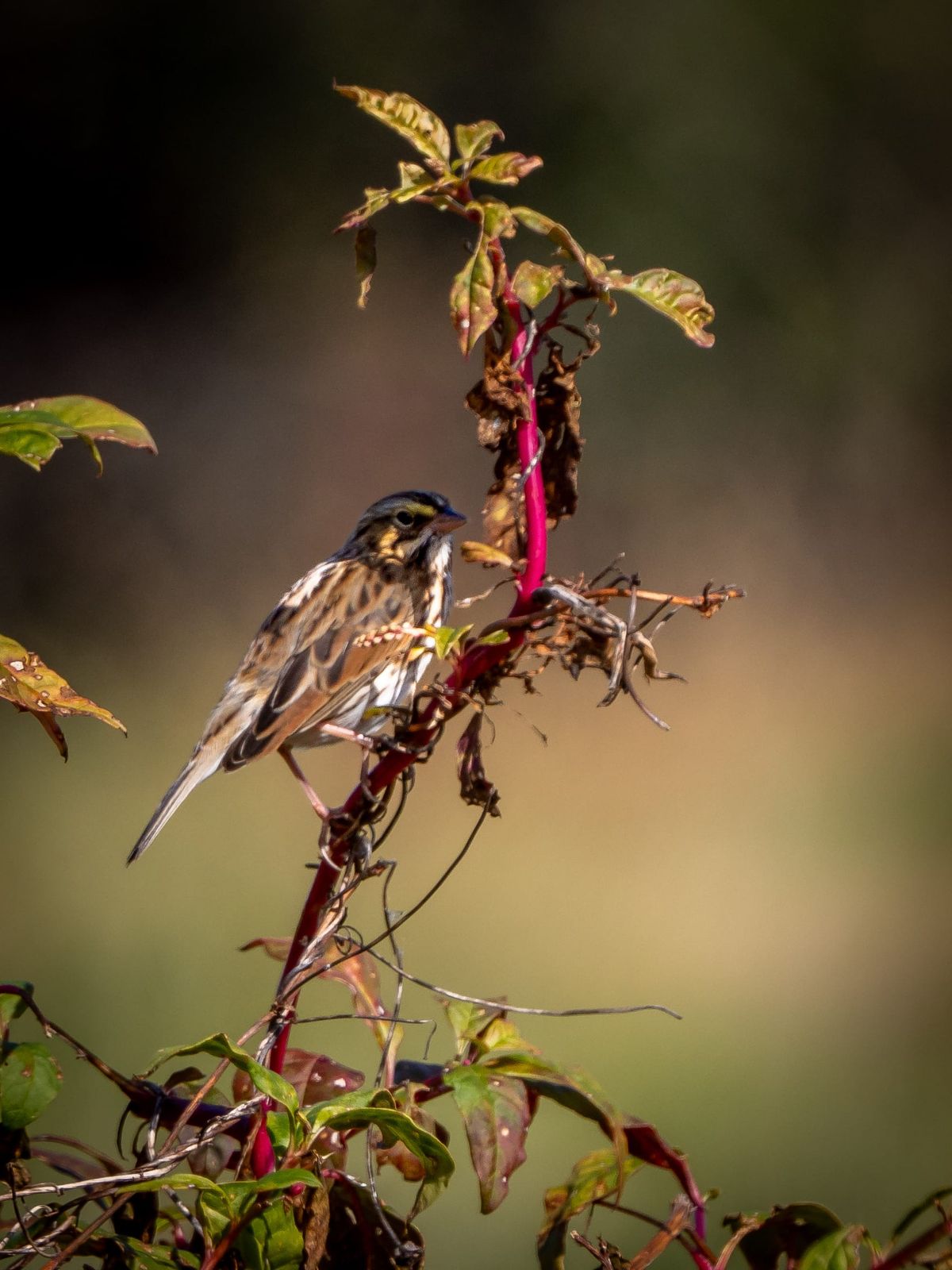
I thought the bird above was a White-throated Sparrow until observers on iNaturalist identified it as a Savannah Sparrow.
Savannah and White-throated Sparrows both have yellow before the eye, but the White-throated has bolder eye stripes. Apparently it takes some practice to tell them apart.
I saw the bird in the meadow on the old landfill at the park. That should have been a clue because White-Throated Sparrows prefer the thickets and understory of the forest. Savannah Sparrows are at home in meadows, fields and pastures; the thicker the better.
Oddly enough the common name is not a nod to this preference. It comes from Savannah, Georgia, where Alexander Wilson first saw the bird in 1811, and Savannah itself is named for the Savannah River, whose name has an uncertain origin.
The bird’s scientific name is Passerculus sandwichensis. Passerculus is Latin for “little sparrow.” Sandwichensis is from where the first specimen was collected comes from; the Sandwich Sound (now Prince William Sound) in Alaska.
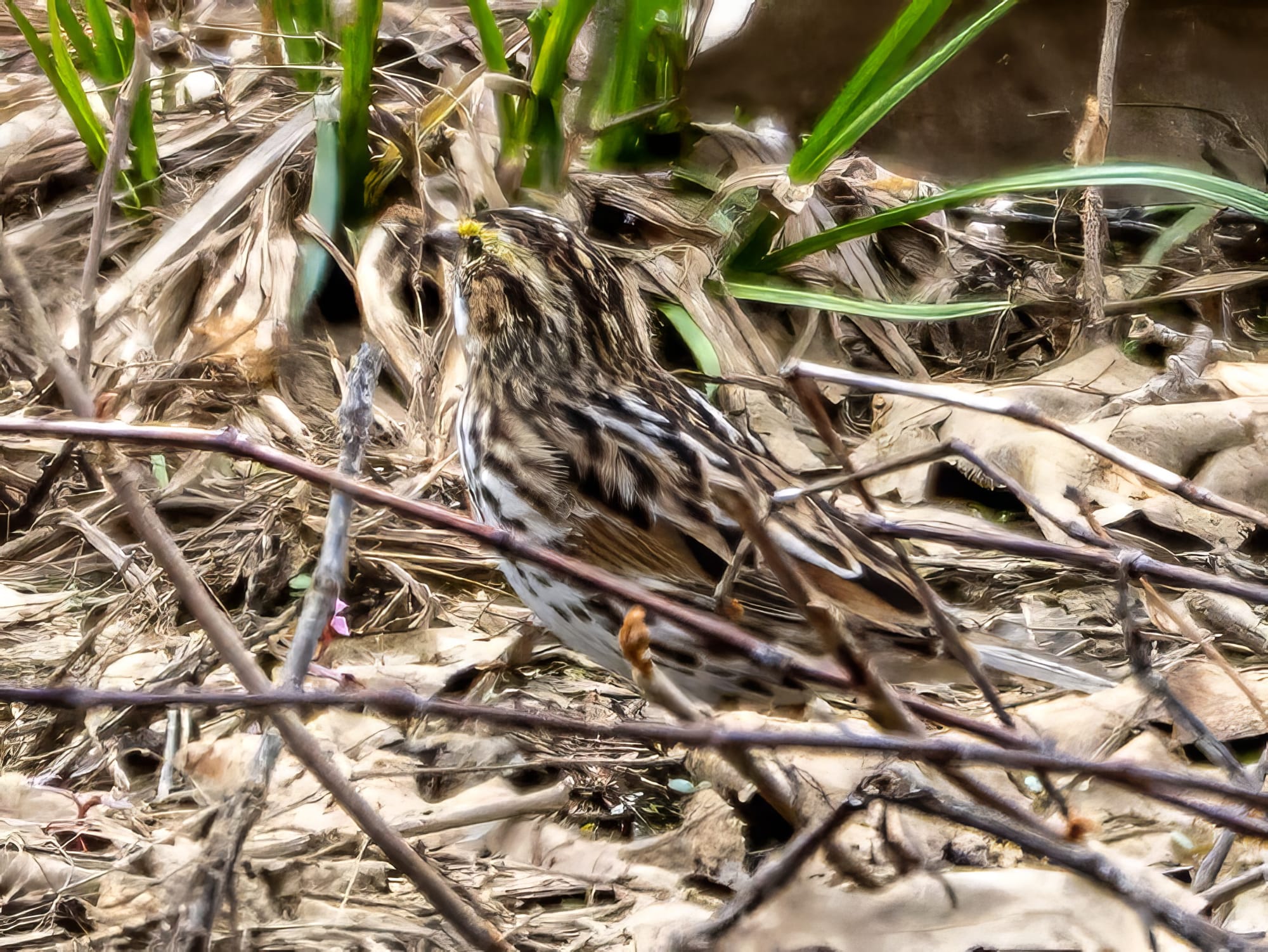
Migrating Savannah Sparrows pass through our area from mid-September through early November and from mid-March through late April. Relatively few have been recorded in our immediate area but they are fairly common in Chester and surrounding counties.
I saw that the entire state of Pennsylvania was in the breeding range of the Savannah Sparrow on the latest range map from allaboutbirds.com at Cornell
Cornell is widely acknowledged as the go-to source for birding. The maps are a computer estimate of where a species of bird is for a period of time created by combining millions of birdwatchers’ sightings and satellite data on land cover.
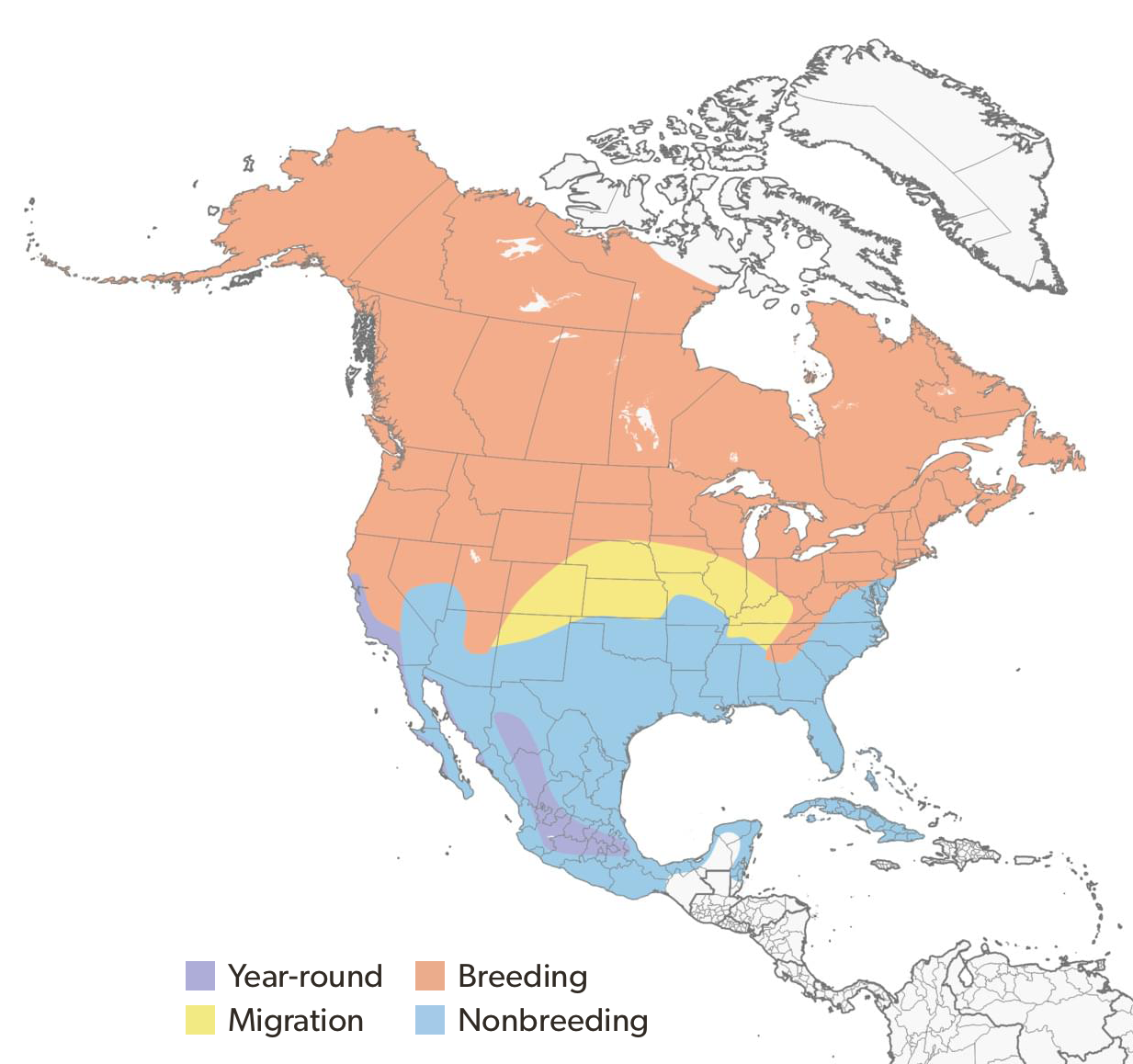
Since these maps are estimates the border between breeding and nonbreeding ranges are more like gradients than hard lines. We are clearly on the border between these ranges.
Digging deeper Cornell has this more detailed and nuanced abundance map (if you follow the link you can adjust the map to your hearts content.)
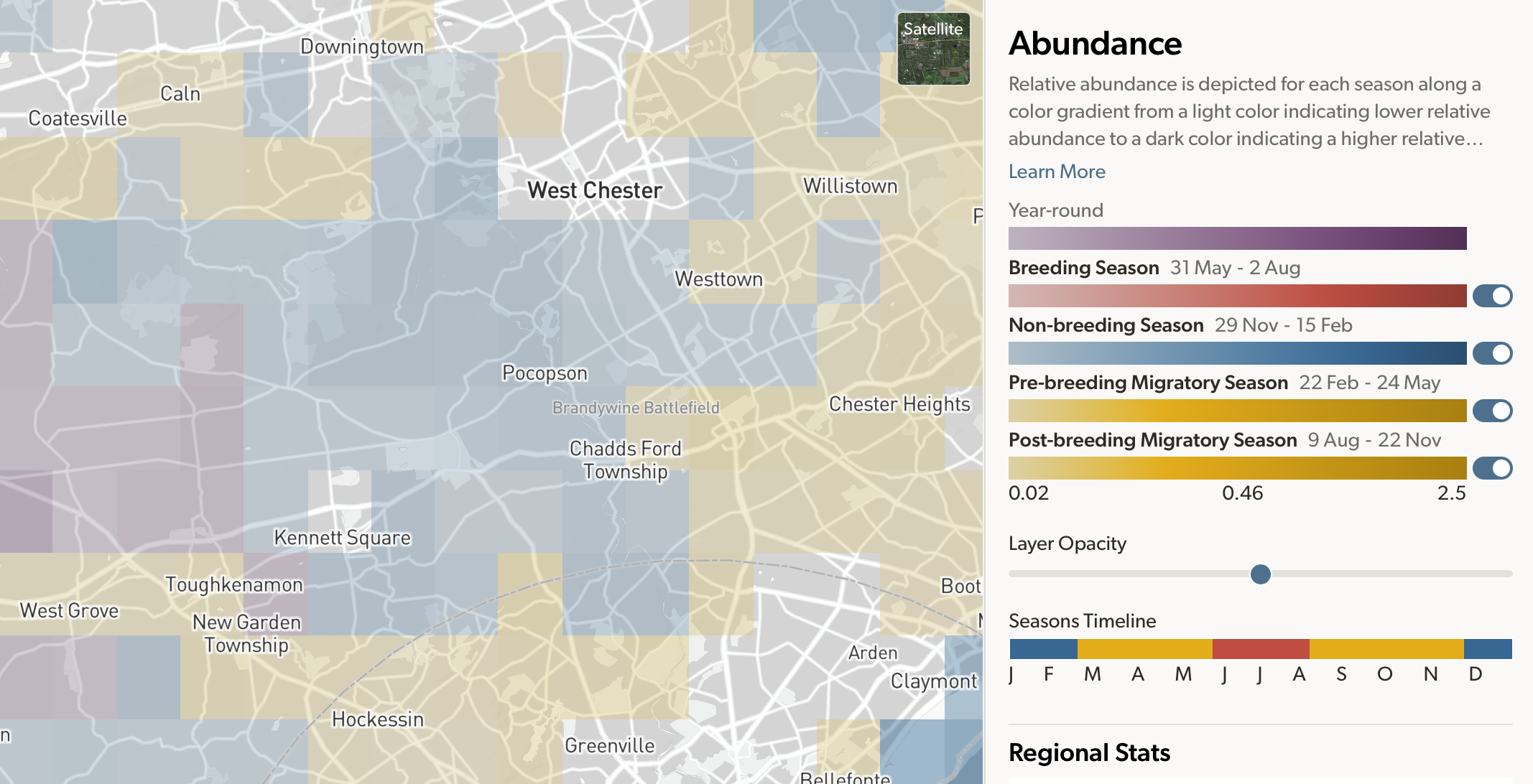
This solidly places the Savannah Sparrow in the immediate area year-round.
So far as I can tell no nest has been found locally, but iNaturalist, a website where people post observations, has three June sightings in three different years in the western part of Chester County. Observations on eBird where birders record their outings also have a few June and July reports.
Nixon Park has four reports of the sparrow, two on eBird and two on iNaturalist, all in spring or fall, this supports the conclusion that the park is a migration stopover. It's also likely these sightings could indicate a year-round presence at the park.
I guess most of us prefer absolutes over ambiguity but nature is a tangle of nuanced complexity rewarding our attention and curiosity with wonders at every turn.